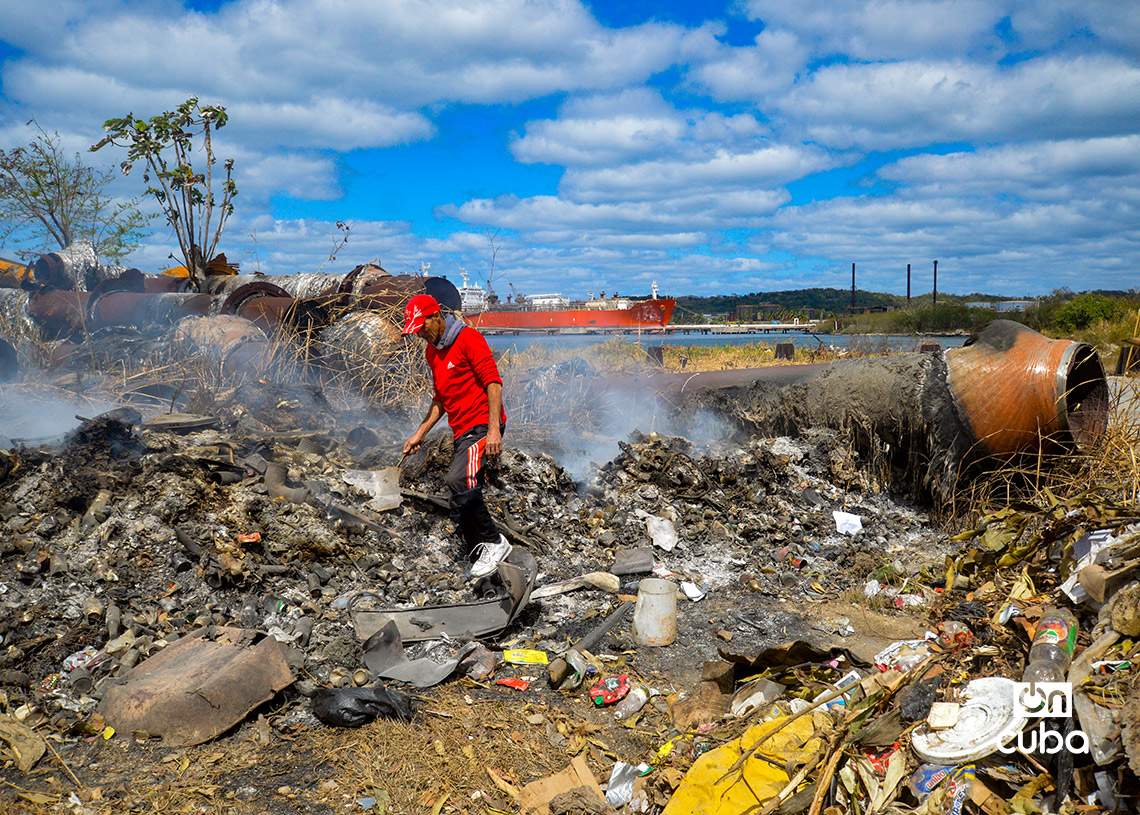
Three months ago it started as an offensive against garbagein the midst of the spread of arboviruses and repeated citizen complaints about pestilent accumulations and poor sanitation in the city. After achieving very few results, now we have added, to make matters worse, the problems derived from the massive burning of garbage dumps and the toxic smoke that invades all of Havana.
The fires have a high risk of spreading as a result of the drought and the smoke covers nearby homes for a long time, generating outrage both about the respiratory effects and the damage to urban infrastructure.
Although it is not yet clear how or who sets the fire, there have been many messages on networks calling for an end to the problem and for the Government to take action.
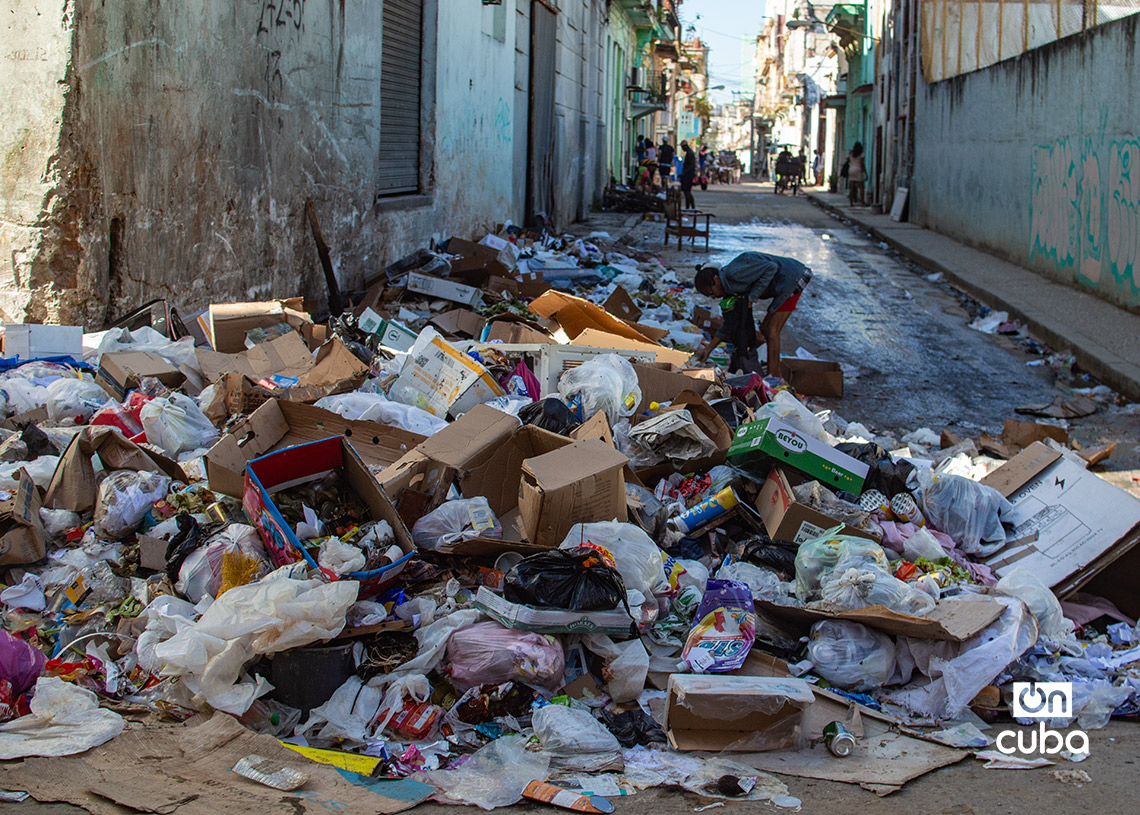
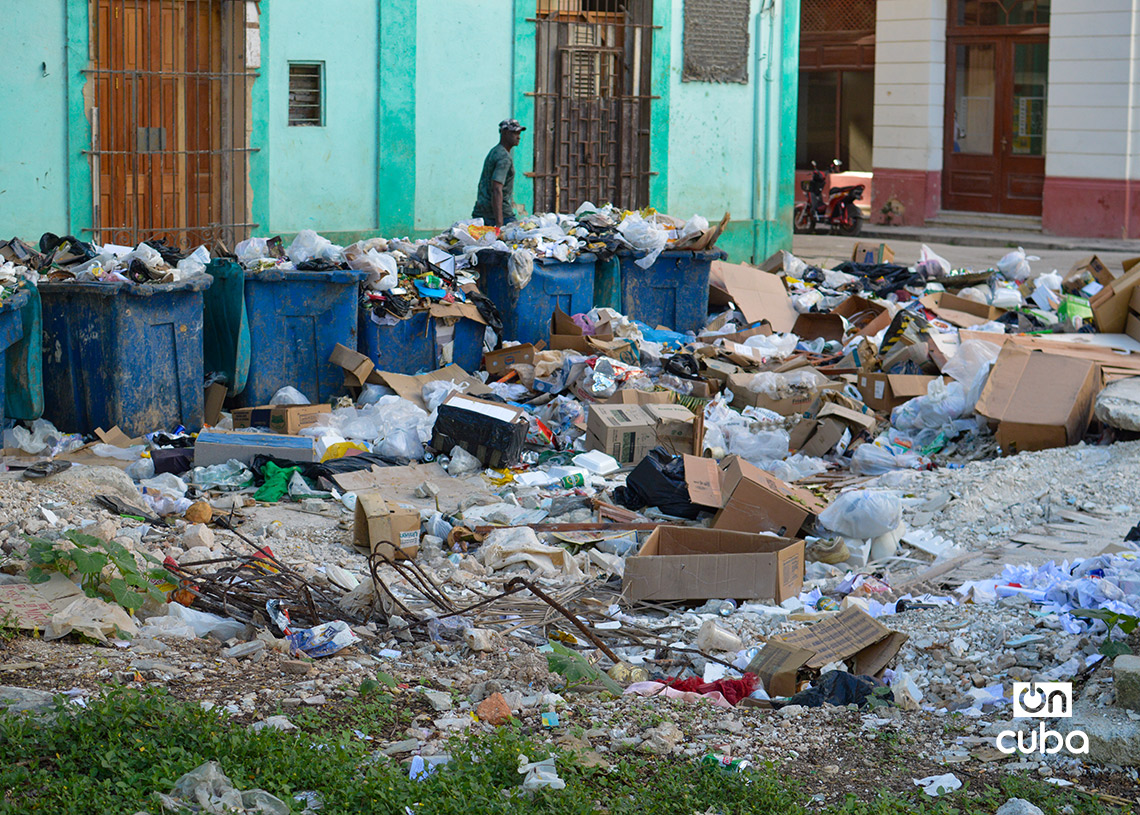
The large garbage dumps accumulated in streets and neighborhoods are a reflection of the structural crisis on the island for a long time. The lack of adequate infrastructure for waste collection has forced many places to resort to the use of bulldozers, vehicles that damage sidewalks and create impassable spaces that, in the long run, only increase the sources of waste accumulation.
The fuel shortage after the oil blockade decreed by the Trump Administrationhas come to aggravate this scenario until it reaches a breaking point.
Today, given the impossibility of mobilizing collection trucks with the necessary frequency, garbage cans burn in the middle of the street in almost all Havana neighborhoods.
The smoke produced is highly polluting: the accumulated garbage includes plastics, batteries, electronic waste and all types of toxic materials that, when burned, release extremely harmful compounds.
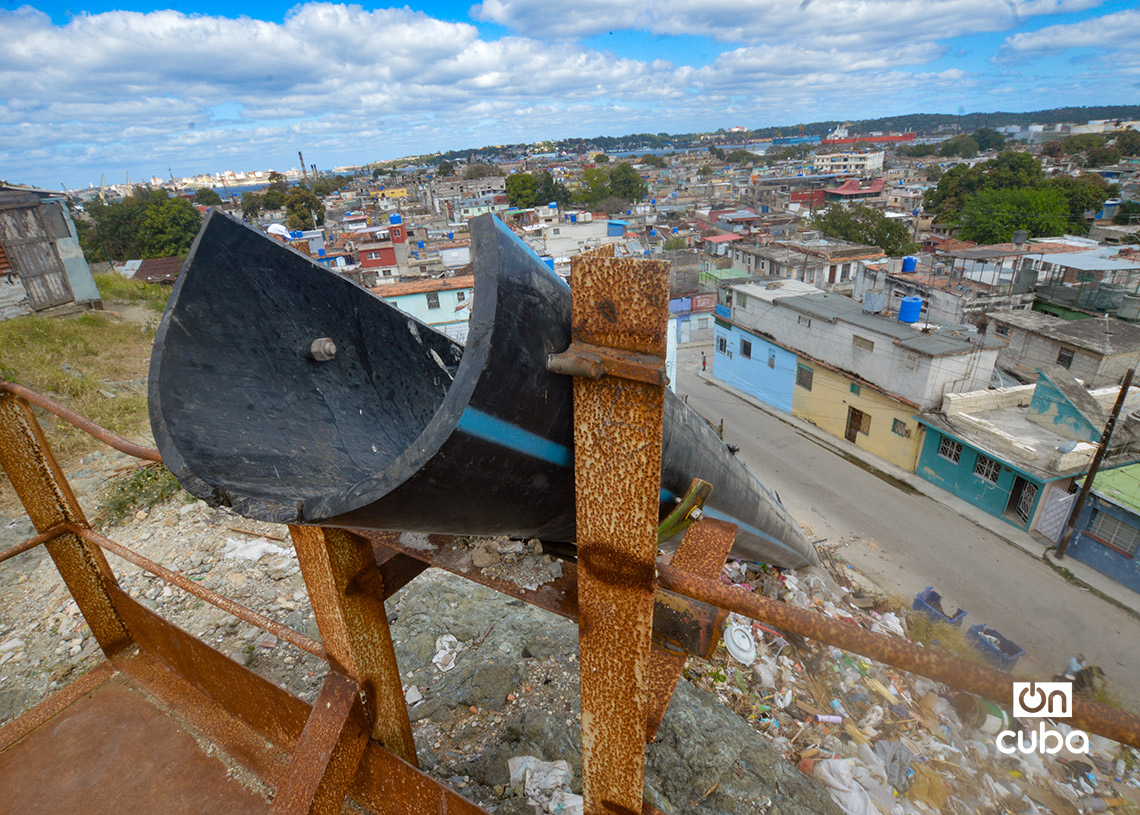
The population inhales them while walking through the streets or even from their own homes, without the possibility of avoiding it.
The problem is also aggravated by the lack of common waste separation practices for recycling in Cuba, as well as differentiated deposit points for toxic substances or components, which means that everything ends up mixed in the same improvised landfill.
The alerts from the authorities contrast with a striking silence: there is no mention of those responsible, no deadlines are offered, no concrete solutions are articulated.
“Less sterile speeches and more urgent actions”
In Facebookthe troubadour Rita del Prado demanded “less sterile speeches, less triumphalist narratives” and “more urgent and effective actions by local governments, Public Health (…) the entire State”, to prevent this practice that she considers harmful.
Another artist, comedian Ulises Toirac, warned of the seriousness of the issue due to the implications “that go far beyond solving the visible problem,” in reference to its immediate impact on public health and burning without technical control.
When garbage is burned on public roads, you are not eliminating the problem: you are transforming it into another one, more invisible… and more dangerous, he said.
“Burning garbage does not reduce the volume of solid waste in its entirety, it does not solve future accumulation, it does not create a sustainable system. It is an emergency solution that, if prolonged, becomes a structural problem,” the comedian noted on his networks.
From those smokes, these damages
A few days ago, the Telecommunications Company (Etecsa) notified “serious damage” to poles and cables of the telecommunications networks in the municipality of La Lisa, after a fire in the Guatao area.
According to the company, Damage to infrastructure was “significant”interrupting telephone services in part of the community, “which cannot be resolved in the medium term given the magnitude.”
Etecsa called for awareness about the burning of garbage near its technological equipment such as cabinets, cables and telephone poles. Users who are affected, warns the company, “will have to wait long periods for services to be restored due to resource difficulties to replace or repair damaged equipment.”
For its part, the Secret Nature group announced the danger to which a farmer was exposed, whose farm is located a few meters from a landfill that recently burned.
According to the report, when the waste was burning near the farm, Fausto’s wife had to go to her sister’s house due to allergies and lack of air, while he preferred to stay and take care of the house.
When the flames started, Fausto thought “about throwing the guano roof of his land-based pole to the ground, he thought about the gas pipe that runs just below where they threw the garbage, he thought about the plastic water tank that he managed to buy and could be damaged by the fire,” Secret Nature narrates.
https://www.facebook.com/NaturalezaSecretadeCuba/posts/pfbid02uWpyuH8djz72R5cJqzJxKSWX21rE4JHKeDCkWjfCK8jTAWiWc9UbMXpaJYPmnP8Hl
Smoke, a lot of smoke
In the midst of the fuel crisis that limits systematic garbage collection, environmental authorities urged people to avoid these practices and opt for comprehensive management solutions.
After notification to the territorial delegation of the Ministry of Science, Technology and Environment (Citma), the extinguishing of the fires was coordinated with provincial authorities, according to the official communication from that authority in Havana.
The combustion of municipal solid waste, which includes plastics, metals and other materials, causes polluting emissions due to incomplete combustion and can damage electrical, telephone, water and sewage networks.
According to Citma, although incineration is an alternative applied in other countries, it requires specialized technologies, strict controls and prior environmental impact studies, in accordance with current legislation.
The statement reminds that projects of this type must have environmental evaluation and formal authorization. In contrast, it proposes prioritizing comprehensive management schemes based on the separation at source of dry and wet waste, with community participation and solutions adapted to each neighborhood.
https://www.facebook.com/NaturalezaSecretadeCuba/posts/pfbid02QQf8WSST1NFnvVffa4sd25fuNNMZH1fMQ7nYDV36kjQFWa1PaXN4Fgr2xFSVEha4l
The authorities emphasize that, even with material limitations, it is possible to move towards practices aligned with the principle of circular economy included in the Law 150/2022with the aim of reducing volumes in landfills, taking advantage of resources and minimizing impacts on health and the urban environment.
Until Monday, the Government of Havana had limited itself to sharing a message of public good in the face of what it called “annoying situation generated”, without taking sides on the matter or taking concrete actions to stop the phenomenon.
From the comments, Internet users call for action. “Government of Havana, everyone knows what burning garbage is, so save the conceptual and do something to solve the problem,” writes a user, who believes that “the decision to use something that is part of the lungs of Havana as a landfill [el Parque Metropolitano] “It didn’t come from someone individual, it was an orientation.”
“The problem has been created, what is the solution, because it is not worth talking about the same thing without providing at least some solution,” asked one user, while another asked “Who will explain to the population the damage generated and the non-compliance with the existing protocols for the preservation of the environment?”
New management project with foreign investment… undated
While the landfills grow, the Playa People’s Power Assembly announced in the last few hours a project with foreign investment that will add to the management of solid waste, without a specific start date.
As pointed out in Facebookthe initiative, promoted from Portugal, plans in a first stage to put all available trucks and containers into operation, incorporate means for washing and install new tanks in different parts of the city.
As explained by the Municipal Government of Playa, the operational calculation is based on an estimated generation of 700 grams of waste per inhabitant per day.
For the success of this project, they point out, greater inspection is planned with fines for those who violate what is established, which will be approved in a territorial ordinance that will define the responsibilities of citizens and companies.
The program includes the separation of household waste, prunings and construction debris, the latter subject to specific permits. Meanwhile, at the labor level, the authorities plan to modify the salary scheme for communal services workers to include incentives.
A second phase, focused on waste treatment, will depend on the initial results. The authorities emphasize that all equipment, including those purchased, will remain state property.
The garbage continues
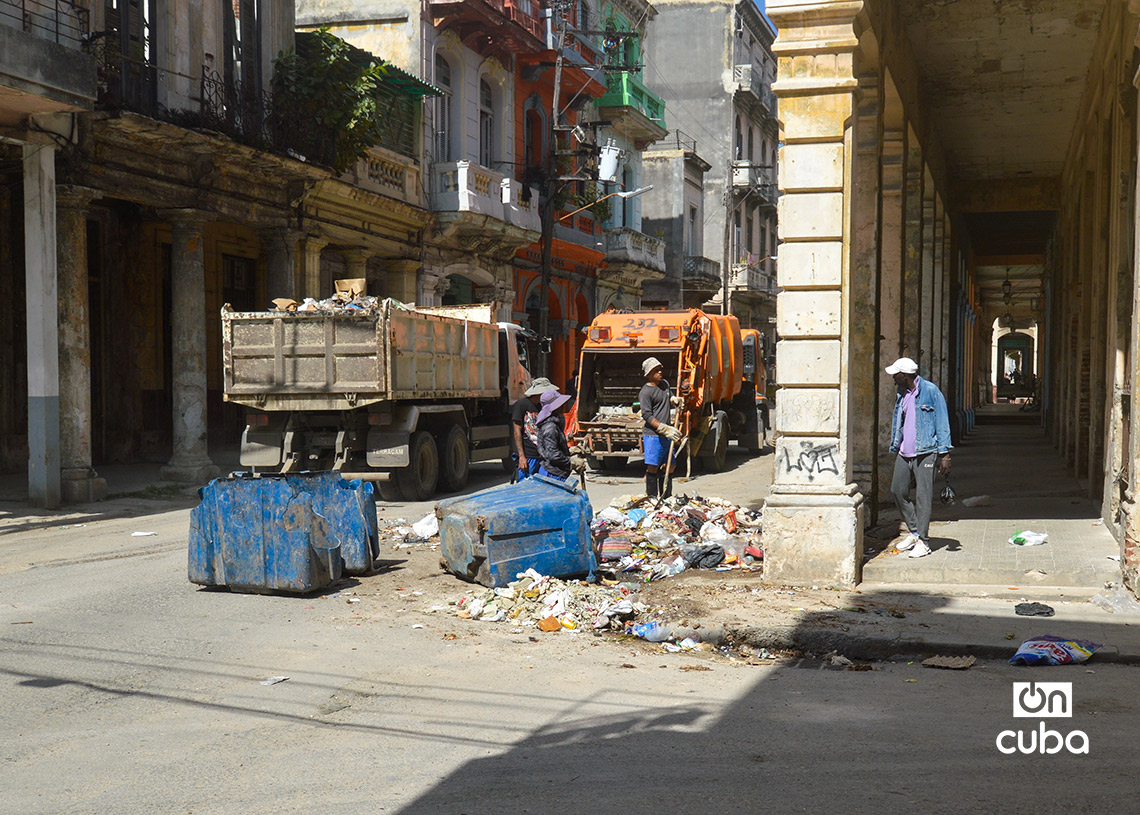
In a Havana overflowing with garbage, the military and state entities mobilized in cleaning days at the end of last year as part of a government offensive following growing complaints and protests from the population.
So, it faced the same challenges as other campaigns: lack of equipment and personnel, lack of fuel and also lack of systematicity, apathy fueled by the crisis, among other factors. Today, the situation has worsened.
In November, when the charge against garbage was at its peak, in municipalities like Old HavanaFor example, trucks begin to circulate around 7:00 at night along the main avenues, while during the day excavators and brigades of workers collect the accumulated waste.
By then, some questioned that the routes were limited to certain streets, while others regretted that the use of technical means that were not always suitable for collection caused breaks in streets, sidewalks and garbage tanks.
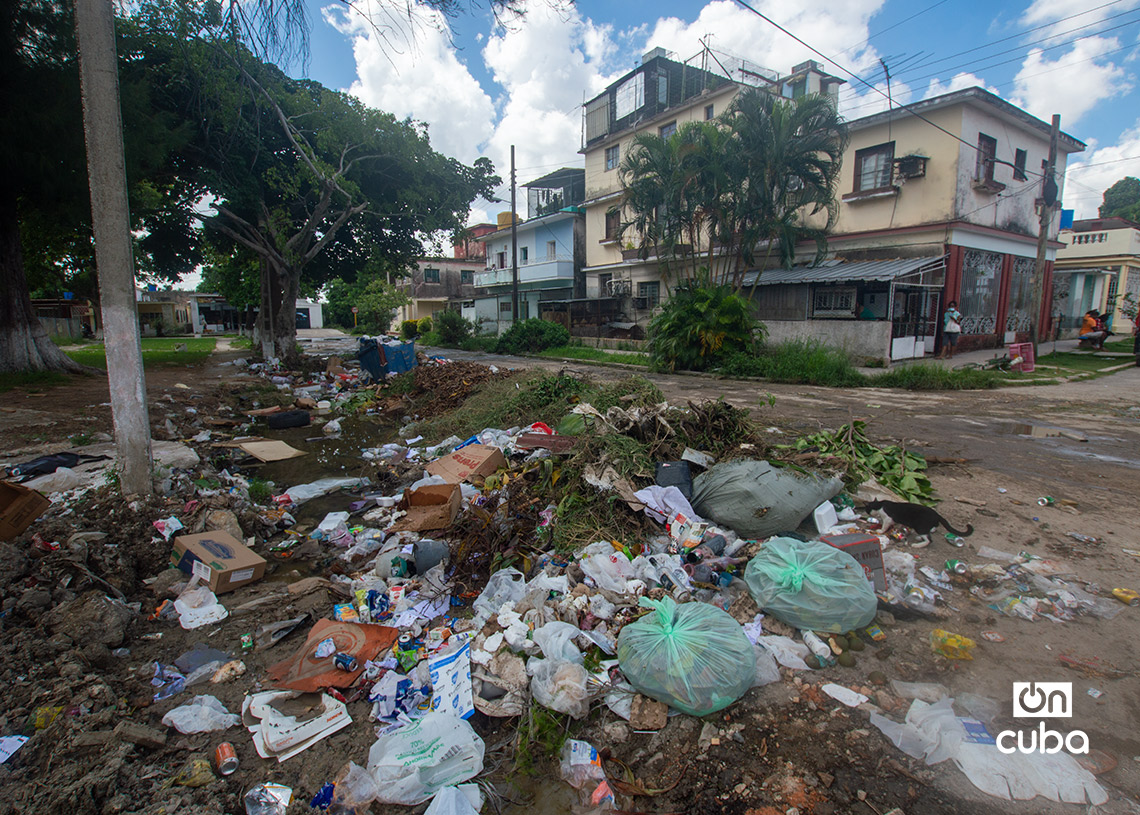
After the notorious unrest of the people of Havana, the authorities admitted the problems accumulated for years in the Cuban capital and called to “shake the passivity” to try to address them in the midst of the crisis.
In the current year, The Cuban Government has launched a tough contingency plan which includes, among other things, the reduction of public transportation and severe fuel rationing, which has skyrocketed gasoline and diesel prices in the also dwindling black market.
This anti-crisis package takes as reference the “indications” of former President Fidel Castro during the so-called Special Period, due to the depression that the fall of the Soviet bloc meant for the island. By announcing it, President Miguel Díaz-Canel rescued the concept of “zero option”the survival plan proposed in the nineties in the face of the “zero oil” scenario.