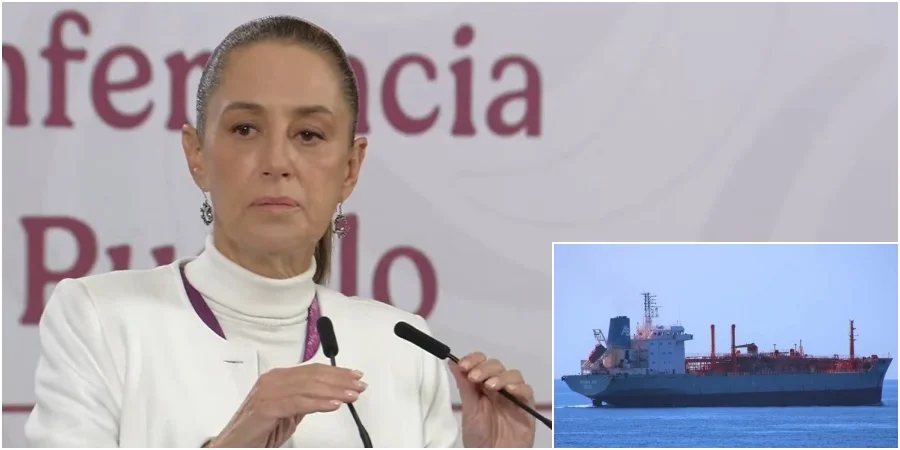
LIMA, Peru – The president of Mexico, Claudia Sheinbaum, avoided confirming whether her government will resume oil shipments to the Cuban regime, now that the threat of trade sanctions from the United States was void after the Supreme Court ruling.
During her morning conference this Tuesday, the president indicated that the possible sanction “no longer exists” and that her administration is evaluating the situation, without offering a concrete decision.
“We are reviewing. We already informed you,” Sheinbaum responded when pressed by a journalist to give a more explicit statement.
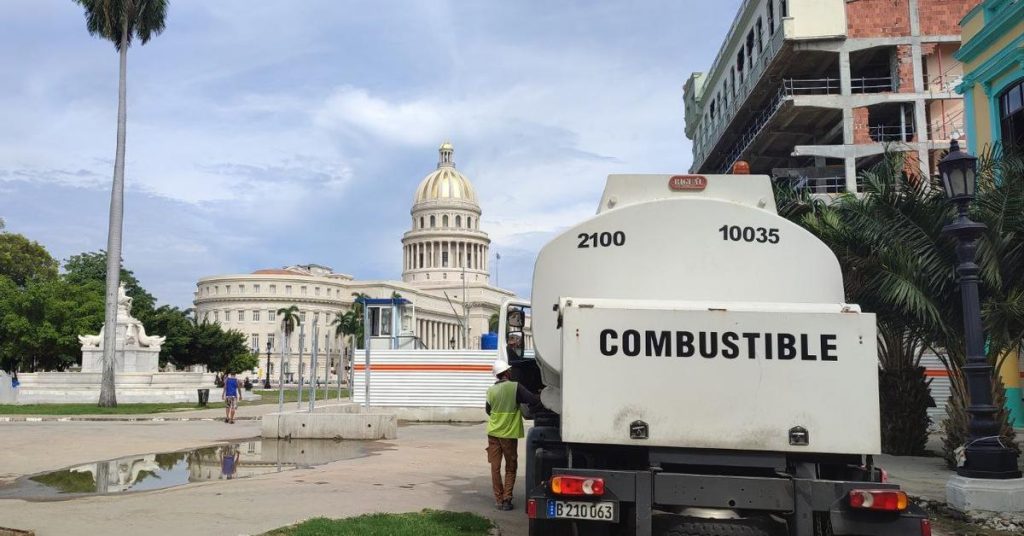
Since 2023, Mexico has played a key role as energy backup for the Cuban Government, amid prolonged blackouts, fuel shortages and a deep economic crisis. In 2025 alone, Mexican shipments were around 20,000 barrels per day.
At the same time, Washington’s tone towards Havana had hardened in recent weeks. However, Donald Trump put an end to the additional tariffs imposed on countries that provide fuel to Cuba on February 20, by signing the executive order. “Ending certain tariff actions”.
On January 29, the president of the United States had signed another executive order, “Addressing threats to the United States by the Government of Cuba”which created a “tariff system” to impose additional tariffs on imports from countries that sell or supply oil to Cuba, directly or indirectly, under the International Emergency Economic Powers Act (IEEPA).
Now, the executive order of February 20 means that the tariff mechanism designed to punish countries that send oil to the Island is no longer in force and must stop being collected, although the “national emergency” declared with respect to Cuba remains in force.
In that sense, the new order specifies that “all other actions” adopted in previous orders, as long as they do not impose rights ad valorem under the IEEPA nor are steps necessary to implement them, will not be affected by the new provision. Likewise, it clarifies that the national emergencies declared or described in these orders, including the one related to Cuba, remain in force.
Washington’s pressure is not over
According to an EFE report, the president of the US-Cuba Trade and Economic Council, John Kavulich, warned that the original executive order has not been completely neutralized. “I dare not say that [la orden ejecutiva de 29 de enero] It’s a paper tiger. “If it has teeth, it is still a tiger, it can still be scary,” he told that agency.
In his opinion, “the Government of Cuba would make a huge mistake if it understood that the Supreme Court’s decision is a protective shield.”
Along the same lines, the Cuban-American lawyer Pedro Freyre, partner of the Akerman law firm and specialized in litigation linked to Cuba, considered that Washington could resort to other mechanisms. “The White House reversed the implementation of that mechanism, but left the door open to other possible actions. Knowing how they do things in this administration, I think I can assure that they are going to use other tools,” he told EFE.
According to the analysis collected by the Spanish news agency, among the alternatives that could be considered are possible banking measures promoted by the Treasury Department or secondary sanctions against actors participating in the supply of fuel. So far, the US Administration has not publicly detailed what specific instruments it could activate.