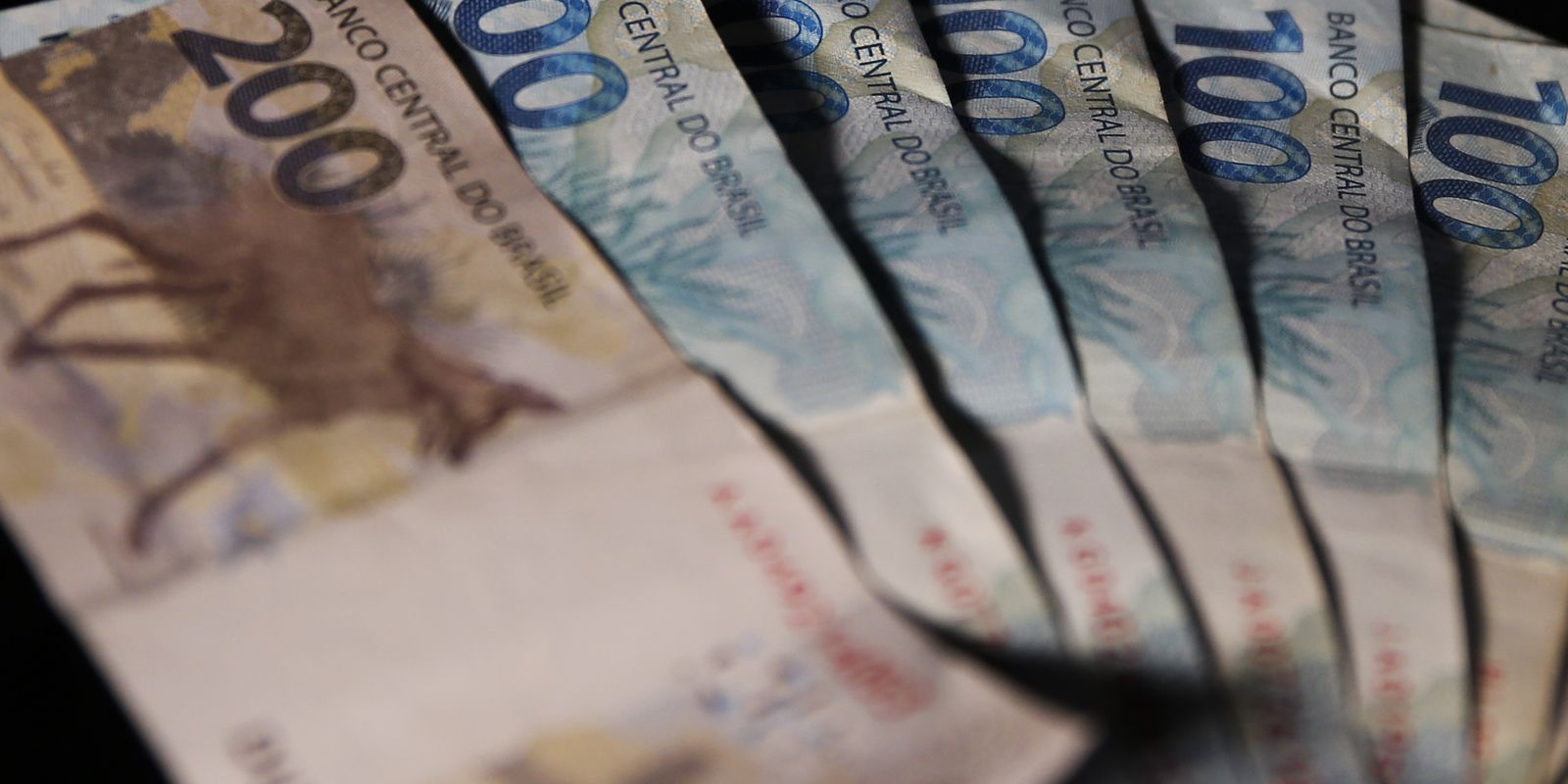
Federal revenue reached R$325.7 billion in January, the highest value ever recorded for the month since the beginning of the historical series, in 1995. The result represents real growth of 3.56% compared to January last year, already discounted for inflation.
The data was released this Tuesday (24) by the Brazilian Federal Revenue Service. According to the Tax Authorities, the performance was driven by the growth in economic activity and recent changes in tax legislation.
Among the highlights is the advancement of the Tax on Financial Operations (IOF), whose collection totaled R$8 billion in January, with a real increase (discounted for inflation) of 49.05% compared to the same month in 2025. According to the Revenue, the result reflects changes in legislation that increased the incidence of tax on new financial transactions.
Income Tax Withheld at Source (IRRF) on capital income also registered significant growth of 32.56%, totaling R$14.68 billion. Performance was influenced by investments in fixed income and the taxation of Interest on Equity (JCP), one of the ways in which a company distributes profits to shareholders.
At the end of last year, the National Congress approved the increasefrom 15% to 17.5% of the Withholding Income Tax rate for JCP. However, this increase will only be reflected in federal revenue from April onwards.
Pension
Social Security revenue reached R$63.45 billion, a real increase of 5.48% compared to January last year. The advance was attributed to the 3.49% growth in the wage bill and the 7.46% increase in Simples Nacional revenue.
Revenues from the Contribution to the Financing of Social Security (Cofins) and the Social Integration Program (PIS) totaled R$56 billion, with a real expansion of 4.35% compared to the same month in 2025. According to the Revenue, the increase reflects the increase in the volume of sales in commerce and services.
Games and bets
Taxation on online betting and gambling generated R$1.5 billion in January, compared to R$55 million in January last year. Growth in the sector reaches 2,642% year-on-year, reflecting the regulation and expansion of charges on so-called “bets”.
Part of the changes approved at the end of 2025 have not yet fully impacted collections due to the nineteen-day period, a period of 90 days for collection to begin after a rate change.
Other taxes
Conversely, taxes linked to imports showed a real decline. Revenues from the Tax on Industrialized Products (IPI) and Import Tax fell 14.74% in January, discounting inflation, compared to the same month in 2025. The Revenue attributes the result to the reduction in the volume of imports in dollars and the drop in the exchange rate in the annual comparison.
Fiscal target
January’s performance reinforces the government’s cash flow at the beginning of the year and contributes to meeting the fiscal target established for 2026, which foresees a primary surplus of R$34.3 billion, excluding the payment of court orders and expenses outside the fiscal framework.
Fiscal rules, however, establish a tolerance limit of 0.25 percentage points in relation to the central target. In this way, the government is authorized to obtain zero primary results up to a surplus of R$68.6 billion in 2025.