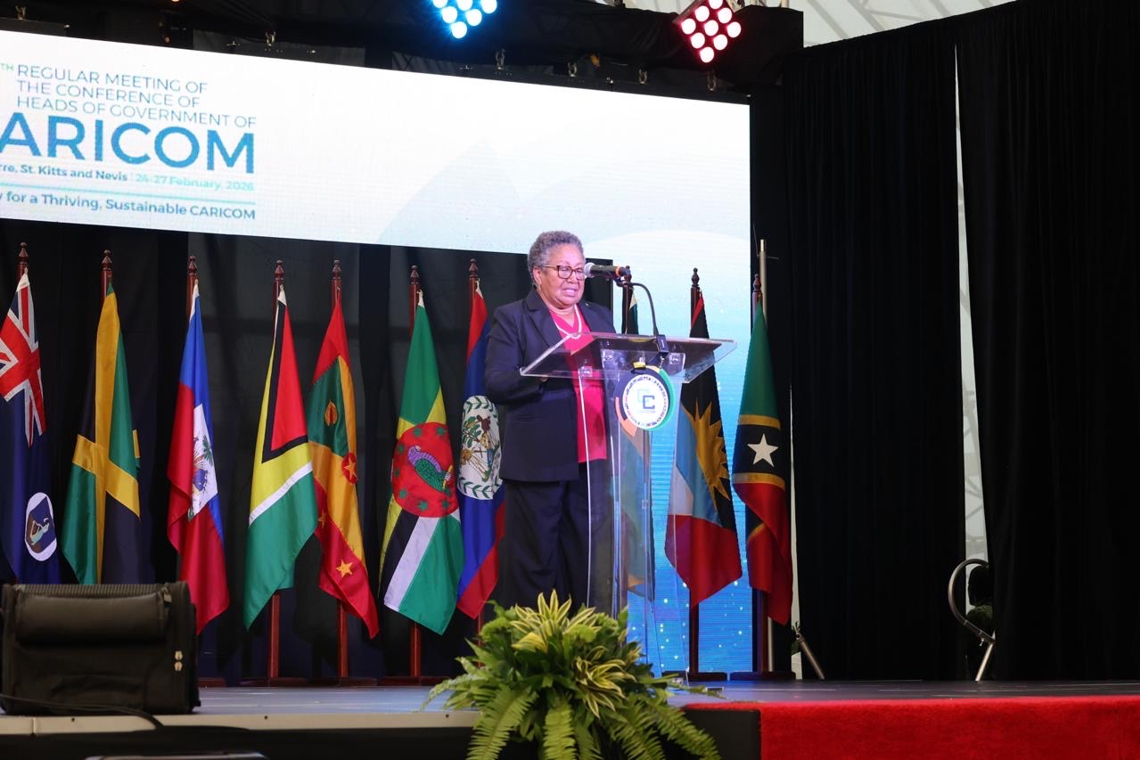
The leaders of the Caribbean Community (CARICOM) They advocated this Tuesday for “taking collective action” to support Cuba in the midst of the energy crisis that the island is going through, despite pressure from the United States and the presence of Secretary of State Marco Rubio at the regional meeting.
The fiftieth edition of the annual CARICOM conference became a forum of support for Havana, with calls for unity in the face of geopolitical and humanitarian challenges, international press agencies reported from Basseterre, capital of Saint Kitts and Nevis.
The Prime Minister of Jamaica, Andrew Holness, was one of the most emphatic in his intervention. “We must address the situation in Cuba with clarity and courage. Cuba is our Caribbean neighbor. Its doctors and teachers have served throughout our region. A prolonged crisis in Cuba will affect migration, security and economic stability throughout the Caribbean region,” he stressed.
Holness, acting president of CARICOM in 2025, insisted that the community must “consider this matter carefully and take collective action” regarding Cuba, refers to a report of EFE.
“Jamaica is firmly in favor of democracy, human rights, political responsibility and an economy based on an open market. We do not believe that long-term stability can exist where economic freedom is restricted and political participation limited,” he stated, quoted by the Spanish media.
The countries of the Caribbean Community (Caricom) advocate “taking collective action” in support of Cuba due to the United States siege.https://t.co/uwLAsNUUeQ
— EFE News (@EFEnoticias) February 25, 2026
American pressure and paralyzed economy
Pressure from Washington, which threatened with tariffs on countries that supply oil to Havana, has progressively paralyzed the Cuban economy, already weakened after several years of crisis. Prolonged blackouts, fuel shortages and the drastic reduction of basic services such as transportation and hospitals have raised alarm in the region.
Holness maintained that Jamaica supports a “constructive dialogue between Cuba and the United States with the objectives of de-escalation, reform and stability.”
The Jamaican leader stressed that the geopolitical environment is changing and that CARICOM can play a constructive role, not as an ideological bloc, but as a community of democratic States that offers cooperation, economic reform and social development.
Holness also highlighted the need for the Caribbean organization to support political, humanitarian and security pillars in Haiti, and urged the 15 members to be united in the face of climate change and natural disasters, such as Hurricane Melissa that impacted Jamaica and Cuba at the end of October 2025.
Calls to action
The current president of CARICOM, Terrance Drew, urged member countries to design mechanisms to directly help the Cuban people.
“The community can provide help directly and become a forum for conversation,” he said.
For his part, Godwin Friday, Prime Minister of Saint Vincent and the Grenadines, opted to promote “peace and security in Haiti and the entire region, facing the humanitarian crisis that is affecting Cuba.”
CARICOM Secretary General Carla Barnett noted that concern for Haiti has become a global priority and that the community must continue to raise its voice for peace in the Caribbean.
“Our duty is to mobilize as the theme of this meeting demands, we must go beyond words and take action for a sustainable and living CARICOM,” he concluded.
Blonde at the top
The presence of Marco Rubio adds tension to the event. The Secretary of State will travel to Saint Kitts and Nevis this Wednesday to meet with Caribbean leaders and discuss strategic issues such as security, illegal immigration, drug trafficking, illicit trafficking, climate resilience and political cooperation.
Rubio, of Cuban origin, has been one of the main drivers of pressure against Havana and, in particular, against the island’s medical missions. According to the State Department, the Republican politician will reaffirm Washington’s commitment to collaborating with CARICOM member states to increase stability and prosperity in the hemisphere.
However, Caribbean leaders have expressed their displeasure over Washington’s harsh policy decisions in the last year, which include accepting deportees from third countries, rejecting medical missions from Cuba – to which some nations in the bloc have already given in -, cooling relations with China and cutting citizenship-by-investment programs.
Holness warned that changing geopolitical interests may jeopardize the sanctity of borders in the Caribbean. “Each member of CARICOM has the right to decide what is the best way to defend its territory and its maritime domain,” he said.
In addition to Cuba, the summit addresses the lingering crisis in Haiti, where a transitional council recently handed power to the U.S.-backed prime minister, with no clear prospects for elections.
Caribbean leaders also discuss security, reparations, climate change, financing and the consolidation of a single market economy.