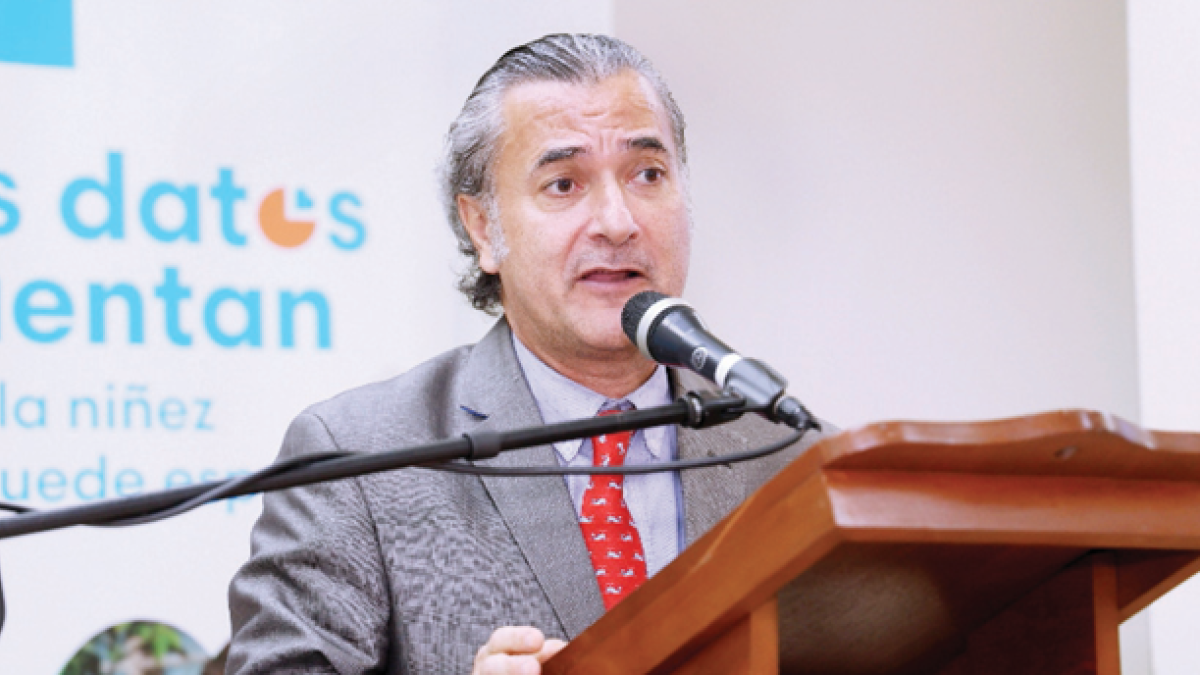
Specialists in economics, social development and public policies assured that the sustainable future of the Dominican Republic depends on placing children and adolescents at the center of macroeconomic decisions. This population represents 32% of the national population.
A note explains that the statement arose during the panel “Analysis of Emerging Economic Trends for Children and Adolescents,” organized by the United Nations Children’s Fund (Unicef) in coordination with the Pontifical Catholic University Mother and Teacher (PUCMM).
“The economic decisions made today will define the opportunities or limitations that millions of children and adolescents will face in the future. It is not just about growing, but about how that growth translates into well-being, protection and rights,” said Carlos Correa Cordón, UNICEF representative in the country.
The text states that the meeting brought together academics, authorities and specialists to analyze how economic transformations marked by digitalization, automation, deglobalization, high debt, the green transition and fiscal restrictions directly impact the well-being and rights of children and adolescents.

Carrera defined the relationship between economy and childhood as “a virtuous circle,” in which the protection and development of children strengthens society and, in turn, a stronger economy generates greater resources to invest in them.
“If we really want to transform the country, we have to invest now. We cannot waste this moment,” he emphasized.
For his part, Nelson David Chávez, director of Development and Sectoral Planning of the Ministry of Economy, highlighted that the country is going through a significant demographic change that forces us to rethink public planning with an age and territorial focus.
National planning 2025 to 2028 articulates prioritized goals that directly impact children and adolescents. There are about 200 public institutions, some of which serve this age group.