Madrid/Confusion reigns in the comments of readers of Cubadebate given the brief news published on Monday about the effects for the Island of the order of the US president that puts an end to some tariffs that he himself imposed, illegally according to the Supreme Court. Among them is the one that affected the countries that deliver oil to Cuba.
“In exchange for what? Incomplete news, and even more so now when everywhere there is talk of talks between Cuba and the United States,” one reader reacted. Even less aware was the one who tried to answer his doubts: “In exchange for what? In exchange for nothing. We do not negotiate with anyone, much less under pressure. We do not like to be threatened. Trump’s pretensions have collided with the dignity of a people who prefer zero option, as if we had to return to the caves. We did not give him anything he asked for and he had to back down. Between the pressure from Russia and China and the demonstrations of preparedness for defense, he has had no other options,” He commented emboldened and ill-informed, until a majority had to shed light on the matter.
“Yes, that rate was lifted based on the executive order, therefore it cannot be invoked to claim anything from anyone. But the order itself remains and could be the basis for new inventions. For the moment, a break,” explained another, slightly more oriented user.
“Yes, that rate was lifted based on the executive order, therefore it cannot be invoked to claim anything from anyone. But the order itself remains and could be the basis for new inventions.”
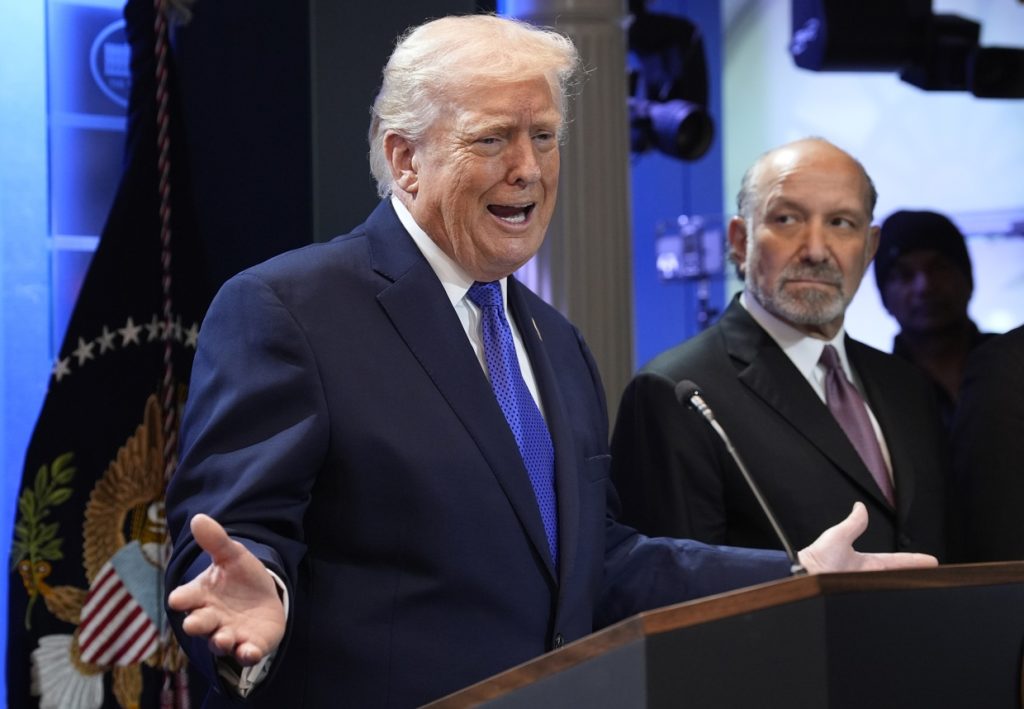
The Supreme Court’s decision, which was announced last Friday, specified that Trump could not rely on the International Emergency Economic Powers Act (Ieepa) to impose the tariffs announced in April 2025 on almost all countries in the world. The High Court, with a conservative majority, rejected by six votes to three, the Government’s theory, which stated that the president can unilaterally impose unlimited tariffs and that he is not subject to the procedural limitations of other tariff laws.
The White House, the ruling determined, must “add clear authorization from Congress” to justify its extraordinary attribution of the power to impose tariffs. “We claim only, as appropriate, the limited role assigned to us by Article III of the Constitution. In compliance with said role, we maintain that Ieepa does not authorize the president to impose tariffs,” he concludes.
Even though a dozen states and a multitude of companies had challenged these tariffs and a court had already ruled in the same direction as the Supreme Court this Friday, Trump resorted to exactly the same questioned mechanism to threaten countries that sent oil to Cuba. However, the order was also supported by two other pieces of legislation, the National Emergencies Act (NEA) and section 301 of title 3 of the United States Code.
In the new executive order that the Administration has had to issue to adapt to the ruling, it is declared that “it will no longer be in force and, as soon as possible, the additional duties will no longer be collected ad valorem taxes in accordance with the Ieepa in a series of orders cited below, among which is 14380, applicable to fuel suppliers to Cuba.
However, the text also reads: “All other actions, including any other actions taken to address national emergencies declared or described” in the same executive orders indicated “that do not impose tariffs ad valorem under the Ieepa or involve the necessary steps to implement the imposition of tariffs ad valorem additional provisions by Ieepa will not be affected by this order.” Likewise, it indicates that “the national emergencies declared or described (in those orders) remain in force and will not be affected by this order.” In both relationships it appears cited 14380, relating to Cuba.
The text makes it clear that any other formula can be invoked to continue cutting off oil shipments, although it remains up in the air when and how it will be done and even if it will be done, although it seems obvious to believe so.
The text makes it clear that any other formula can be invoked to continue cutting off oil shipments, although it remains up in the air when and how it will be done and even if it will be done, although it seems obvious to believe that it will.
As soon as the Supreme Court’s decision was known, Trump already announced that he would apply tariffs of 10% to all countries, this time protected by another law. Just a day later he stated that the would rise to 15%since it had “powerful alternatives.” This penalty has come into force today, finally with the lowest rate (10%), protected by section 122 of the Trade Law of 1974, which allows imposition by presidential mandate for 1,550 days – initially on July 23 – extendable by Congress.
The White House has announced that agricultural products, beef, tomatoes, medications, critical minerals and coin metals, certain energy and aerospace products, donations and luggage are exempt. Neither do the sectors that were already taxed previously – outside the Ieepa –, so that 50% of steel, aluminum and their derivatives remain in force, in addition to those included in the T-MEC treaty with Canada and Mexico, among others.
It has not yet been announced specifically what will be done to prevent the shipment of fuel to the Island, but the United States has made clear that its naval force will continue to prevent the arrival of oil tankers, as has just happened with the Ocean Marinerwhich was intercepted on February 10 when it tried to divert a cargo of fuel oil officially destined for the Dominican Republic to Cuba.
In any case, pointed out another reader of Cubadebate “The real question is: Is there money to buy oil? They can remove the measure, but if there is no money it is as if it is still there.”