He oil fence imposed by the US Government on Cuba has begun to have an unexpected consequence: the slowdown of United Nations humanitarian aid plans for the victims of the devastating Hurricane Melissa.
Officials of the international organization warned that the lack of fuel compromises its response capacity and puts the most vulnerable sectors of the population at risk, according to press reports.
Melissa, considered the most powerful cyclone in the Atlantic in 2025 and one of the three most intense since records began, hit eastern Cuba hard at the end of October with a dramatic toll: more than two million people affected, more than 90,000 homes damaged, schools and hospitals destroyed, in addition to significant losses in crops and infrastructure.
The magnitude of the disaster led the UN to launch a $74.2 million Action Plan in November to care for the victims and support recovery, especially in food production.
So far 23.67 million have been raised thanks to donors such as Canada, Italy, the United Kingdom and Japan, as well as agencies from the United Nations system itself. However, much of this aid remains blocked in warehouses or unable to reach communities due to fuel shortages, say representatives of the global organization.
The UN seeks to reinforce humanitarian aid to Cuba due to the lack of fuel
“Complex situation,” says Pichón
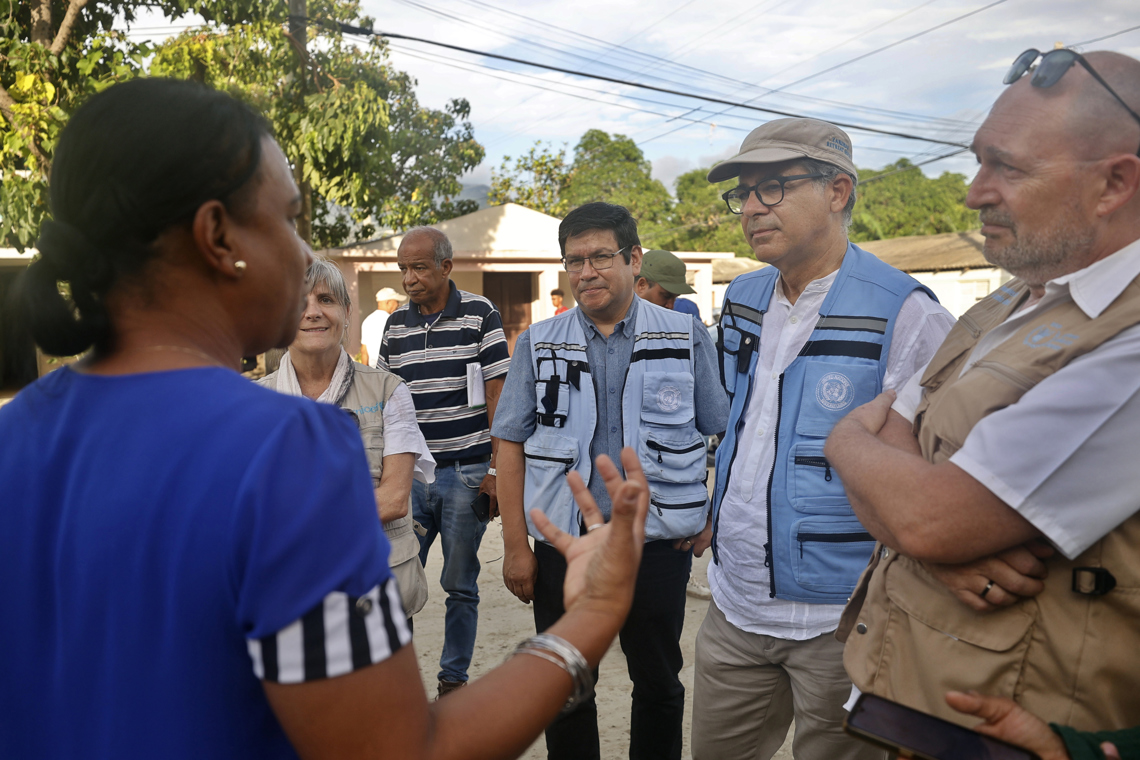
In an interview with the US agency AP In Havana, the UN resident coordinator in Cuba, Francisco Pichón, described the situation as “complex” and stressed that access to fuel is urgent to protect the most vulnerable population.
“What we observe is that these consecutive shocks—the passage of three hurricanes in two years and especially Melissa—in a country with economic challenges and now under an energy siege, decrease resilience and increase vulnerability,” explained the international official.
The crisis that has been hitting Cubans for years worsened last January, first with the US attack on Venezuela and the suspension of oil shipments from that country, and then with the signing by Donald Trump of an executive order that threatened to impose tariffs on countries that supplied oil to Cuba.
The measure, the harshest so far, sought to isolate the island energetically and force a change of government. Although these tariffs were suspended this Monday as a result of a Supreme Court decision, the oil siege on Havana is maintained through other sanctions and diplomatic pressure, according to analysts and representatives of the US Government itself.
Trump suspends tariffs against oil suppliers to Cuba: does the energy fence remain?
Last minute effects and initiatives
The lack of fuel affects the entire logistics chain of international aid in Cuba. According to Pichón, visits to communities to supervise deliveries were reduced, freight costs became more expensive and the availability of flights to transport cargo decreased.
For her part, the head of the UN Population Fund Office (UNFPA) in Cuba, Marisol Alfonso de Armas, warned that some 200,000 people – mostly women – will be affected by the slowdown of projects that include medical supplies such as syringes, condoms, contraceptives, medicines and equipment.
“Some of these supplies are already in warehouses and we have not been able to transport them,” lamented the UNFPA executive in Havana.
Faced with Washington’s oil siege, the UN is evaluating the possibility of bringing fuel directly for its operations in Cuba, through diplomatic negotiations. Pichón recalled that agencies such as the World Food Program have experience in providing fuel in crisis areas.
The Cuban Government, for its part, announced the authorization of small and medium-sized private companies—legalized at the beginning of this decade—to import oilan activity until now reserved for the State. Although the measure seeks to alleviate the shortage, its scope is still uncertain and can only be carried out through state companies.
An economy hit by multiple crises
The oil siege adds to a series of difficulties that Cuba has been facing since the beginning of the decade: the COVID-19 pandemic, a financial reform that triggered inflation and a previous increase in US sanctions.
Furthermore, the loss of Venezuela as a key ally in energy supplies, following Washington’s offensive against the government of Nicolás Maduro, left the island even more exposed to strategic vulnerability.
In recent weeks, the streets of Havana and other cities in the country have been emptying. Fuel for vehicles is only sold in dollars and rationed, working hours were reduced, public transportation was even more limited than it already was, while cultural and sporting events have been suspended.
Furthermore, several airlines canceled their flights to Cuba or cut frequencies, which affects not only tourism but also the arrival of humanitarian shipments.
The combination of natural disasters and sanctions has placed Cuba in a critical situation. The slowdown in humanitarian aid not only delays the recovery of communities affected by Melissa, but also increases the social and economic fragility of the country.
“Evidently there will be significant delays in the implementation of the Action Plan and in the moment when the goods reach the hands of the beneficiaries,” Pichón acknowledged.