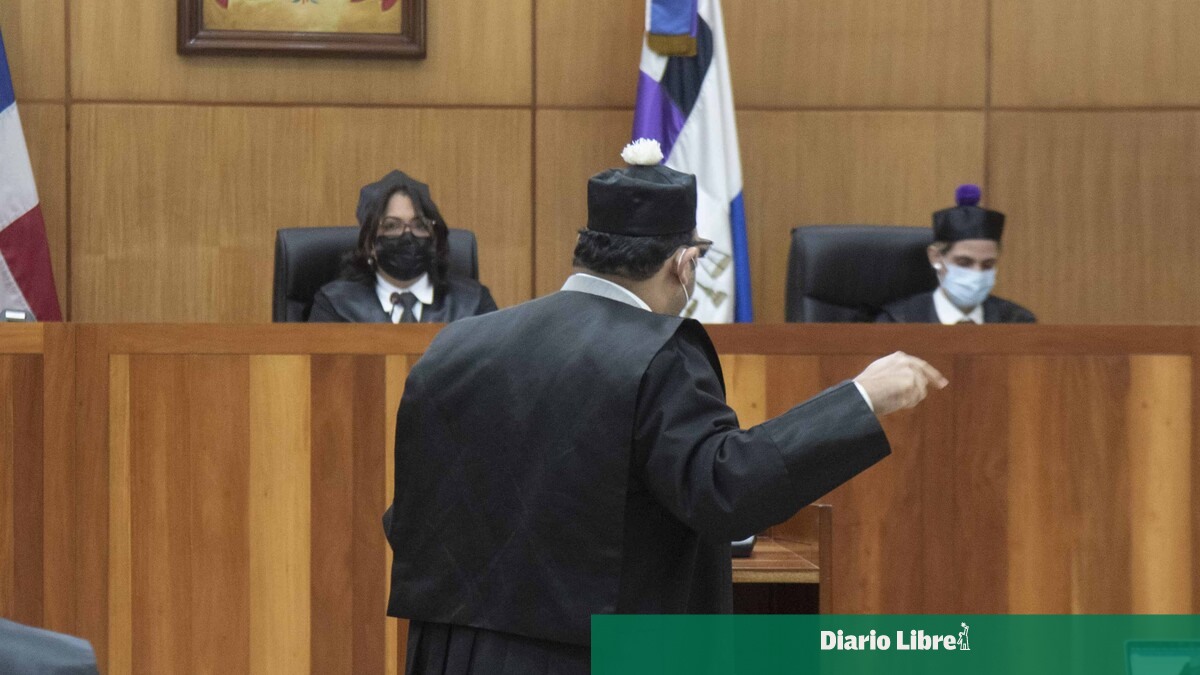
The ruling TC/0054/26which confirmed the acquittal of the only accused by the Odebrecht scandaltip a blow to the Public Ministry and contains important implications for the rule of law and the application of justice in the Dominican Republic.
He Constitutional Court rejected the appeal for review filed by the PEPCA against the decision of the Supreme Court of Justice (SCJ) in the Odebrecht casethus consolidating the acquittals issued in favor of several defendants and setting clear limits on the power of prosecution.
The ruling, adopted on February 19, 2026, supports the actions of the Second Room of the Supreme Courtwhich had confirmed the release of Conrado Enrique Pittaluga and issued acquittal for Víctor Díaz Rúa and Ángel Rondón, considering the evidence presented by the prosecuting body insufficient.
He Constitutional Court made it clear that the constitutional review of jurisdictional decisions does not convert the TC into a new instance to reexamine facts or to reevaluate evidence. Its function, he specified, is to verify that the due processthe effective judicial protection and reasonable motivation for decisions.
With this, the TC rejected the arguments of the Public Ministrywhich alleged contradiction of motiveserroneous evaluation of evidence and violation of the principle of equality.
Presumption of innocence intact
One of the neuralgic points of the ruling is the reaffirmation of the test standard “beyond reasonable doubt“. The Court held that the evidence provided did not destroy the presumption of innocence of the accused.
In the case of Pittaluga, it was assessed that there were formal contracts consultancy linked to the project Coral Highway and that it was not demonstrated that the payments received constituted bribes or that they had been channeled to public officials.
The TC supported the conclusion of the Supreme Court: one is not enough general narrative about corruption schemes; is required concrete proof and individualized that proves the illegality.
Although the continuity of the State is repeated, the decision of the TC affects cessations formulated by the attorney general’s office under Jean Alain Rodrígueztoday under trial for corruption. But he appeal and the action before the TC was led by the current prosecutors, Wilson Manuel Camacho Peraltadeputy attorney at the Attorney General’s Office of the Republic; Mirna Ortiz Fernández, attorney general of the court of appeal; José Miguel Marmolejos and Wagner V. Cubilete García, tax attorneys
Equality is not uniformity
He Public Ministry maintained that there was unequal treatment because, with similar testssome defendants were convicted in previous instances and others acquitted. He Constitutional Court responded that the procedural equality implies equality of arms and opportunitiesnot automatic identity of results.
Each defendant, he indicated, must be evaluated in accordance with the specific test that links it to the facts.
The ruling also delimits the scope of the appeal. He remembered that it is not a new trial nor does it allow the introduction of facts other than those already established by the court of appeal. Consequently, the Supreme Court acted within its powers in deciding on the basis of the established facts.
Beyond the specific case, TC/0054/26 sends a institutional message forceful: the fight against corruption cannot be developed outside of the constitutional guarantees.
The ruling reinforces the idea that the Public Ministry must structure investigations with sufficient technical rigor to overcome the constitutional standard test. The seriousness of the crimes charged does not make the evidentiary requirement more flexible or weaken the presumption of innocenceaccording to the TC.
In terms of rule of lawthe decision consolidates the role of Constitutional Court as guarantor of the process rules and not as a court of political opportunity.
He Odebrecht caseone of the most relevant criminal proceedings in recent decades in the country, thus culminates with a sentence that reaffirms that the dominican criminal justice remains tied to the principles of due process.
In the reaffirmation of rule of lawthe decision indicates that without robust test and directly binding, there is no possible sentenceand without strict respect for the guarantees, there is no institutional legitimacy.