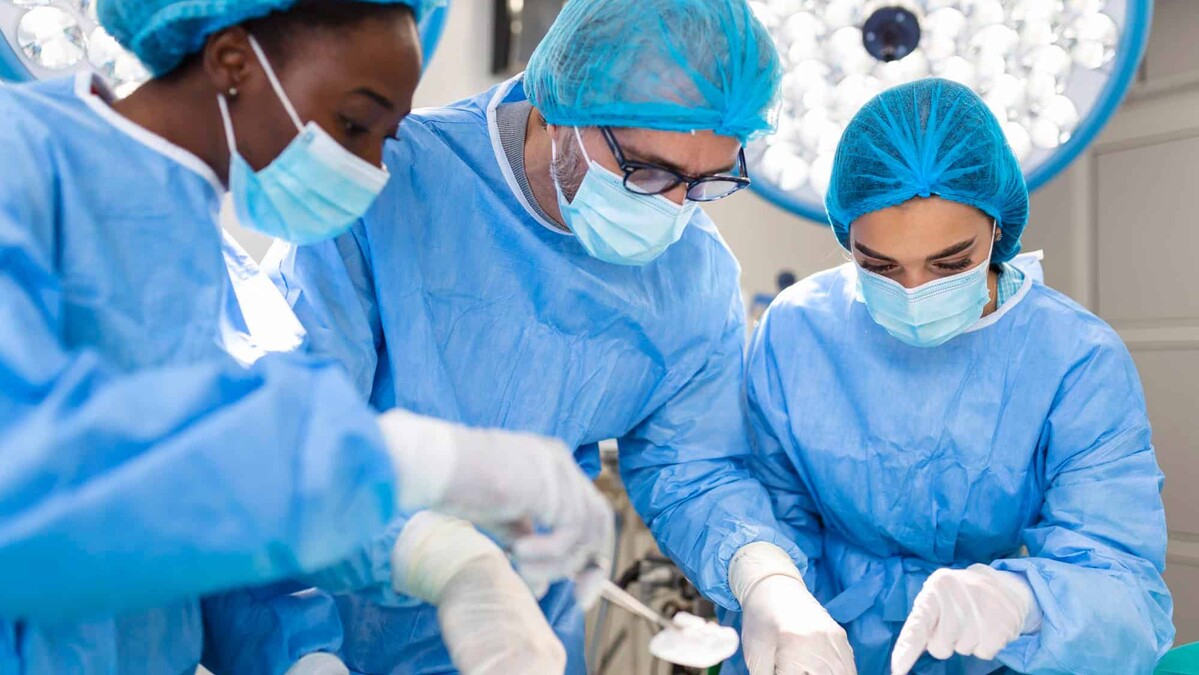
The brain surgery with awake patientalso known as awake surgery or craniotomy in a conscious state, is a highly complex neurosurgical procedure that allows brain injuries to be operated on while the patient remains awake and collaborating with the patient. medical equipment.
He Dr. Issael Ramírez, neurosurgeon oncologistwho has participated in more than 100 procedures of this type and explained that, although the technique is not new in the country since it has been practiced for almost a decade, the technological advances They allow it to get closer and closer to the population.
“It is a surgery technically very complex, but, at the same time, one of those best results they have,” he commented.
Why is it done with the awake patient?
The specialist explained that this type of intervention is used when the tumors (gliomas) are located in highly sensitive areas of the brain, close to areas that control vital functions like speech and movement.
During the operation, the patient remains fully conscious and in constant conversation with the medical equipment. It is only used local anesthesia in it scalp.
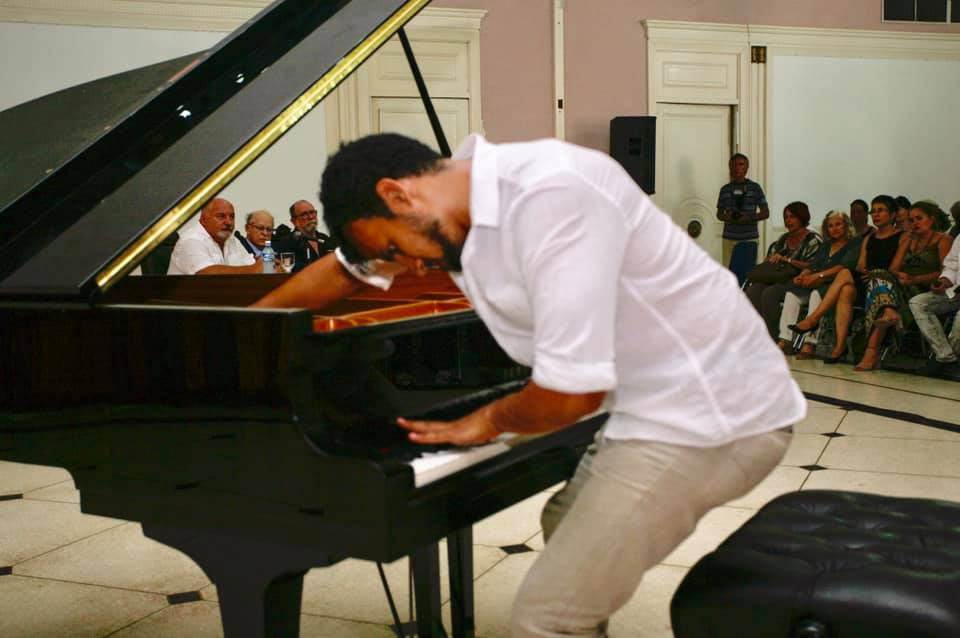
“The patient is completely awake, talking, you ask him about his life, about his family, you make him do things, count backwards, you make him identify images, sing, play an instrument (if he plays it), so that, if you play a sensitive area of the brain, the patient notices it, perhaps saying if he cannot speak well or if he feels weakness, for example, in one hand,” he described.
“It allows one to evaluate live and avoid any damage,” he said.
As the surgeon advances in removing the tumor, he stimulates different areas of the brain with small electric currents to identify the proximity to those critical functional zones.
“I can stimulate and know if I am one millimeter, five or ten millimeters away from a sensitive area“he noted.
How is the tumor removed?
Ramírez, who for ten years trained in Israel and Australiaexplained that the incision depends on the type of tumor, although it is not usually excessively large. The time of the surgery It will depend on the size of the glioma.
The tumor is removed by aspiration and progressive coagulation. “You aspirate the tumor, you coagulate it several times using aspirationcoagulation, one is removing the tumor and at the same time when removing the tumor, one is electrifying with small current strokes below milliamps.”
- He also highlighted that the brain does not have pain receptors. “The good part is that the brain doesn’t hurt“he exclaimed.”
The neurosurgeon assured that by avoiding general anesthesia multiple benefits are obtained.
“First, the long-term outcome is much better because you can remove more tumor. The more tumor you remove, the better the patient does,” he said.
- He also noted that the hospitalization time is shorter
- Risks of neurological deficits are reduced
A recent case in the country

Ramírez led the team made up of doctors Aniel Gómez, 32, and Francisco Estrella, 36, who intervened on February 11, in the Garden View Medical Centerto a 60-year-old patient who was not a candidate for general anesthesia due to a heart condition.
In this context, the technique with awake patient It became the safest option. “In this case that surgery It turned out wonderfully because surgery reduced her risk of any heart problems, she became a surgery super safe for him,” he said.
The tumor compromised the area that controls the right side of the body. “One live, one protected that area so he can move his body, so he can walk, so he can play,” he explained.
He patient He has already been discharged. “He’s been at home at home for a while,” he confirmed.
In the DR for 14 months
After his training abroad, Ramírez returned to the country approximately 14 months ago with the aim of contributing his knowledge.
“The reason why I returned to the country after a decade was because, I like to help people, I like to offer them all these things,” he added.
Lack of data and need for guidance
Regarding the incidence of brain tumors in the country, he indicated that there are no consolidated statistics. “In the country we do not have much data on the incidence of brain tumors, it is something we are working on.”
However, he warned that 20% to 30% of patients with cancer in other parts of the body may develop brain metastasesand that the general incidence “It easily exceeds 5%.”
Finally, he sent a clear message: “There is neurology in the country, we are here and there are techniques that one can use to help them have the best resultsuch as this one from awake patient. And it doesn’t have to be with me… What I want is for the patient to do well and for the procedure to be performed.”
Ramírez said they are working on collecting documentation to send to the Health Risk Administrators (ARS) in order that this surgery have medical insurance coverage.