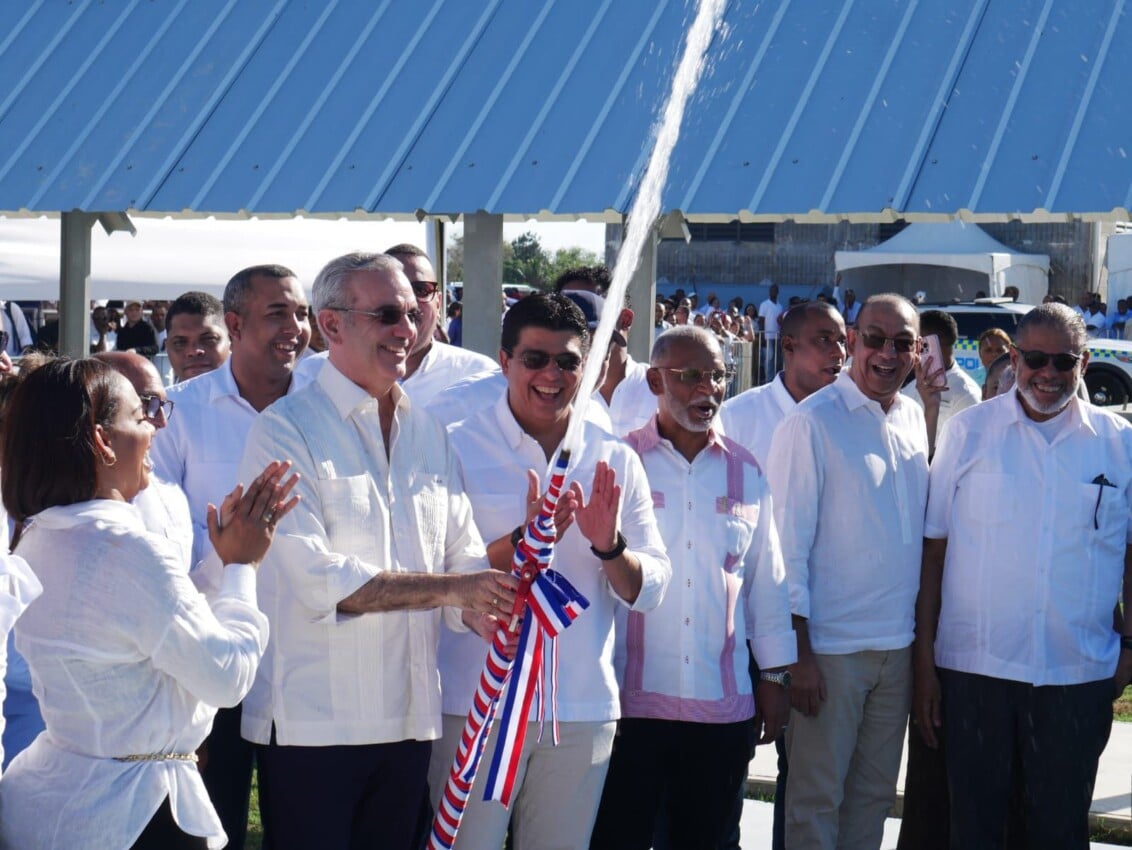
Santo Domingo Este. — The commissioning of the Expansion of the Eastern Aqueduct Salinity Barrier marks a strategic step in the consolidation of the water security of Greater Santo Domingo, by guaranteeing greater availability, pressure and continuity of drinking water for about two million inhabitants of Santo Domingo Este and Santo Domingo Norte.
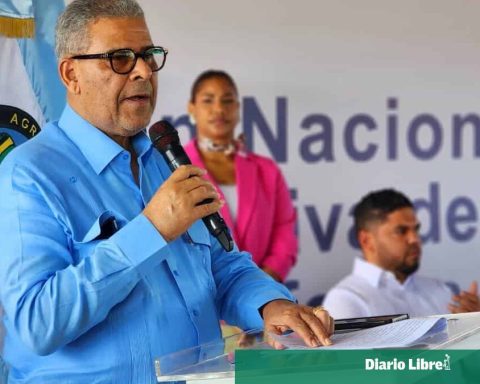
The project was inaugurated by President Luis Abinader together with the director of the Santo Domingo Aqueduct and Sewer Corporation (CAASD), Fellito Suberví, who highlighted the structural impact of this infrastructure on urban development and the quality of life of the population.
Suberví defined the work as a turning point for the national water system.
“Today the Dominican Republic takes a decisive step towards its water security. We demonstrate that development is not improvised or announced: it is planned, built and fulfilled, which is why we put into operation the largest pumped aqueduct in the country. A work that transforms the present and strengthens the future of Greater Santo Domingo,” said Fellito Suberví.
You can read: Everything ready to inaugurate Metro line 2C: free service until Easter
A key infrastructure for urban growth
The expansion of the aqueduct will allow the production 136.9 million gallons per day of drinking water, strengthening the supply in areas with high population density and urban expansion.
The work was carried out in two phases: a first recovery stage that allowed the restoration 45 million gallons per dayfollowed by an extension that added other 45 millionsignificantly increasing the capacity of the system. Furthermore, consider the transfer of 22.8 million gallons per day to Santo Domingo Nortereinforcing regional coverage.
With a total investment of US$142 millionthe project included the construction of a new pumping station, four large-capacity regulator tanks and the installation of more than 52 kilometers of large diameter networksreplacing obsolete infrastructure.
Water security for the coming decades
The authorities stressed that the intervention not only improves immediate supply, but also strengthens the water resilience of Greater Santo Domingo in the face of demographic growth and climate challenges.
Suberví explained that the system will allow increasing the pressure, consistency and production of drinking waterconditions that historically were difficult to achieve. The work, he said, represents a milestone for the CAASD and a decisive advance in the modernization of the national water infrastructure.
Recovery and modernization of a vital system
The Salinity Barrier system was inaugurated in 2004 to capture water from the Ozama River and prevent marine intrusion. Over time, lack of maintenance reduced its capacity to less than half.
In 2022, its comprehensive intervention began, recovering the original four cubic meters per second and raising total production to six cubic meters per secondensuring supply for the coming decades.
With this work, the Government reinforces its commitment to guarantee Continuous and quality drinking wateran essential service for the social well-being, economic development and urban sustainability of the country.