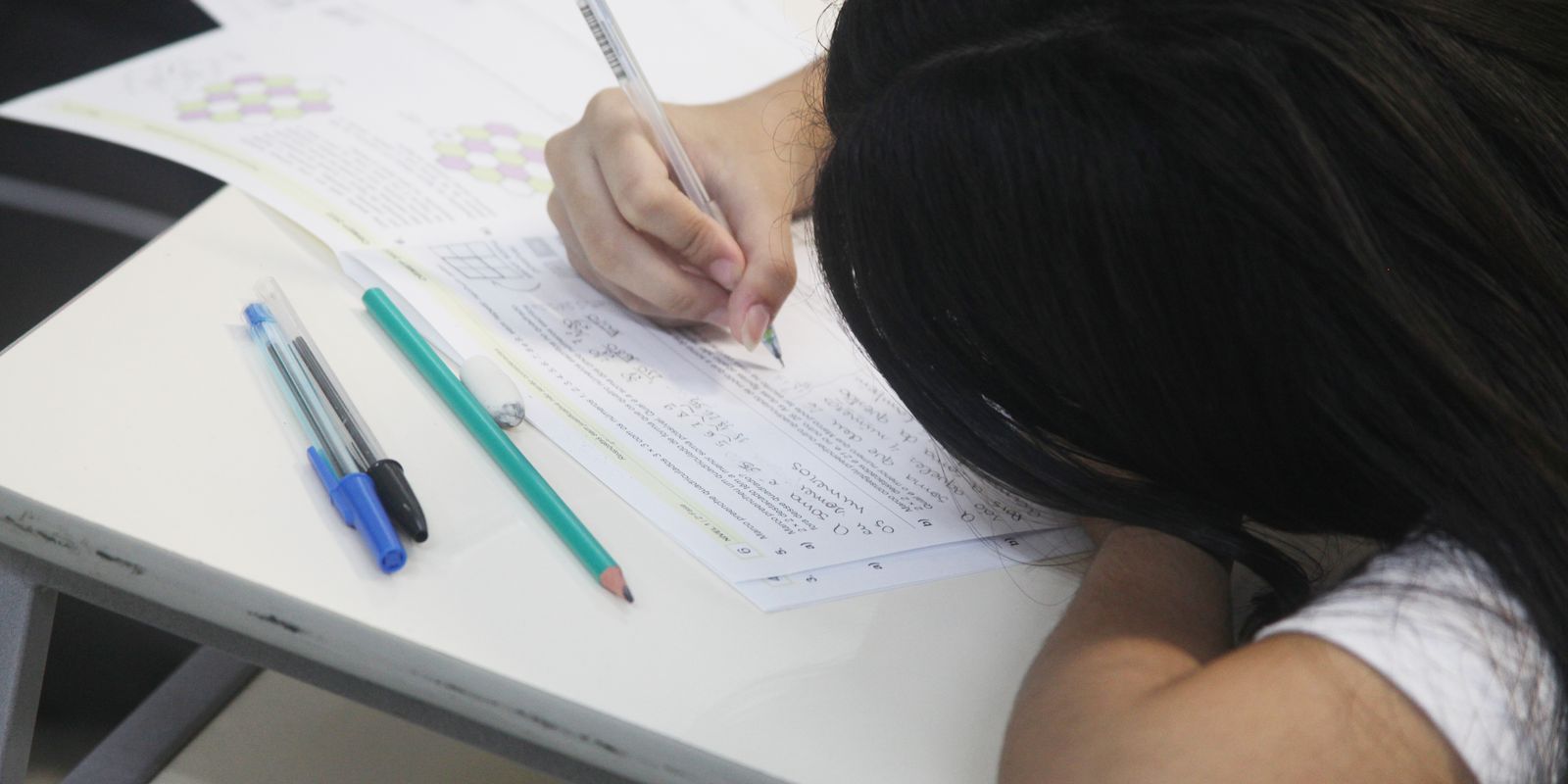
Basic education schools across the country, public and private, can now declare the second stage of the 2025 School Census, which addresses the situation of students during the first stage of research collection.
At this stage, the National Institute of Educational Studies and Research Anísio Teixeira (Inep) incorporates the performance information, whether approved or failed, of each enrolled and previously declared student and the possible movement of students such as transfer, abandonment or death at the end of the 2025 academic year.
Managers of basic education schools must complete the declaration using the Educacenso System until March 30th.
School Census
Inep explains that the School Census is the main statistical survey of basic education. And the Student Status Declaration stage is considered essential for calculating educational indicators, such as performance and school dropout rates.
The federal government also uses the data to calculate the Basic Education Development Index (Ideb), together with performance in the National Basic Education Assessment System (Saeb).
Inep warns that possible inconsistencies in information on student performance (pass and fail) and movement (transfer and abandonment) could compromise the result and distort the reality of the institution and the education network.
Documentation
The information declared in the Student Status must be based on existing documentation at the school, such as class diaries, attendance records, enrollment forms, transfer records, school transcripts, among others, thus ensuring maximum reliability when completing the School Census.
Documentation can be requested at any time by the Ministry of Education (MEC), Inep, the Public Ministry and/or control, monitoring and inspection bodies.
The inclusion of inadequate information, if proven omission or commission, intent or guilt, is subject to administrative, civil and criminal proceedings, warns Inep.
Schools that began activities after the reference date of the School Census – new schools or schools that were closed and returned to operation – must, if any, admit students declared in other units in the first stage, but who later enrolled in the new unit.
Schedule for the second stage of the 2025 School Census:
- collection: February 19th to March 30th;
- provision of preliminary reports: March 31, 2026; and
- rectification: March 31st to April 14th.
Inep makes material available on its website with instructions for filling out the declaration to the School Census. The document Notebook of concepts and guidelines for the 2nd stage of the 2025 School Census | Student status is accessible on Inep website.
Basic education
Basic education in Brazil is regulated by the National Education Guidelines and Bases Law (LDB). This first educational stage aims at the citizenship training of Brazilian individuals and comprises three sequential and mandatory stages, from 4 to 17 years of age:
- early childhood education: daycare centers and preschool, for children aged 0 to 5 years and 11 months, being mandatory for those aged 4 and 5;
- elementary education I and II: duration of nine years, with students aged 6 to 14;
- regular secondary education: minimum duration of three years, with students aged 15 to 17.
There are also students studying EJA and technical-professional education courses.
School Census
Annually, the Basic Education School Census is coordinated by Inep and carried out in collaboration between state and municipal Education departments, with the participation of all public and private schools in the country.
The survey covers the different stages and modalities of basic education: regular education, Youth and Adult Education (EJA); Professional and Technological Education (EPT); and inclusive special education, aimed at students with disabilities, autistic students and those with high abilities or giftedness.