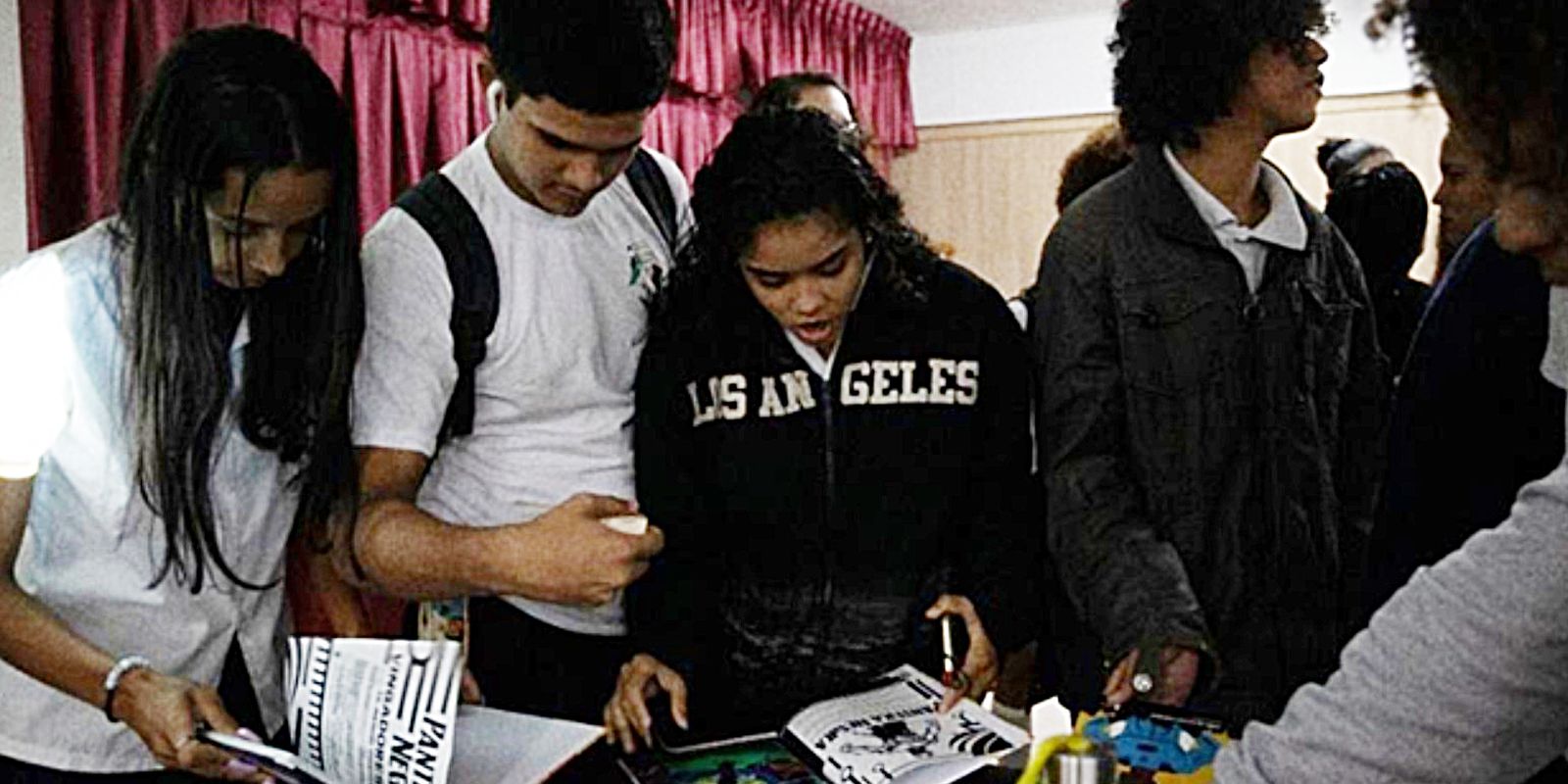
A fan of comic books (comics) since childhood, doctoral student and professor Fernanda Pereira da Silva, from the Postgraduate Program in Media and Daily Life at Universidade Federal Fluminense (UFF), developed a study that confirms how graphic novels they can provoke reflections on ethnic-racial issues in the training of future Normal Course teachers, strengthening anti-racist education. 
To the graphic novels They are comics with complete stories, images and longer texts.
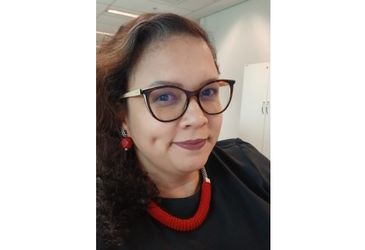
PhD student Fernanda Pereira da Silva believes that comics have the power to attract people to this discussion Photo: Disclosure/Personal archive
Until her master’s degree on ethnic-racial relations, based on black comic book heroes, Fernanda had not stopped to talk about racism.
“I felt ignorant, because I had never stopped to address racial issues. It’s an issue for everyone, regardless of the color of their skin,” Fernanda (19) told Brazil Agency.
Therefore, she believes that comics have the power to attract people to this discussion.
In 2018, at the end of the master’s degree, when the federal government launched comics with the black heroes Carolina, Cumbe and Angola Janga in the National Book and Teaching Material Program (PNLD), she decided that she would dedicate herself, during her doctorate, to researching how graphic novels could contribute to the racial debate in the initial training of elementary school teachers.
“I saw the importance of working on this in initial training so that these teachers are encouraged to continue the anti-racist debate in their later training. Hence my interest in including comics to bring the anti-racist discussion into the classroom.”
Fernanda’s doctoral thesis is titled Daily life, school and Graphic novel: The role of the media in strengthening Education for Ethnic-Racial Relations and was guided by the professor at the Faculty of Education at UFF, Walcéa Barreto Alves.
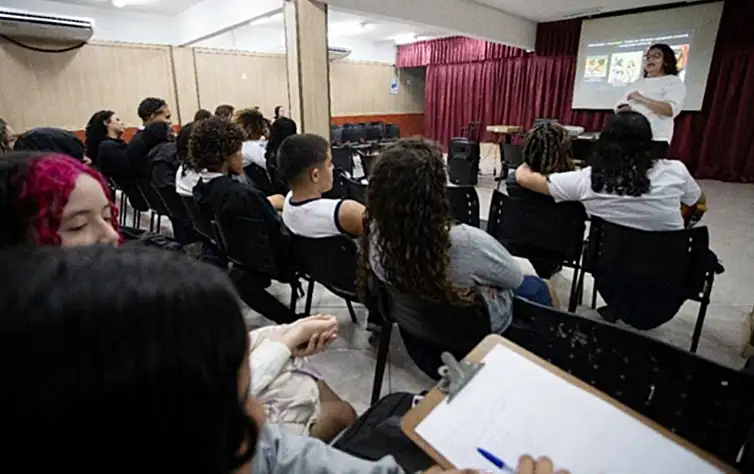
Doctoral student Fernanda Pereira da Silva interacting with students. Photo: Jean Barreto/ Disclosure
On the field
Fernanda carried out fieldwork at Colégio Estadual Júlia Kubitschek with second-year high school students, the vast majority of whom (95%) were black. What she found was that schools only address the topic of racism in November, Black Consciousness Month, but fail to talk about the subject for the rest of the year, while students experience situations of racism and discrimination on a daily basis, as reported. There is also no school planning to talk about the issue of racism.
Another finding is that Law 10,639/2003, which makes the teaching of Afro-Brazilian and African history and culture mandatory in public and private primary and secondary education establishments, is not complied with in 71% of Brazilian municipalities, according to research by Geledés Instituto da Mulher Negra and Instituto Alana. One of the arguments for not applying the law is that teachers consider the topic controversial and difficult to work on. “And it’s not controversial. It’s part of our history.”
Fernanda argued that the issue of racism can be addressed in several ways.
“You can invite people to give lectures at school. And one strategy I saw is to look for other elements to work on the racial issue. So, I looked at the comics and asked: why not take the story of the writer Carolina Maria de Jesus and, through the graphic novelspresent it to the students and, telling the story of that writer, talk about anti-racist education?”, he says.
Immersion
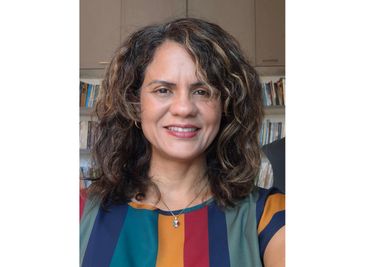
UFF professor Walcéa Barreto Alves says that the fieldwork provided an intervention. Photo: Disclosure/Personal archive
Professor Walcéa Barreto Alves, from the Faculty of Education at UFF, highlighted that Fernanda was careful to carry out fieldwork that was not just theoretical, but also carried out an interventional action. From this immersion in the field, Fernanda was able to observe the daily lives of these students, checking whether or not the school debated ethnic-racial issues for these future teachers.
“She found that there was no such debate on a daily basis and that it was reserved primarily for November, which is Black Consciousness Month,” stated Walcéa.
From the interviews and questionnaires formulated, Fernanda observed that students experience situations of racism in their individual daily lives outside of school and also within these establishments.
Fernanda’s concern was to prepare these future teachers for when they teach new generations. “Fernanda’s idea was to carry out an interventional practice, as she did with these graphic novelsfor them to have access to this material and have the possibility of using it in their teaching practice”, highlighted professor Walcéa.
The objective was to listen to those who are actually involved in this daily life, he added. Fernanda stated that this is a more attractive way to work on the theme of ethnic-racial relations, based on the story of black characters, “because it sparks several discussions”.
Walcéa drew attention to an important issue that the thesis presents, which is looking at the ethnic-racial dimension with a positive perspective and leadership of the black characters and people, who were the protagonists of the story.
“In many works, it is clear that black people are always placed in the corner; they are, at most, supporting actors. There is no leading role, especially in teaching material, that places the positive identity of the racial issue, of the black and indigenous race, of the original peoples of our country. The vision is very colonialist.” The objective is to bring this material from a decolonial perspective to the vision of the ethnic-racial debate.
Lightness
In the opinion of the UFF professor, comics are an essential tool for the debate on racism to be more amplified.
“The comics bring a lightness and, at the same time, manage to work on the theme in depth, due to the visual resources, the textual organization itself that facilitates reading by children and teenagers and, even, adults. But they also allow for some issues to be deepened, for questions to be raised that are parallel to that main story. They are certainly a very important and very valuable tool.”
Walcéa advocated that there be work to raise awareness and access to this material, because it can be used in any subject to debate, clarify and value the ethnic-racial issue inside and outside of school from the early years. She also reinforced the need to move forward and use comics in school planning, as well as in pedagogical practice.