Productions I explain it to you presented the second installment of her special report on the Hatillo dam reservoir, a journalistic investigation carried out by the journalist Nairobi Viloriacreator of the medium and native of Cotuí.
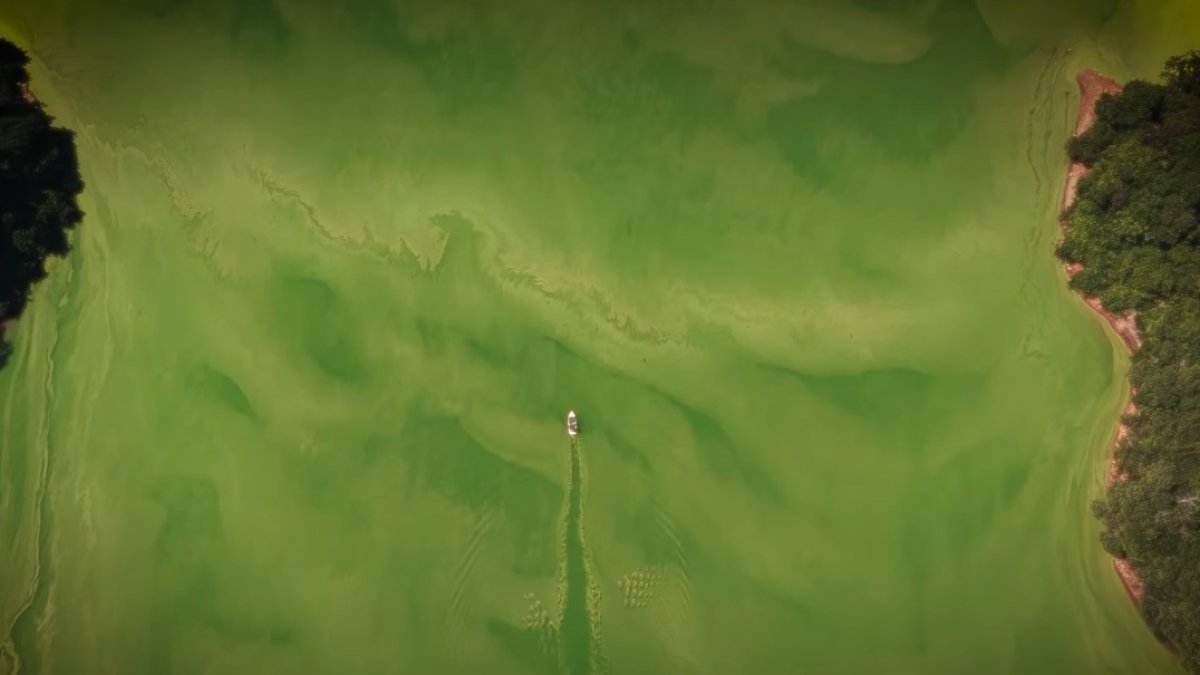
The work, disseminated through I’ll explain it to you News on YouTube, documents the results of physical analysischemical and microbiological of the reservoir water, with the aim of identifying the causes of the green coloration that has generated concern in the population and throughout the province of Sánchez Ramírez.
Main findings by IMPA
The analyzes carried out by the Institute of Microbiology and Parasitology (IMPA) of the Autonomous University of Santo Domingo reveal a worrying scenario of environmental and health contamination in the water of the Hatillo dam, in Cotuí.
The study confirms the significant presence of bacteria indicative of fecal contamination, including: total coliforms, fecal coliforms, Enterobacter sp and Klebsiella sp, as well as specific detections of Escherichia coli, which shows the contact of the reservoir with human and animal waste, possibly coming from wastewater discharges, agricultural runoff and nearby human activities.
Microscopic analyzes repeatedly identified the presence of Microcystis sp, a cyanobacteria associated with eutrophication processes and known for its ability to produce microcystins, highly dangerous toxins for human health and aquatic life. This finding scientifically explains the green color of the water observed in the reservoir.
The technical report also documents the presence of microalgae such as Desmodermus sp and Staurastrum sp, indicator species of aquatic ecosystems with excess nutrients, high organic load and ecological imbalance, which reinforces the diagnosis of progressive environmental deterioration.
Specialists warn that these conditions represent direct risks to public health, especially in a reservoir used for recreational, productive and environmental use activities, in addition to generating negative impacts on biodiversity, fishing and the balance of the aquatic ecosystem.
It recommends carrying out specific analyzes to detect and quantify microcystins, as well as permanent monitoring of physicochemical and biological parameters of the water, in order to establish prevention, control and environmental management measures that allow protecting the population and the ecosystem of the dam.
Main findings in the physicochemical study
The physicochemical study carried out by the Franja Laboratory on the surface water of the Hatillo dam detected elevated levels of heavy metals and toxic substances that exceed the maximum acceptable parameters for surface waters intended for aquatic life and environmental use.
The results reveal nickel concentrations of up to 1,613 mg/L, well above the permitted limit (0.1 mg/L), as well as the presence of total chromium, copper, manganese and cyanide, substances associated with environmental and health risks.
The report identifies high levels of total nitrogen and phosphorus, elements that favor eutrophication processes, which contribute to the proliferation of algae and the deterioration of water quality.
They warn that these contaminants represent a risk to aquatic biodiversity, public health and the ecological balance of the reservoir. The results reinforce the need for permanent monitoring, environmental intervention and control of pollution sources, as well as the implementation of urgent management and sanitation measures in the Hatillo dam basin.
Producciones Te lo Explico reported that the investigation was funded entirely by the media itself and by journalist Viloria, without sponsorship from public or private institutions, reaffirming its independent nature.
As the country’s main artificial surface water body, the Hatillo Dam fulfills key functions in hydroelectric generation, flood control, fishing, recreation and indirect water supply, so its environmental quality is essential for the ecological and productive sustainability of the region.
The media invited citizens, authorities, academics and environmental organizations to see the full report and learn about the findings of this independent journalistic investigation.
Experts and institutions consulted
Scientific institutions and specialists participated in the process, including the Dominican Society of Chemical Engineers and the Institute of Microbiology and Parasitology (IMPA) of the Autonomous University of Santo Domingo.
He IMPA-UASD carried out the sampling and microbiological analyses, while the physicochemical studies were processed by the Franja Laboratory. Among others, Dr. Modesto Cruz, director of the IMPA-UASD, and Dr. Frank Reyes, director of the Franja Laboratory, were interviewed.
Likewise, Edwing Pujols Fernández, general manager of Nextworld Technology Spain, a company contacted by the Ministry of the Environment to propose solutions to the coloration of the reservoir, and environmentalist Luis Carvajal, coordinator of the Academy of Sciences of the Dominican Republic, were interviewed.