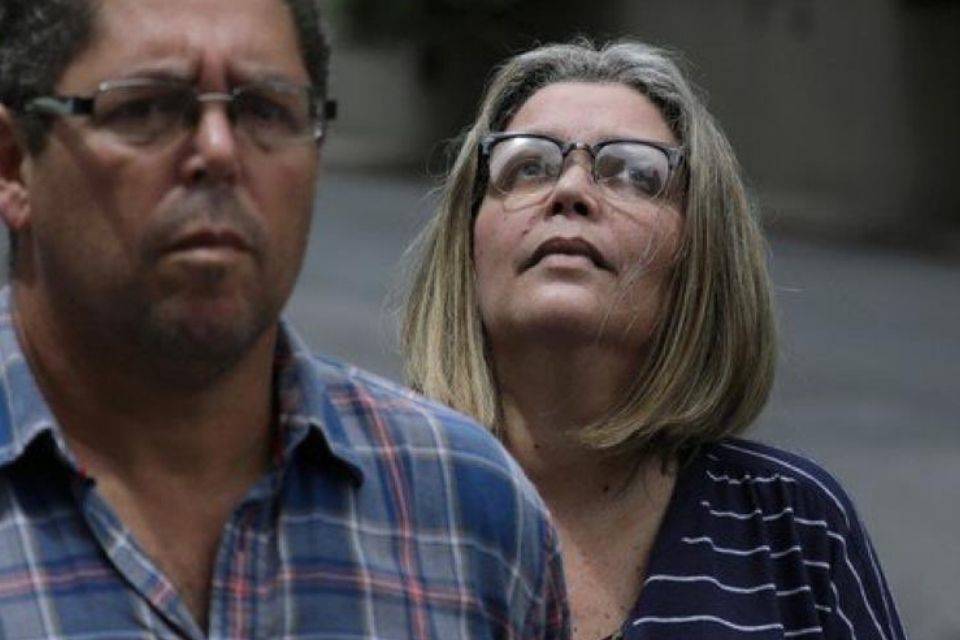
María Lourdes Afiuni was arrested in December 2009 after ordering the release of businessman Eligio Cedeño, a decision she made based on recommendations from a United Nations working group. She has remained under submission since 2011 after having been deprived of liberty since 2009.
Judge María Lourdes Afiuni, who has been under arrest since 2011 after having been deprived of liberty since 2009, was excluded from the benefits of the recently enacted Amnesty Law for Democratic Coexistence, according to her brother, Nelson Afiuni.
Through his account on the social network
“Here you can observe the legal atrocity committed against Judge María Lourdes Afiuni, convicted of spiritual corruption, without a single piece of evidence and is now excluded from the amnesty law by article 9.4 of said law,” he wrote, accompanying the publication with a document that, he claims, confirms the exclusion of the magistrate.
The Amnesty Law has led to hundreds of releases in recent days; However, the text establishes a series of exclusions that have generated controversy, especially among family members and human rights organizations that question the criteria applied.
An emblematic case
María Lourdes Afiuni was arrested in December 2009 after ordering the release of businessman Eligio Cedeño, a decision she made based on recommendations from a United Nations working group. The measure generated strong criticism from then-president Hugo Chávez, who publicly requested his arrest.
Since then, the Afiuni case has been considered emblematic by national and international human rights organizations, which have pointed to it as an example of political pressure on the Venezuelan judicial system.
Relatives of the judge have repeatedly denounced that during her detention she suffered psychological and physical torture, and have described the process as “political revenge.”
Although he is currently complying with the presentation regime, Afiuni has not obtained full freedom. His relatives hoped that his situation would be reviewed within the framework of the new legislation so that the process against him would be definitively closed.
Until now, the authorities have not commented on the exclusion of the case nor have they clarified whether it will be reviewed by the special commission in charge of evaluating situations not contemplated in the law.
Post Views: 316