Trump’s economic agenda suffers a definitive judicial impact, since the Supreme Court rules that the Emergency Powers Act (IEEPA) does not grant unlimited powers to the Executive to impose taxes
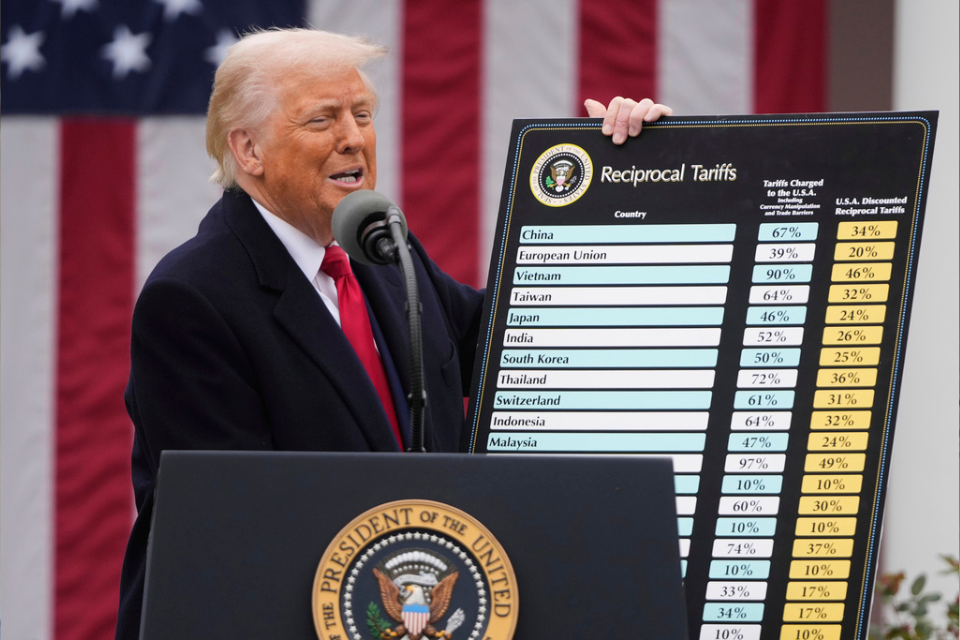
The United States Supreme Court ruled against the so-called “reciprocal” tariffs imposed indiscriminately by the Donald Trump Administration on more than a hundred countries. The 170-page resolution concludes that the Executive abused the Emergency Powers Act of 1977 (IEEPA) by using it widely to dictate trade policy.
The ruling focuses exclusively on levies approved under the 1977 Law, affecting the majority of rates directed at strategic trade partners, as well as those applied to China, Canada and Mexico. However, the Court clarified that this decision does not affect all commercial taxes, therefore, specific rates on aluminum or automobiles are left out of this ruling.
The majority opinion, signed by the president of the Supreme Court, John Roberts, achieved a coalition of six to three. On this occasion, the judges validated the arguments of the plaintiffs—led by the We Pay the Tariffs platform—who stressed that the IEEPA was created by Jimmy Carter precisely to limit the president and that its text does not even include terms such as “tariffs” or “taxes.”
*Read also:Trump announces that 50 million barrels of Venezuelan oil are on their way to Houston
Conservative Justice Brett Kavanaugh led the dissenting opinion, warning that the ruling could trigger an economic “disaster.” In his 63-page brief, Kavanaugh anticipated that the United States could be forced to refund billions of dollars to importers who have already passed those costs on to consumers.
The dimensions of this financial threat are massive: economists at Penn-Wharton Budget Model estimate that the White House faces possible refunds totaling $175 billion for items collected irregularly.
The White House had already contemplated this scenario and has confirmed that it will seek alternative legal formulas to maintain its protectionist policy. However, the ruling represents immediate relief for sectors such as textiles and technology, whose tax burden would be drastically reduced after a period in which the average tariff rate in the United States reached levels not seen since 1935.
With information from El País
*Journalism in Venezuela is carried out in a hostile environment for the press with dozens of legal instruments in place to punish the word, especially the laws “against hate”, “against fascism” and “against the blockade.” This content was written taking into consideration the threats and limits that, consequently, have been imposed on the dissemination of information from within the country.
Post Views: 390