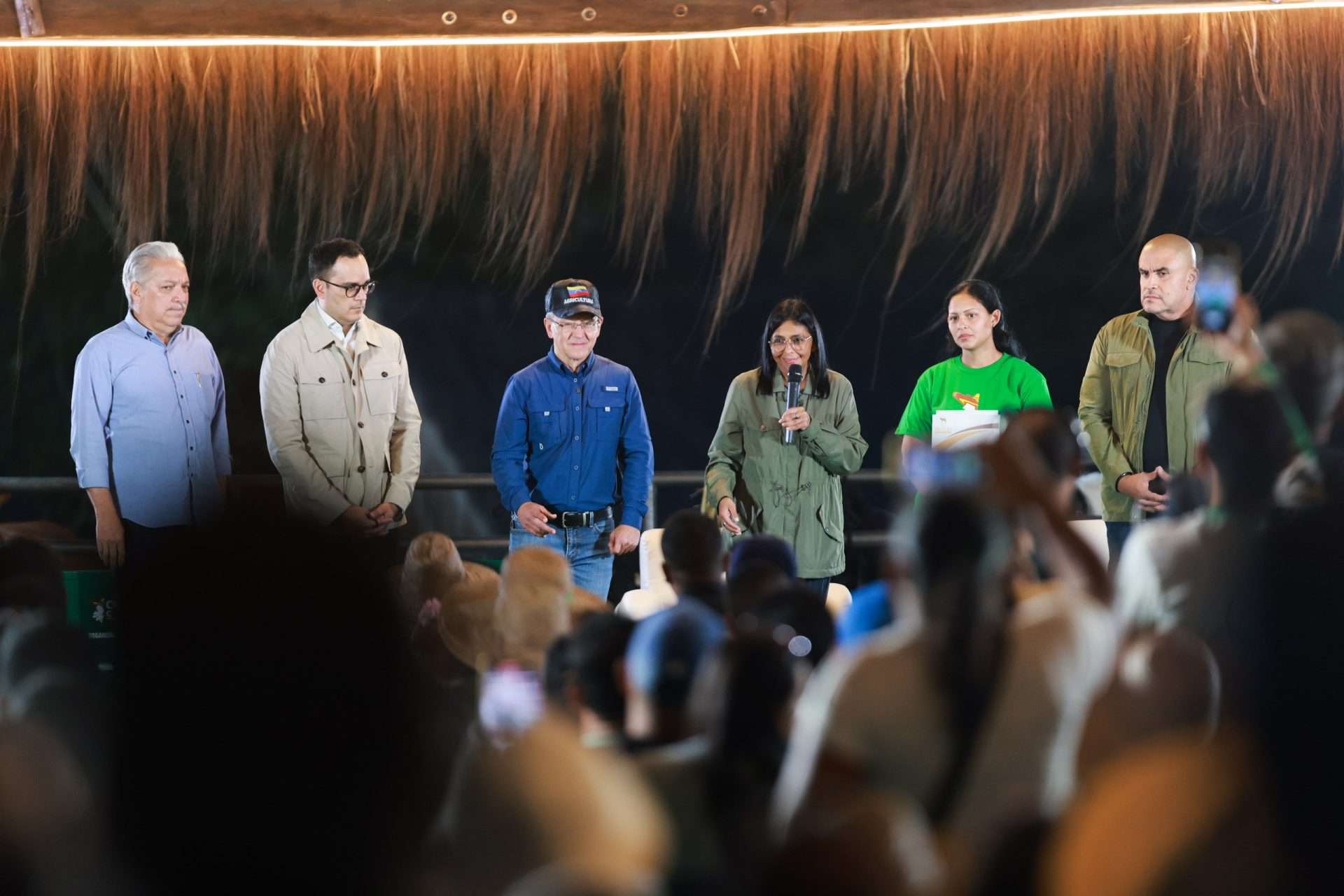
“We must break this cycle of anti-politics where hatred, extremism and fascism caused political violence, caused hate crimes, Venezuelans who were burned alive because of their skin color, because of their political thinking,” is how the president in charge of the Republic, Delcy Rodríguez, expressed it, referring to the recently promulgated Amnesty Law for Democratic Coexistence.
He highlighted that, after formally receiving the Amnesty Law by Parliament, the country enters a stage of national reunion. He highlighted the importance of the law to consolidate peace and the end of political hatred.
Likewise, he described this instrument as vital to healing the wounds of extremism and anti-politics that have generated violence from 1999 to this year, making special recognition of the detachment of the victims in the cause of peace.
«I also want from this space to give our recognition to the victims of this entire period of political violence from 1999 to the year 2025 because the victims have shown detachment to forgive, but we have to move forward, we cannot stay stuck in hatred and confrontation, we can move forward from divergence and difference; “There are divergences and differences in the national project, our project is Simón Bolívar’s project,” he added.
During an event commemorating the 167 years of the Federal War, in the Mampote sector in Guarenas, Miranda state, the president in charge urged to resolve differences based on respect. “Of course there are differences and we can resolve them, just as we have differences at the international level and we have said that we are going to resolve them with Bolivarian peace diplomacy.”
«We defend Bolívar’s project in Angostura for social justice and we also defend the cry of the Federation that was raised 167 years ago against the conservative oligarchy that wanted the monopolization of political power to also monopolize the lands (…) And there was the general of free peoples, of sovereign peoples, of free men and women. of Free Lands, Ezequiel Zamora. “There is our project,” he said.
On the other hand, Rodríguez said that Venezuela must take a new, different path for politics, “but also for economic dialogue and that is why I am pleased that from the Peasant Union we can establish an agreement with the private productive sectors for the economic advancement of our country, because economic progress will translate into happiness for our people, in having greater production of animal protein, seafood, land products and that this production is to guarantee the food of our people at an affordable price and that we can also export.”
In this sense, he highlighted the development of the engines of the economy that provide foreign currency income to Venezuela. «We are building a more democratic, more just, more free Venezuela, and it must be with the efforts of everyone (…) So the steps we are taking, we are taking them with a fundamental Bolivarian consciousness and that from Bolivarism we give a hand to those who think differently so that they understand that Bolívar’s project is a national project. “It is a project that refuses to allow Venezuela to be subjected.”
“I salute the political diversity of those whose thoughts are in defense of our sovereignty and our independence and our freedom and from there the productive sectors march together,” he concluded.