The National Confederation of Industry (CNI) reported this Friday (20) that it is following with “attention and caution” the developments related to the United States Supreme Court’s decision to drop tariffs on imported products that had been imposed globally by President Donald Trump.
According to the entity, a survey based on 2024 data from the United States International Trade Commission (USITC) showed that the suspension of additional tariffs of 10% and 40% that had been imposed by the Trump government on Brazilian products would cause an impact of US$21.6 billion on exports to the United States.
“We follow today’s decision with attention and caution. The impact of a measure like this on Brazilian trade is significant, given the relevant commercial partnership between Brazil and the United States”, said Ricardo Alban, president of the CNI, in a statement.
According to the CNI, the Supreme Court’s decision specifically overturns the tariffs that were imposed based on the International Emergency Economic Powers Act (Ieepa), that is, other tariffs that were adopted based on different legal instruments still remain in force, especially those in section 232 of the Trade Expansion Act, which are related to national security reasons, such as steel and aluminum.
Fees applied to “practices considered unfair” must also remain in force, which, according to the CNI, could result in new measures from the United States on Brazilian trade.
Coffee
One of the sectors that had been heavily impacted by taxation, the coffee industry, celebrated the United States Supreme Court’s decision.
“The Brazilian Coffee Industry Association (Abic) expresses its position in favor of the decision of the Supreme Court of the United States, which reinforces legal certainty and respect for legal competences in international commercial relations”, said this Friday Pavel Cardoso, president of Abic.
In January of this year, Cardoso had informed that the entire coffee chain still struggled to reduce tariffs applied by the United States government to instant coffee. Although the US government had suspendedin November last year, the 40% tariff on coffee beans, soluble coffee had been left aside and continued to be taxed.
This Friday, in a note, the president of Abic highlighted that, for the coffee industry, unilateral measures, such as those taken by the US government, can “generate uncertainty and impacts throughout the entire production chain” and that, therefore, he considered the decision taken by the Supreme Court to be important.
“For the coffee industry, a global and highly integrated sector, predictability, equality and clear rules are fundamental to guarantee stability, investments and consumer protection”, said Pavel in the note.
Associations
The Supreme Court’s decision also pleased other sectors that had been suffering from tariffs, such as plastic and fish.
In a note, the Brazilian Plastics Industry Association (Abiplast) informed that it is also “closely following the decision of the Supreme Court of the United States that declared illegal the tariffs imposed based on the International Emergency Economic Powers Act (Ieepa)”.
“The Court understood that, although the legislation allows the president to ‘regulate’ the import of goods, it does not authorize the imposition of tariffs, a competence that, according to the North American Constitution, rests with Congress”, wrote the association.
“For Brazil, the decision represents a relevant relief by eliminating part of the unpredictability that had marked the recent commercial environment. The additional 10% tariffs imposed via Ieepa no longer have a legal basis, reducing tariff pressure on Brazilian exports affected by these measures. This is an important step towards restoring greater legal certainty in bilateral commercial relations”, highlighted Abiplast.
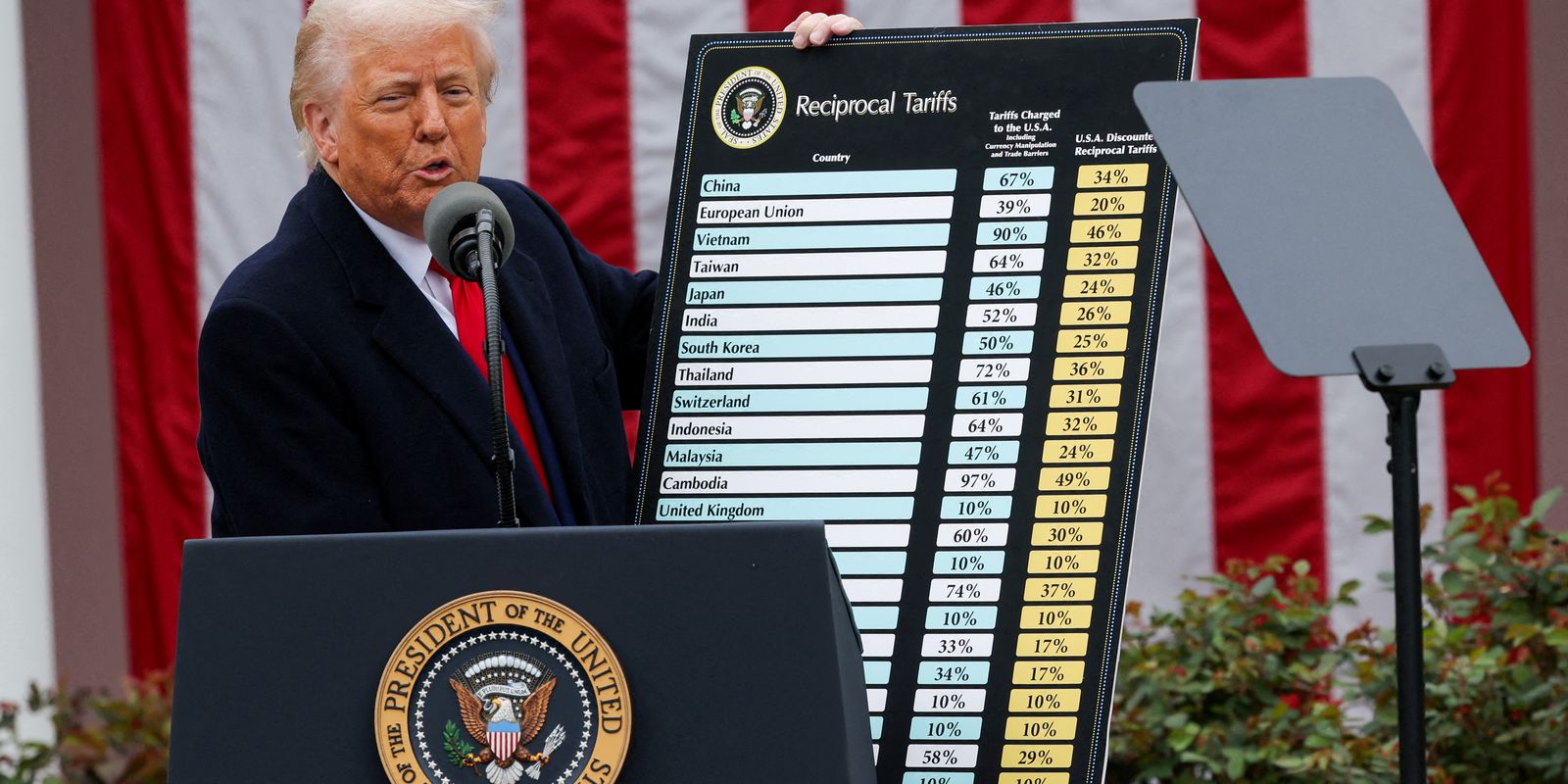
The association informed, however, that it “will continue to closely monitor the developments of the decision and its effects on the Brazilian plastics industry”, especially after the president of the United States, Donald Trump, having announced shortly after that it will impose a global tariff of 10%for a period of 150 days, to replace some of the tariffs that were overturned by the Supreme Court.
“The President of the United States, Donald Trump, in turn, has just instituted a new global tariff of 10%, based on the so-called Section 122 of North American commercial legislation, shortly after the decision of the Supreme Court of the United States that declared tariffs imposed based on IEEPA illegal. Section 122 allows the temporary adoption of tariffs, for up to 150 days, with the aim of addressing imbalances in the balance of payments. It is, therefore, a different instrument from the one analyzed by the Supreme Cut, which indicates a reconfiguration of the US administration’s commercial strategy”, wrote the association.
Through its social networks, the Brazilian Association of Fish Industries (Abipesca) wrote that it received “with optimism” the decision of the United States Supreme Court that revoked the tariff, “a measure that directly impacted international trade in several products, including the fish sector”.
“The eventual consolidation of the drop in tariffs represents a strategic opportunity for Brazil to expand its presence in the North American market. Abipesca projects, if the new scenario is definitively confirmed, an increase of up to 100% in Brazilian fish exports to the United States, in addition to an estimated growth of 35% in the sector’s total exports”, said Abipesca, adding that the main impact should be the tilapia production chain, one of the main products of national fish farming.
“The competitive reopening of the North American market can generate positive effects in the short term, stimulating investments, expanding production and strengthening the entire industrial and logistics structure linked to the segment”, he added.
Textile
The Brazilian Association of the Textile and Clothing Industry (Abit), another sector greatly affected by the tariffs, also said it was following “with caution” the decision announced this Friday by the Supreme Court and also “the subsequent political developments involving the proposal for new global tariff charges”.
“Since the beginning of the debate on the so-called ‘tariff’, Abit has defended dialogue, predictability and clear rules in international trade, essential elements for legal security and business planning”, wrote the association, highlighting that the United States is the main destination for Brazilian textile and clothing exports.
“It is worth noting that the tariffs applied by the USA to textile and clothing products are already among the highest in the American tariff structure, and additional measures could compromise the competitiveness and viability of exports”, stated Abit, in a note.