The law grants a “general and full” amnesty for crimes linked to political events between 1999 and 2026. It excludes serious human rights violations, intentional homicide and corruption.
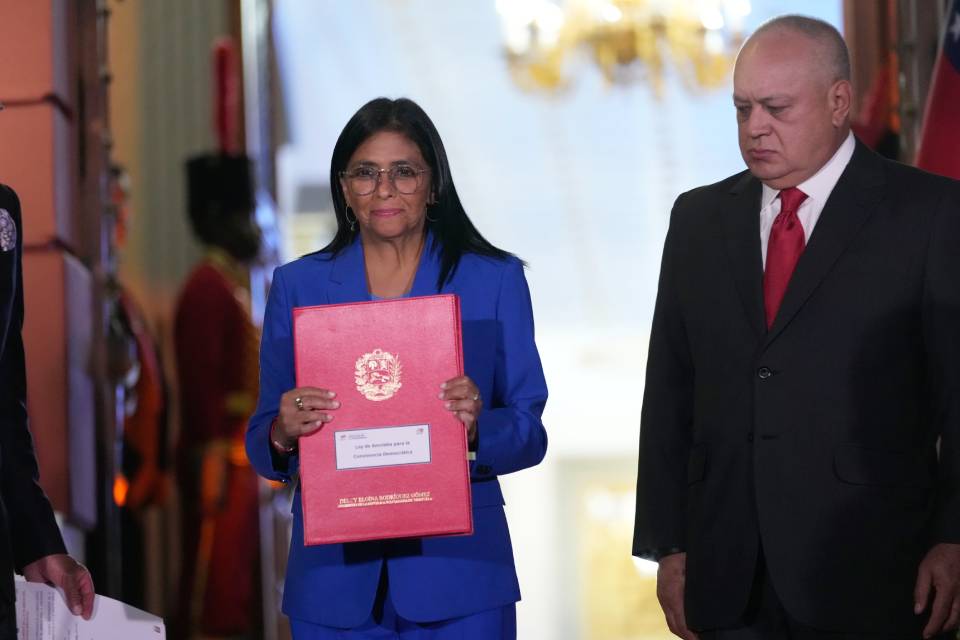
The National Assembly promulgated this February 19, 2026 the Amnesty Law for Democratic Coexistencean instrument that grants a “general and full” amnesty for crimes and misdemeanors committed between January 1, 1999 and the entry into force of the norm, as long as they are linked to the political events expressly listed in the text. The temporal scope—more than 27 years—makes this law one of the longest adopted in the country.
According to article 1, the object of the law is to promote social peace and democratic coexistence. Article 2 adds national reconciliation, political pluralism and reintegration into public activity of the beneficiaries as goals. The text indicates that it is governed by principles such as life, liberty, justice, democracy and the preeminence of human rights, and declares its provisions of public order and general interest.
The amnesty covers acts committed from January 1, 1999 until the entry into force of the law. Regarding the personal level, it extends to any person prosecuted or convicted for specific acts included in the norm, provided that it is legal or becomes legal after its entry into force.
The text contemplates that those who are outside the country can be represented by power of attorney granted to a trusted lawyer. It also specifies that the amnesty only applies to those who have ceased carrying out the acts that are the subject of the benefit.
Facts included in the amnesty
Article 8 lists 13 specific contexts covered by the amnesty. Among them are the coup d’état of April 11 and 12, 2002; the oil strike and sabotage of 2002-2003; demonstrations linked to the 2004 recall referendum; political events that occurred in 2007, 2009, 2013 and 2014; and actions of the National Assembly for the period 2016-2021.
It also includes protests from 2017 and 2019 – excluding the crime of military rebellion -, internal processes for the selection of presidential candidates in 2023, demonstrations linked to the 2024 presidential elections and those related to regional and parliamentary elections in 2025.
The law excludes serious violations of human rights, crimes against humanity and war crimes. It also does not cover intentional homicide, very serious injuries, drug trafficking or crimes provided for in the Anti-Corruption Law.
Likewise, people involved in armed or forceful actions against sovereignty and territorial integrity with the participation of foreign actors are excluded.
Legal effects
Article 10 establishes that the amnesty automatically extinguishes criminal, disciplinary or civil actions related to the amnesty events, at any stage of the process, including extradition requests. Measures of personal coercion and alternatives to deprivation of liberty also cease.
The procedure provides that the courts must verify each case and decree the dismissal or annul final sentences by decision within a maximum period of 15 continuous days. Article 12 provides for an appeal with devolutive effect.
The rule also orders the elimination of administrative, police or military records and records linked to the beneficiaries, which would have a direct impact on the restitution of rights and the possibility of reintegration into public activity.
The National Assembly appointed a Special Commission to ensure compliance with the law and may have experts for technical advice.
The practical application of the instrument will now depend on the actions of the courts and administrative bodies in charge of executing its effects.
*Read also: NGOs denounce “unjustifiable excess of exclusions” in the Amnesty Law
*Journalism in Venezuela is carried out in a hostile environment for the press with dozens of legal instruments in place to punish the word, especially the laws “against hate”, “against fascism” and “against the blockade.” This content was written taking into consideration the threats and limits that, consequently, have been imposed on the dissemination of information from within the country.
Post Views: 142