With information from Aura Torrealba and Odry Farnetano.
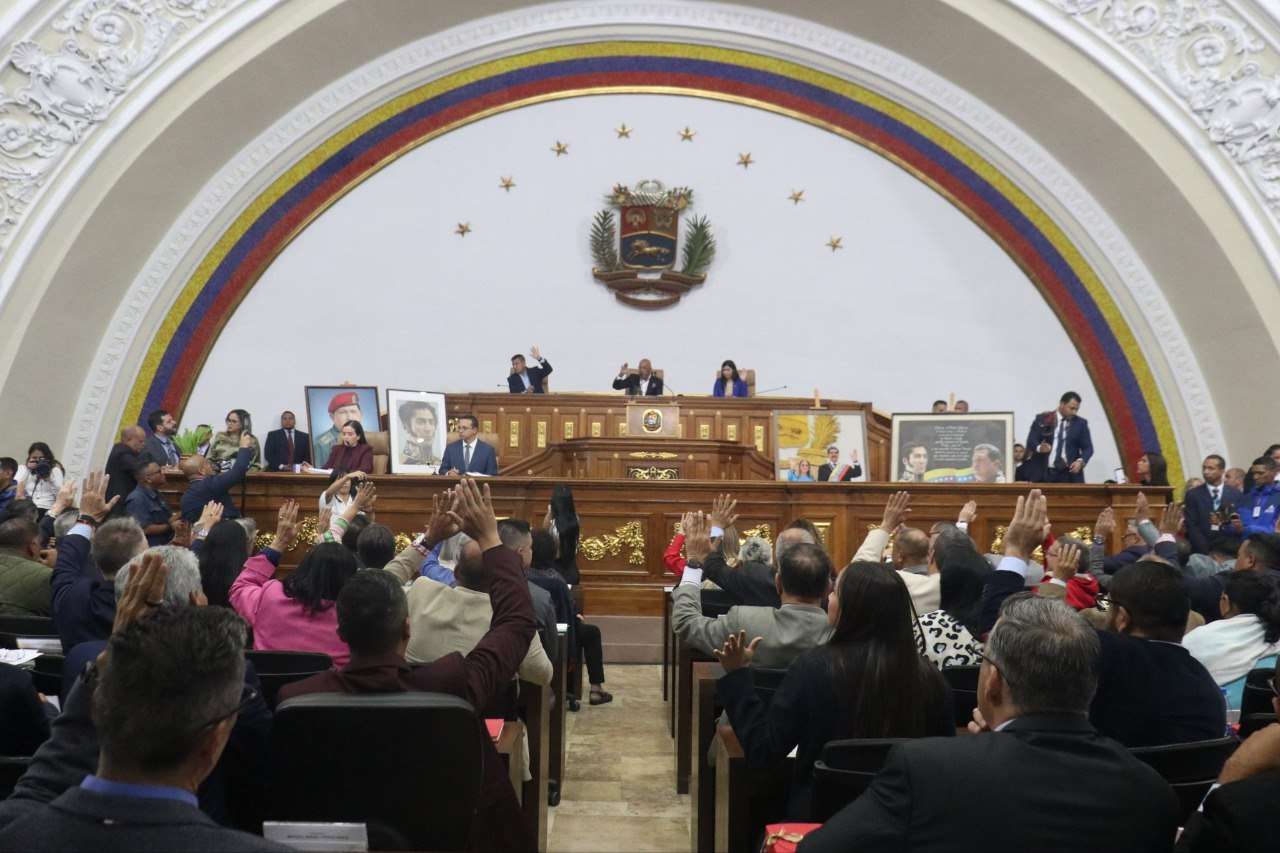
During the ordinary session held this Thursday, the National Assembly unanimously approved the Amnesty Law for Democratic Coexistence and sent the text to the National Executive for the purposes of its promulgation.
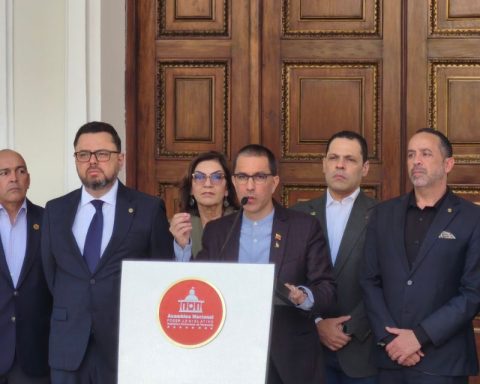
The president of the Venezuelan parliament, Jorge Rodríguez, appointed a special commission, made up of 23 deputies, to deliver the new norm to the acting president Delcy Rodríguez, which will come into force upon publication in the Official Gazette.
The session began with the approval of one of the articles that caused the most controversy last session, which establishes that those people who are outside the national territory and may be subject to amnesty will have the option of being represented before the competent court with a judicial representative, which gives those who are outside of Venezuela the opportunity to be represented by a lawyer to stand up to the law; this, exceptionally.
Article 7 approved unanimously states the following:
«The amnesty object of this law covers any person who is or may be prosecuted or convicted for crimes or misdemeanors, committed and occurred within the framework of the events subject to the amnesty, provided that he or she is eligible or becomes eligible after the entry into force of this law. Exceptionally, when the person is not legal and remains outside the national territory, he or she may be represented before the competent court by means of a power of attorney granted to a lawyer of his or her trust and choice, without any other formality being necessary. After submitting the amnesty request, the person may not be deprived of liberty for the events provided for in this law and must appear personally before the competent court for the purposes of granting the amnesty. The amnesty will only cover people who have ceased in the execution of the acts constituting a crime or misdemeanor that are the subject of the amnesty or cease in their execution after the entry into force of this law.«.
The exclusions of the law
Article 9, which was approved unanimously, establishes that “actions or omissions that constitute the following crimes will be excluded from the application of the amnesty provided for in this law: serious violations of human rights, crimes against humanity and war crimes, in accordance with the provisions of article 29 of the Constitution.
Also excluded are intentional homicide and very serious injuries, trafficking in narcotics and psychotropic substances, and crimes provided for in the anti-corruption law.
The approved text adds that “people who are or may be prosecuted or convicted for promoting, instigating, requesting, invoking, favoring, facilitating, financing or participating in armed or forceful actions against the people, sovereignty and territorial integrity of the Bolivarian Republic of Venezuela by states, corporations or foreign persons will also be excluded from the amnesty provided for in this law.”
Article 10, approved unanimously, provides that “with the amnesty regulated in this law, all criminal, disciplinary or civil actions against the persons benefited by the amnesty in any state and degree of the process or the fulfillment of the sentence are extinguished by operation of law, including extradition requests, related exclusively to the facts that are the subject of this law.” Likewise, it establishes that “any measure of personal coercion, alternative measures to deprivation of liberty and any other measure that has been agreed upon will cease,” and specifies that the effects of the amnesty “extend to all authors and participants in the crimes or misdemeanors referred to in this law.”
Court must verify the amnesty assumptions
Article 11 establishes that the competent court, at the request of a party, will verify the amnesty assumptions in each case and will decree the dismissal of all ongoing processes or the review of the final sentence for its annulment, by means of a replacement sentence in a period that will not exceed 15 continuous days.
Likewise, it will dictate all the measures or provisions necessary to ensure compliance with the aforementioned law, including the cessation of measures of personal coercion and alternative measures to deprivation of liberty and any other measure that has been agreed upon.
It will be up to the control or trial court to hear or decide the applications presented in processes that are in the preparatory, intermediate or trial phase.
The request may be presented by the Public Prosecutor’s Office, the accused person or his or her defender.
It will be up to the Court of Appeals to hear and rule on the applications presented in the processes in the execution phase.
The request may be filed by any of the subjects referred to in article 463 of the Organic Code of Criminal Procedure (COOP).
Victim may appeal
Article 12 establishes that the victim accredited in the process, the Public Ministry and the person prosecuted or convicted may file an appeal, only with evolutionary effect. The appeal will be processed according to the provisions of the COPP.
Bodies will conclude the investigations
Article 13 states that the investigative, police and military bodies will conclude the investigations and procedures related to the facts that are the subject of the amnesty, except for the exceptions provided for in article 9 of the law.
Meanwhile, article 14 specifies that the administrative, police or military bodies and entities in which there are records or records on persons benefiting from the amnesty subject to the law must eliminate from their files the records and records related to them, ex officio or at the request of the Public Ministry, the interested person or their legal representative. In the event that the beneficiary has been required to be detained or placed abroad, the competent authorities must be notified immediately so that said requests are nullified.
Facts contemplated in the Amnesty Law for Democratic Coexistence
Article 8 defines the facts that will be contemplated in the Amnesty Law.
First. The coup d’état of April 11 and 12, 2002, including the assaults and attacks against governorates, mayors’ offices, and public and private facilities.
Second. Those related to the business and oil strike and sabotage from December 2002 to February 2003.
Third. Those related to the demonstrations and violent events for political reasons that took place on the occasion of the call and subsequent holding of the presidential recall referendum of 2004.
Room. Those related to the demonstrations and violent events for political reasons that took place in May 2007.
Fifth. Those related to the demonstrations and violent events for political reasons that occurred between July and September 2009.
Sixth. Those related to the demonstrations and violent events for political reasons that occurred on the occasion of the presidential elections of April 2013 and the proclamation of their results.
Seventh. Those related to the demonstrations and violent events for political reasons that occurred between February and June 2014.
Eighth. Those related to the actions of the National Assembly installed for the period 2016-2020 and the ignorance of public institutions and authorities.
Ninth. Those related to the demonstrations and violent events for political reasons that occurred between March and August 2017.
Tenth. Those related to the demonstrations and violent events for political reasons that took place between January and April 2019, except those constituting the crime of military rebellion.
Eleventh. Those related to the call and carrying out of the internal processes for the selection of presidential candidates that took place in 2023.
Twelfth. Those related to the demonstrations and violent events for political reasons that took place within the framework of the presidential elections held in July 2024.
Thirteenth. Those related to the demonstrations and violent events for political reasons that took place within the framework of the regional elections and for the National Assembly held in 2025.
Anti-hate law review
It should be noted that the opposition deputy Pablo Pérez requested that some events of a union nature and other cases related to subjects who had been charged by the law against hatred be taken into account, since the president of parliament, Jorge Rodríguez, when taking the floor clarified that, according to the dictionary of the Royal Academy, “amnesty is the forgiveness of certain types of crimes, period, it is a forgiveness, an amnesty is a forgiveness, one does not forgive someone who has not committed an offense, one forgives someone who has committed an offense classified in our legal order.
He explained that the reason why those cases had been excluded is because the law to which it refers is to facts and not to particular people. «Let us know what the limits established in the amnesty law are, that is why it was clear which are the facts and which are excluded. It is true that there may have been cases where the law against hate was misused, but it is also true that people were murdered for instigating hate. (…) We do not want a country with impunity, it is a pardon that the political country is deciding, at the request of the acting president Delcy Rodríguez.
Rodríguez clarified that the Monitoring Commission, established in article 15 of this regulation, together with the Program for Democratic Coexistence and Peace, will be in charge of reviewing this type of particular cases, in an exhaustive and peremptory manner, after the approval of this regulation, in response to the concern expressed by the opposition deputy, Pablo Pérez.

Special Commission to ensure compliance with the law
Article 15 contemplates that the National Assembly will appoint a Special Commission that will develop and implement mechanisms to ensure compliance with the Amnesty Law in collaboration with the bodies of the justice system.
For this purpose, you will be able to count on the support of experts in order to provide specialized advice based on the established objectives and purposes. Said commission may recommend to the competent bodies the adoption of measures to achieve the purposes set out in article 2.
This commission will be chaired by Deputy Jorge Arreaza and the vice president will be Deputy Nora Bracho and will be made up of the following deputies:
Pedro Infante, Grecia Colmenares, Carolina García, Thania Díaz, Nicolás Maduro Guerra, Pedro Carreño, América Pérez, Iris Varela, Jaqueline Faria, Roy Daza, Francisco Torrealba, Stalyn González, Juan Carlos Alvarado, Rubén Luna, Luis Florido, David Uzcátegui, Antonio Ecarry, Pablo Pérez, Rubén Limas, Alejandra Rodríguez and Alfonso Campos.
It should be noted that the president of parliament also mentioned the name of deputy Cilia Flores as a member of this commission.
He stressed that the first mission that this commission will have will be to “go to the Miraflores Palace to present the acting president Delcy Rodríguez, so that she can be peremptorily promulgated as head of the Executive Branch,” he said.