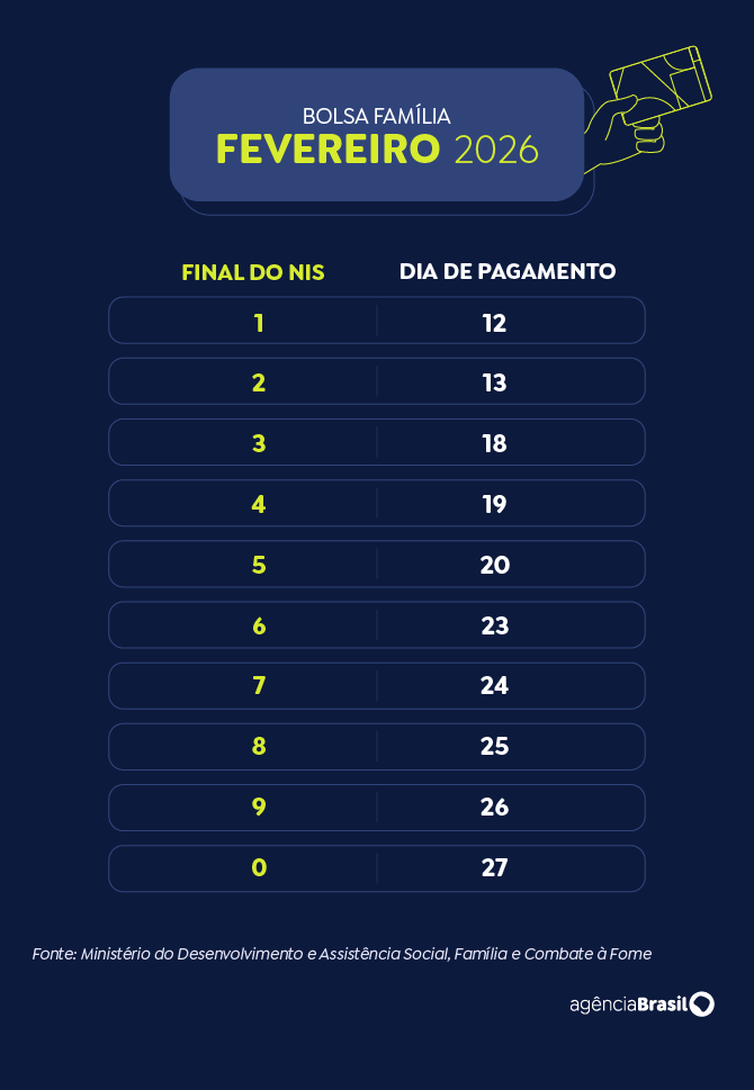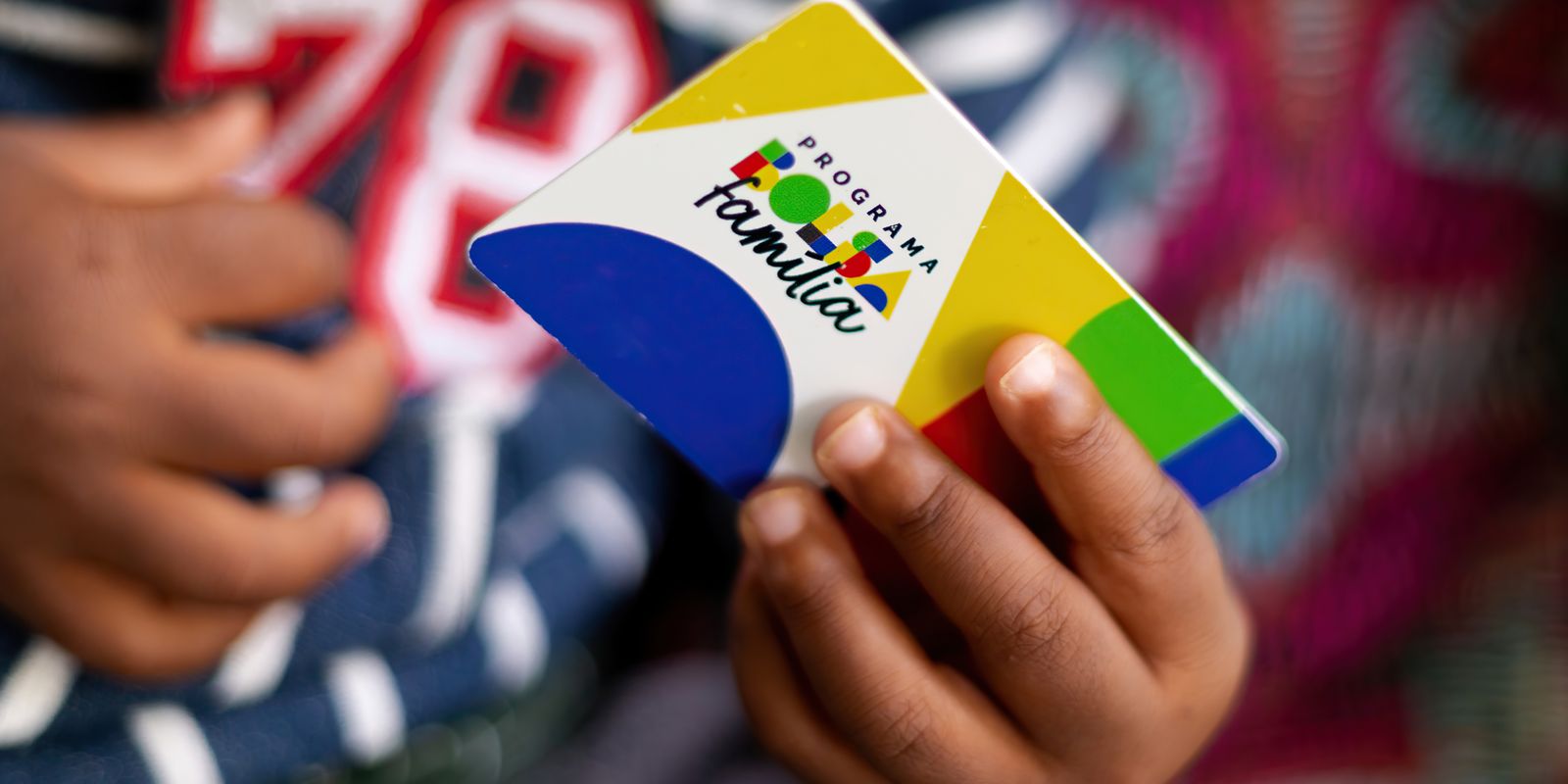
Caixa Econômica Federal pays this Friday (20) the February installment of Bolsa Família to beneficiaries with a Social Registration Number (NIS) at the end of 5.
The minimum value corresponds to R$600, but with the new additional the average value of the benefit increases to R$690.01. According to the Ministry of Development and Social Assistance, this month the Federal Government’s income transfer program will reach 18.84 million families, with expenditure of R$13 billion.
In addition to the minimum benefit, there is the payment of three additional benefits. The Nutriz Family Variable Benefit pays six installments of R$50 to mothers of babies up to six months of age, to guarantee the child’s nutrition. THE Bolsa Família also pays an additional R$50 to pregnant women and nursing mothers (mothers who breastfeed), one of R$50 for each child aged 7 to 18 and another of R$150 for each child up to 6 years old.
In the traditional Bolsa Família model, payment occurs in the last ten working days of each month. The beneficiary will be able to consult information about payment dates, the value of the benefit and the composition of the installments in the Caixa Tem application, used to monitor the bank’s digital savings accounts.
Unified payment
Beneficiaries from 171 cities in eight states received payment on the 12th, regardless of the NIS. The measure benefited residents of 122 municipalities in Rio Grande do Norte, which are suffering from drought. Cities in the following states also benefited: Bahia (14), Paraná (12), Sergipe (11), Roraima (6), Amazonas (3), Piauí (2) and Santa Catarina (1).
These locations were affected by rain or drought or have indigenous peoples in vulnerable situations. THE list of municipalities with advance payment is available on the Ministry of Development and Social Assistance website.
Since 2024, Bolsa Família beneficiaries no longer have the Defeso Insurance discount. THE change was established by Law 14,601/2023which rescued the Bolsa Família Program (PBF). Defeso Insurance is paid to people who survive exclusively from artisanal fishing and who cannot carry out the activity during the piracema period (fish reproduction).
Protection rule
Around 2.51 million families are under the protection rule in February. This rule allows families whose members get a job and improve their income to receive 50% of the benefit to which they would be entitled for up to two years, as long as each member receives the equivalent of up to half the minimum wage.
In 2025, the length of stay under the protection rule was reduced from two to one year. However, the change only covers families that entered the transition phase from June 2025. Those who fell under the rule until May 2025 will continue to receive half the benefit for two years.