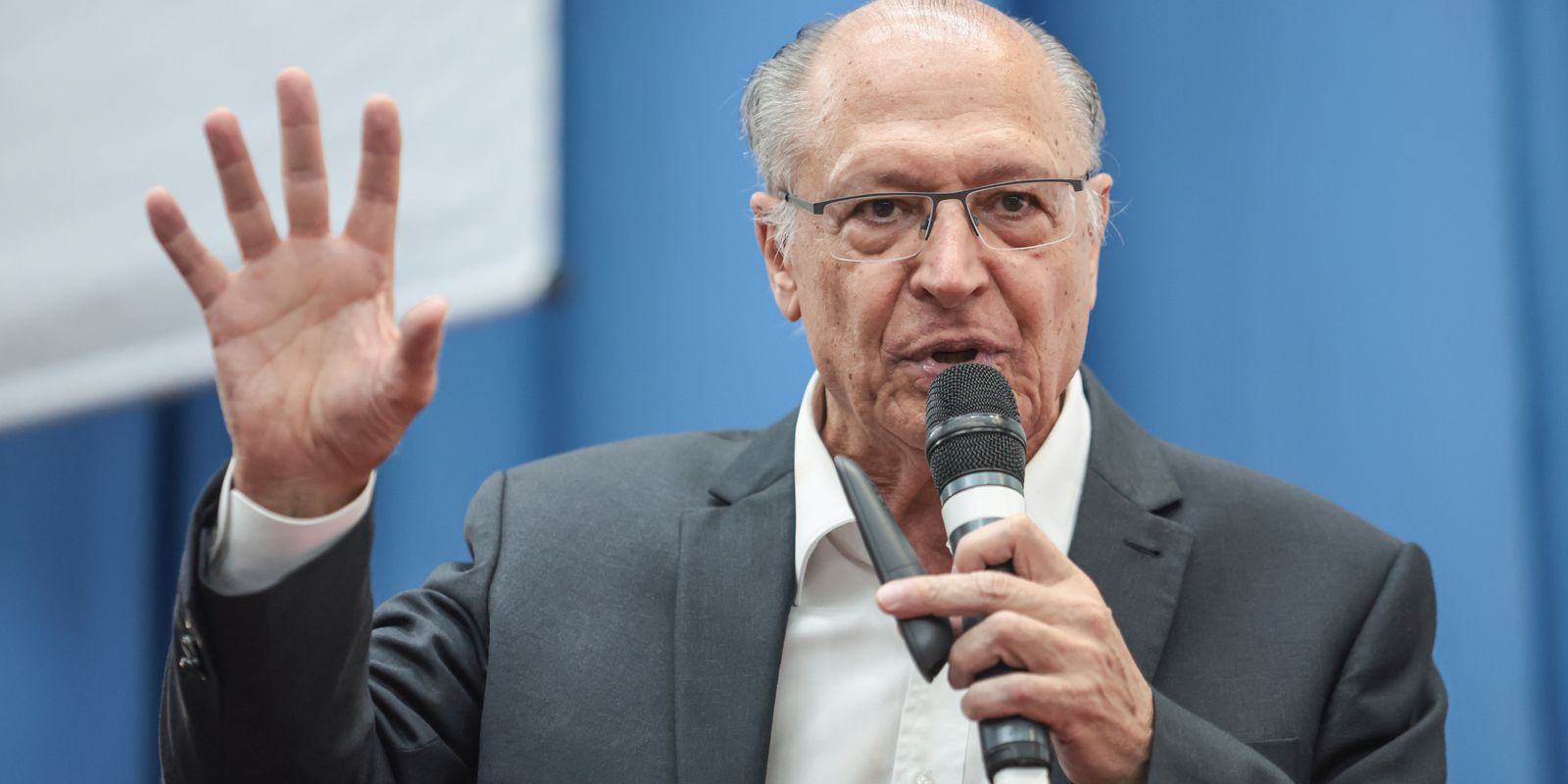
The federal government will issue a decree to regulate safeguards – instruments to protect national producers – in trade agreements signed by Brazilannounced this Thursday (19) the acting president and Minister of Development, Industry, Commerce and Services, Geraldo Alckmin.
The statement was made in Caxias do Sul (RS), during the opening of the 35th National Grape Festival and Agroindustrial Fair.
According to Alckmin, the measure will establish clear rules for applying protection mechanisms to Brazilian production in cases of sudden increase in imports that cause losses to industry and agribusiness sectors. The decree should cover both existing agreements and future commercial commitments.
“President Lula will regulate the safeguard by decree. If there is a large increase in imports, the measure can be activated immediately”, he stated.
How safeguards work
Safeguards are mechanisms provided for in trade agreements that allow a country to react to import surges resulting from negotiated tariff reductions. If serious damage to national production is proven, the government may:
- Establish import quotas;
- Suspend the tariff reduction provided for in the agreement;
- Restore the tax level prior to the treaty’s validity.
The decree must define deadlines, investigation procedures and conditions for applying the measures.
Expansion of agreements
The regulation occurs amid the expansion of the Mercosur agreement network. Since 2023, the bloc has concluded negotiations with Singapore, the European Free Trade Association (EFTA) and, most recently, the European Union.
With the new treaties, the portion of Brazilian trade covered by tariff preferences increased from 12% to 31.2%, more than doubling the scope of the agreements.
In a previous scenario, safeguards could be applied based on general multilateral rules. With the expansion of preferential commitments, the government assesses that it is necessary to create specific discipline to provide predictability and legal certainty to the use of the instrument.
Mercosur-EU Agreement
During a visit to the Grape Festival, a traditional event in the Rio Grande do Sul wine sector, Alckmin also commented on the tariff reduction schedule (mutual reduction of tariffs) provided for in the agreement between Mercosur and the European Union.
According to him, tariff reduction will occur gradually to allow national producers to adapt. In the case of wine, the period will be eight years; for sparkling wines, 12 years.
Wine sector
In addition to the agreement between Mercosur and the European Union, the wine sector, stated Alckmin, will benefit in the coming years from tax reform.
According to Alckmin, the recent consumption tax reform should reduce the tax burden on national wines by around 7%a measure seen as a way to strengthen the competitiveness of the sector.
Before the opening of the party, Alckmin met with representatives of the productive sector in Serra Gaúcha. On the agenda, in addition to the agreement with the European Union, were topics such as tax reform, international tariffs and credit lines for truck fleet renewal.