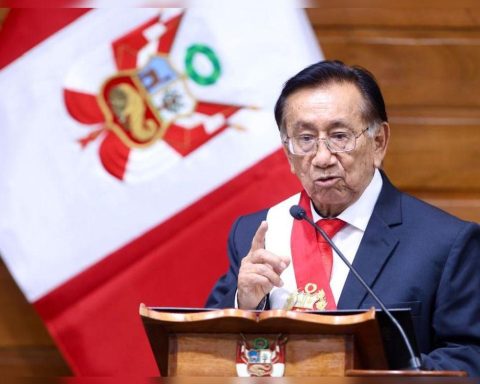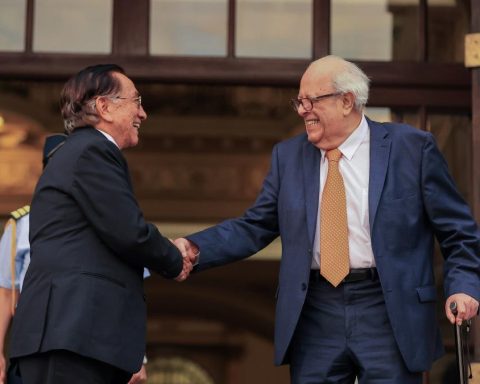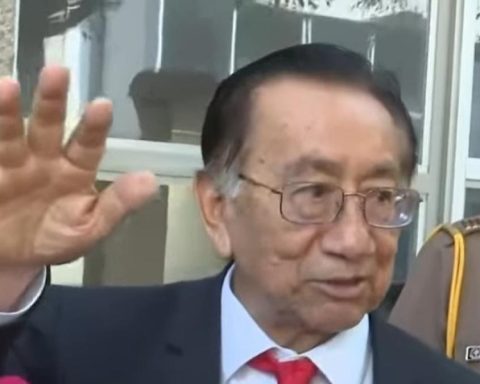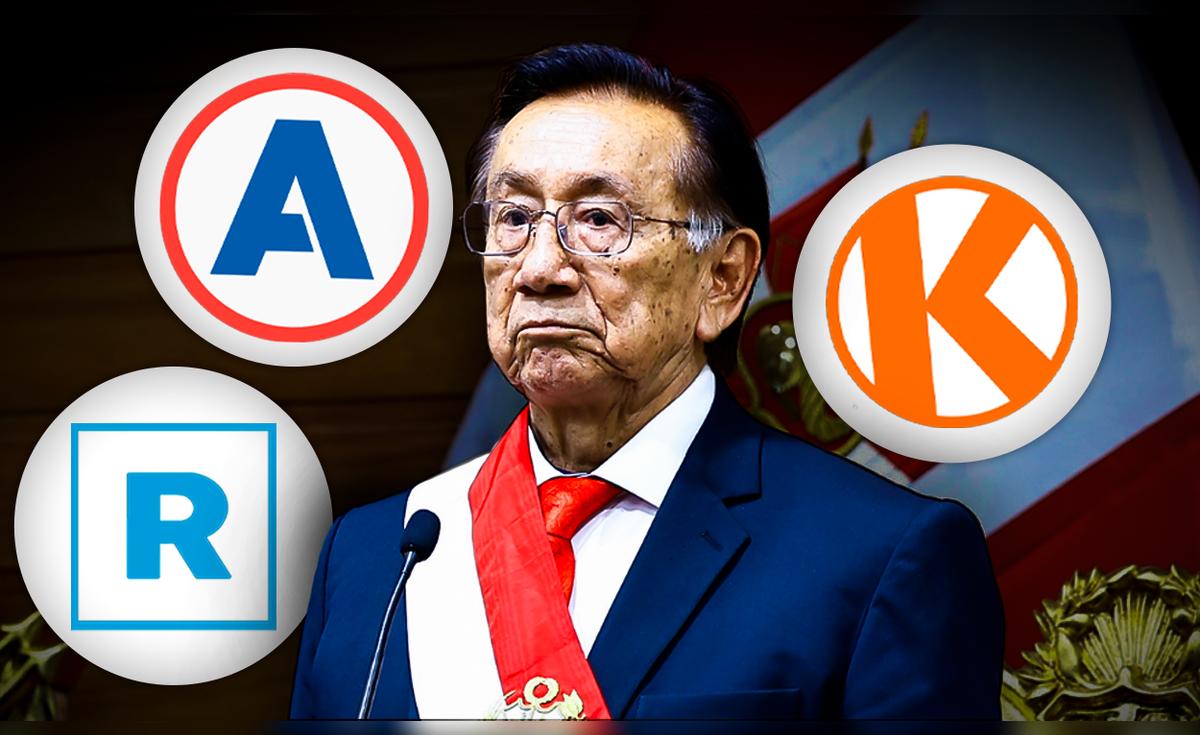
José María Balcázar has been elected the new president of Peru. With 64 votes, the congressman associated with Free Peru won in a second round Maricarmen Alvawho only received the support of 46 parliamentarians. Among those present, the vast majority of parties had announced their support for Alva due to political affinities —Popular Renewal and Popular Forceamong them. The left, in theory Balcázar’s only support, could not position the Perulibrista: only among Together for Peru and the pencil party, the votes reached a maximum of 21. Even, adding Podemos Peru, the numbers continue to remain flat: they reach 33 favorable votes.
How then did Balcázar win? For certain, nothing can be confirmed with sufficient rigor. However, theories point to only one possibility: the existence of a secret vote by right-wing parties in favor of the current president of Peru. In the background, one fact could give a clue about the political move: the recent fight between Popular Renewal and Popular Force.
WE RECOMMEND YOU
NEW PRESIDENT UNTIL THE 28TH? AND THE BIG WRONG | WITHOUT SCRIPT WITH ROSA MARÍA PALACIOS #FEEG2026
With Balcázar’s victory, the Fujimori party can boast of not occupying the Government. In the face of any failure by the new president, the narrative remains: Popular Force was the one who opposed these figures and Renovación Popular, his main competitor in this section of the general elections, was “who put them in power.”
A fight from several weeks ago shortly before the elections
Since the explosion of ‘chifagate’ – the leak of clandestine meetings of José Jerí with Chinese businessmen—the climate of vacancy was beginning to appear. When signatures began to be requested for an extraordinary plenary session, the parties already made their positions clear regarding the vacancy. The two most representative parties of Peruvian conservatism, Fuerza Popular and Renovación Popular, had dissimilar positions.
The bench led by Rafael Lopez Aliaga It was one of the forces that positioned itself most firmly in favor of the extraordinary plenary session and the motion of censure against Jerí. “We demand that José Jerí go to the Congress of Peru and provide the necessary explanations in the face of serious questions about his conduct in the exercise of office,” they stated in one of their publications on the social network X (formerly Twitter), before the now former president was removed.
Often, Popular Force and Popular Renewal They voted similarly. But on this occasion it was not like that: Fuerza Popular was the force that most refused to call the extraordinary plenary session, with Fernando Rospigliosi playing an important role in his role as president of Congress in delaying this process. In the first instance, Rospigliosi ordered the signatures to be corrected to convene the plenary session. Once summoned, the orange congressmen were, along with some members of We are Peru and little else, the only defenders of the censored former president.
When explaining their reasons, the Fujimoristas pointed out that the objective was to “maintain democratic stability” and announced their confrontation with the celestials, whom they accused of “helping the caviars” in the departure of Jerí. The narrative was already laid out: Popular Force would not support “destabilization,” while Renovación Popular not only promoted it, but played an active role in it. This, in the dispute for the conservative vote, would be key.
APP movements and a narrative that remains
Prior to the election of Balcazarboth benches seemed to maintain their position: the two parliamentary groups assured that they would vote in favor of Maricarmen Alva to be the new president of the Board of Directors of Congress and, with this, become the new president of Peru.
But the election passed and brought surprises: Balcázar won the first round by three votes over Alva. In a second round, everything seemed to indicate that Alva would win, since the benches that supported her were the majority. However, it was not like that: Balcázar won by more than ten votes.
The calculations do not lie: one of the groups designated as pro-Alva must have cast their votes in favor of Balcázar. The theories mainly point to two fronts: Popular Force and Alliance for Progress.
From Fuerza Popular they have indicated that the coinist bench, through Richard Acunamaintained communications with those close to Congressman Balcázar. “According to what I have heard, I am not aware of it, but according to what has been seen in the hallways, apparently there have been negotiations between the son of Cesar Acuña“, Mr. Richard Acuña, and the people who were managing Mr. Balcázar’s campaign,” declared the Fujimorist. Ernesto Bustamante for a television channel.
The other hypothesis points against the Fujimori group, pointing out that they would have voted in favor of Balcázar in order to be able to point out, in the coming months, political forces ideologically aligned with the left as responsible for possible scandals of the new administration. Fuerza Popular, accustomed to showing its votes in these settings, opted for discretion on this occasion.
Under this strategy, Popular Force goes against two fronts: first, it points to Rafael Lopez Aliaga as one of those responsible for the situation that could come; and second, he directs his criticism against another recently rising candidate, located between third and fourth place and associated with the left sector: that of Ahora Nación, with Alfonso López Chau at the head. The Fujimoristas do not gain more points in the polls; The hypothetical strategy goes against its direct rivals.
As no minor fact, Balcázar was registered in Ahora Nación for a brief period. His dismissal occurred after his statements about sexual relations with minors.