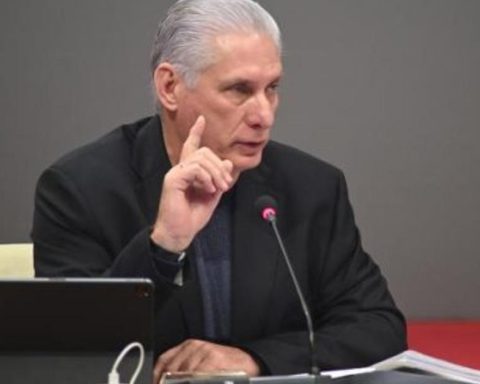
Havana/The cry of “Down with Díaz-Canel!” resounded since this Wednesday afternoon inside the Canaleta prison, in Ciego de Ávila. Dozens of inmates staged a riot that, according to reports from organizations and testimonies from inside the prison, was responded to with a strong repression operation.
This newspaper was able to confirm, through an activist in direct contact with relatives of the inmates, that “there are ambulances outside and seriously injured people.” The activist, whose identity is omitted to avoid reprisals, adds that “there is a confirmed death, although it is not known if he hanged himself or was hanged.” The situation, according to his testimony, is “partially controlled,” but not completely.
According to the NGO Prisoners Defenders and the Cuban Prison Documentation Center (Cdpc), the uprising took place in this high-security prison in the center of the country, a facility that has had several complaints for years about overcrowding, unsanitary conditions and mistreatment. A testimony from a prisoner provided to the EFE agency also stated that reinforcement groups went to the scene and used rubber bullets, pepper spray and physical violence to quell the protest.
Inmates talk about beatings, shooting with rubber projectiles and the use of chemical agents
According to versions released by relatives and activists, the riot began approximately between six and seven in the afternoon on Wednesday. The inmates – among whom there were several prisoners for political reasons – were protesting the living conditions inside the prison, especially the shortage of food, the lack of medical care and the abuse of the guards.
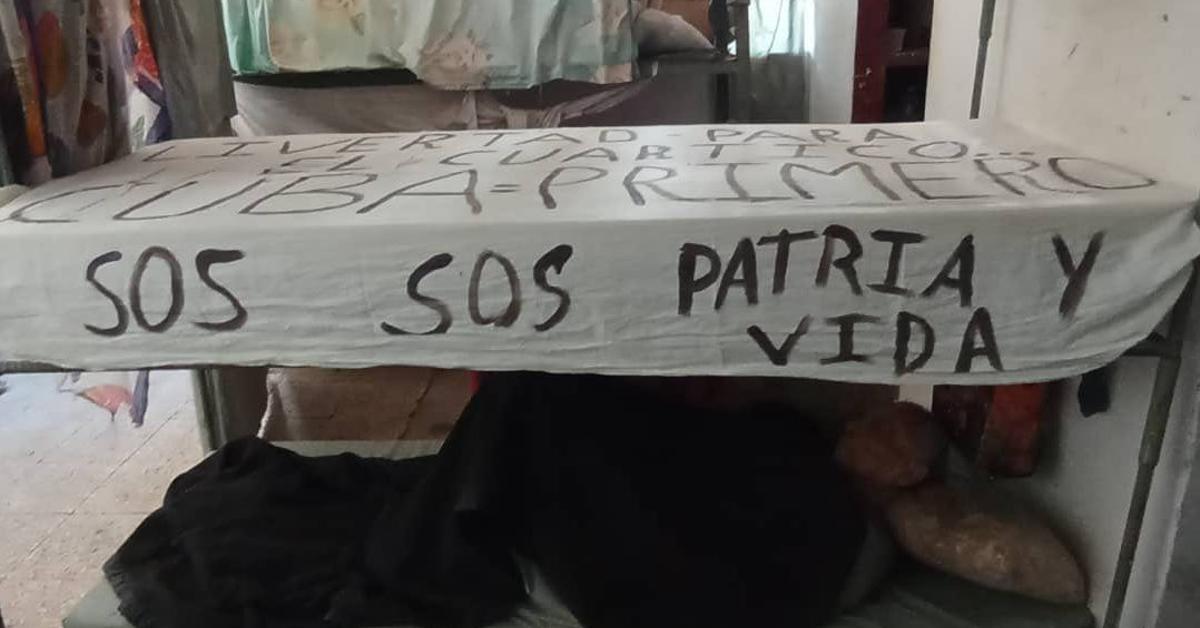
During the early morning they circulated on social networks videos and audios in which cries of “freedom”, “Homeland and Life” and slogans against President Miguel Díaz-Canel are heard. In some images taken from inside the prison, several inmates show sheets with protest messages hanging in common areas.
The complaints indicate that the repressive operation intensified early on Thursday morning, when – according to testimonies – special troops known as the Black Wasps intervened. Inmates speak of beatings, shooting with rubber projectiles and the use of chemical agents.
/ Screenshot / Facebook
The Canaleta prison, considered the most rigorous prison in the province of Ciego de Ávila, is located on the outskirts of the main city and houses more than 3,000 inmates, according to data collected by researchers from the Cuban prison system. The complex began to be built in the mid-sixties with wooden barracks and was expanded in 1975 with multi-story buildings, surrounded by double perimeter fences and concrete walls. Due to its size and level of security, it concentrates a significant part of the territory’s prison population.
Prisoners Defenders points out that the prisoners “have risen up demanding freedom for Cuba.” The organization, based in Madrid, currently accounts 1,207 prisoners for political reasons on the Island, a figure that the Cuban Government systematically rejects.
According to Cubalex figures, in 2025 at least 41 deaths in prisons Cubans, linked to inhumane conditions of confinement, poor nutrition, lack of adequate medical care and diseases without timely treatment.
Regarding the Canaleta prison, the reports coincide in pointing out abuses and repression against prisoners for political reasons, internal corruption and deterioration of sanitary conditions.
In that same period, the NGO documented 1,330 human rights violations against people imprisoned on the Island. The reports include 1,045 cases of harassment and repression, 402 of denial of medical care, 297 of inadequate living conditions and 224 linked to nutritional deficiencies.
The Cdpc has also denounced practices such as prolonged isolation, punitive transfers and forced unpaid labor, in addition to the use of punishment methods that human rights organizations consider forms of torture, including the so-called “Turkish bed”, “the bicycle” and the use of “shakiras”, shackles that completely immobilize the prisoner.
Regarding the Canaleta prison, in particular, the reports coincide in pointing out abuses and repression against prisoners for political reasons, internal corruption and deterioration of sanitary conditions. Relatives of prisoners have also reported on multiple occasions the difficulties in accessing medicine and food during visits.
Almost 24 hours after the beginning of the incidents, the Cuban authorities have not issued an official report about the riot or the situation inside the prison. The existence of fatalities has also not been independently confirmed.