In a change to the distribution paradigm in force since the 1960s, starting in April the Cuban Government will implement a new distribution scheme for the regulated family basket.
This is a measure outlined for some time by the island’s authorities as part of their economic program “to correct distortions”, the application of which was now confirmed at a government meeting in Havana reviewed by the local press.
The reform seeks to directly subsidize people and not products, in a scenario fueled by the US oil siege and the growing shortage of fuel and other basic products that drastically affects daily life on the island.
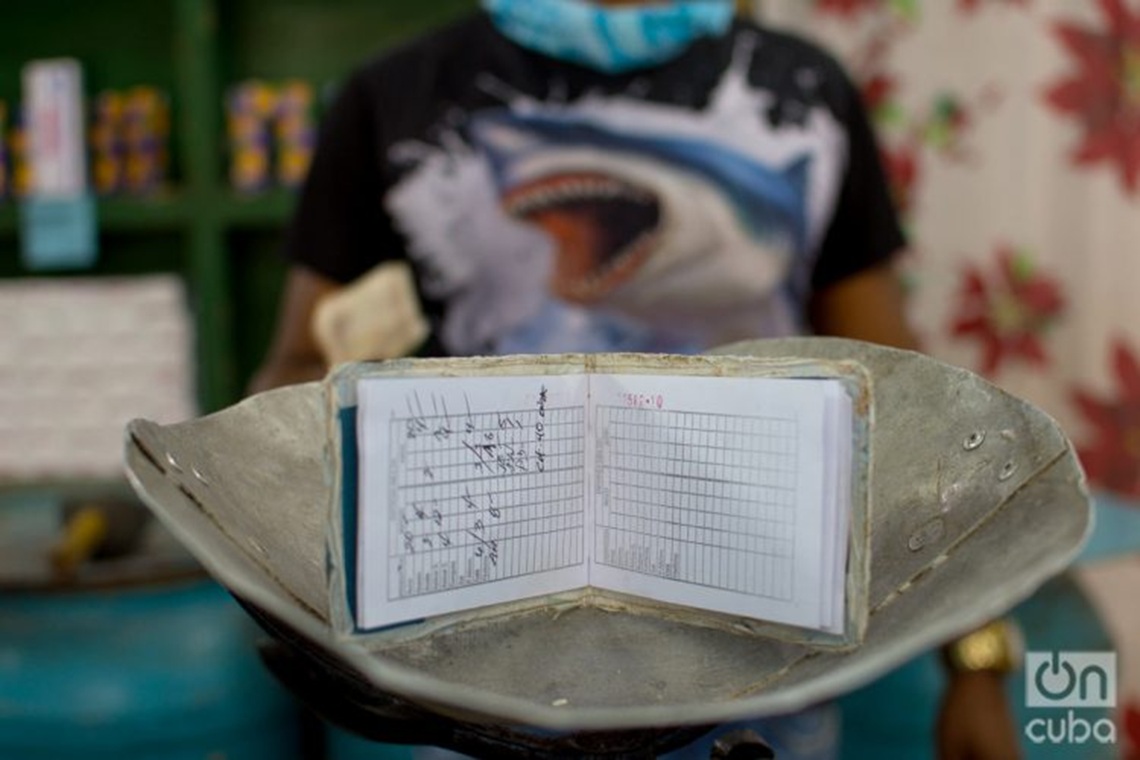
The call supply book It was established in 1962 by the revolutionary government in response to the shortage of food and basic goods. The system, which is badly damaged today, established monthly quotas for essential products – such as rice, sugar, oil, meat and grains – that each family could purchase in state warehouses at subsidized prices.
The measure, initially conceived as temporary, became a permanent mechanism of distribution and social control, to guarantee basic access to food in the midst of the economic and political tensions derived from the US embargo and the island’s internal problems. The mechanism, however, has been in sharp decline for several years.
The “damned” fact of the Cuban economy: the cost of the basic basket
Targeted subsidy, differentiated prices and local production
The new distribution modality, which will begin in April, foresees that certain basic products, until now included in the regulated basket with subsidized prices, will be sold freely but with differentiated rates among consumers.
As reported by the Havana authorities during a work session of the Cotorro Municipal Administration Council, the objective is for state aid to be concentrated on the most vulnerable sectors, while local production is stimulated and public spending is rationalized.
The products “will be controlled, released for sale, but at different prices than the current prices of the regulated basic basket, where the people and not the product will be subsidized,” reviewed about it Havana Tribune.
The report does not detail which products in the regulated basket this system will apply to, nor how it will be determined which individuals and families will remain under the subsidized modality. Nor does it address what the difference in prices will be between those who are subsidized by the State and those who are not.
In the meeting—in which Yanet Hernández Pérez, governor of the capital, participated—it was highlighted that the implementation of the new distribution scheme “imposes arduous work in the remainder of February and March” and that for this “the production that each territory “is capable of carrying out” will be fundamental.
The above coincides with what was recently said by the president Miguel Diaz-Canel during a televised intervention, in which he addressed the complex situation facing the island amid increasing pressure from the Trump Administration.
So, the president assured that his Government would change “the concept” of the basket, to eliminate its dependence on imports, centralized distribution and “egalitarianism.” “We are going to eat what is produced in each place,” he said.
Cuba revives its survival plan from the 90s in the face of the “zero fuel” scenario
Pending arrears and energy crisis
The new April scheme is announced while delays persist in the delivery of basic products distributed through the supply book.
In HavanaFor example, rice, sugar and peas for January only arrived in some municipalities, while in the rest it is still being distributed or is pending. On the other hand, compote for children up to 2 years old was only delivered in La Lisa and Playa.
In other provinces, however, the delay in the distribution of these products is much greater, while others, such as eggs or coffee, are practically no longer delivered.
The announcement of the new mechanism for the regulated basket comes in the midst of a worsening of the energy crisis due to pressure from Washington. This has forced the government to apply contingency measures such as the reduction of public services, the expansion of teleworking in state offices, a teaching reorganization, and severe fuel rationing.
Agricultural markets are also feeling the impact. Vendors like Norbys, in the municipality of Playa, must walk long distances to reach their positions due to the high cost of transportation. “There are things that are missing because they cannot arrive, as a result of fuel rationing,” told the agency EFE.
The fear of many sellers is that fuel shortages and inflation will reduce customers and make it impossible to make ends meet. American pressure on oil supplies has progressively paralyzed the Cuban economy, already hit by six years of crisis with high inflation, daily blackouts and mass migration.
The quarter is not the same: the fuel shortage begins to raise the tide of prices
More measures in the heat of the crisis
In the recent government meeting in the Cotorro municipality, emphasis was placed on accelerating the delivery of idle lands, in compliance with Law 148 on Food Sovereignty, and on rescuing agricultural areas such as the historic Cordón de La Habana, a voluntary and failed production plan for coffee, fruit trees and other crops in the 1960s in order to supply the capital.
Also discussed was the transportation of milk, affected by the lack of fuel, and the need to incorporate bakeries that run on firewood, a variant already applied in previous crises whose use is now spreading again throughout the island.
The Havana governor announced the delivery of 2 kilowatt solar panel kits to nursing homes, polyclinics and bank branches, in order to guarantee basic services and maintain the connectivity of the population. In addition, it was demanded that nursing homes, maternity homes and other social centers have “alternatives” such as firewood or charcoal for cooking.
For her part, the first secretary of the Municipal Committee of the Communist Party, Zulia Muñoz González, called for linking private economic actors with state companies, and exploiting the potential for coal production in the territory.
In parallel, the Havana authorities referred to the search for solutions for the transportation of people and goods, such as the use of electric tricycles due to lack of fuel, the use of animal traction means to collect garbage, and the construction of homes from containers.