Yesterday, Venezuela proposed to Guyana to “definitively engage in a negotiation in good faith” to resolve the controversy surrounding the Essequibo.
Guyana assured this Wednesday the 18th that it will continue to “defend its sovereignty and territorial integrity by legitimate and peaceful means” and that it trusts the International Court of Justice (ICJ) to resolve the dispute with Venezuela over the Essequibo border region.
The Ministry of Foreign Affairs of Guyana urged Venezuela in a statement to renew its commitment to international law, respect the ongoing judicial process before the ICJ and “refrain from actions or statements that could undermine peace and stability in the region.”
He also reaffirmed his unwavering commitment to “peaceful coexistence, mutual respect between nations and the definitive judicial resolution of this controversy,” which continues with the Venezuelan Government, now in the hands of the Chavista leader, Delcy Rodríguez.
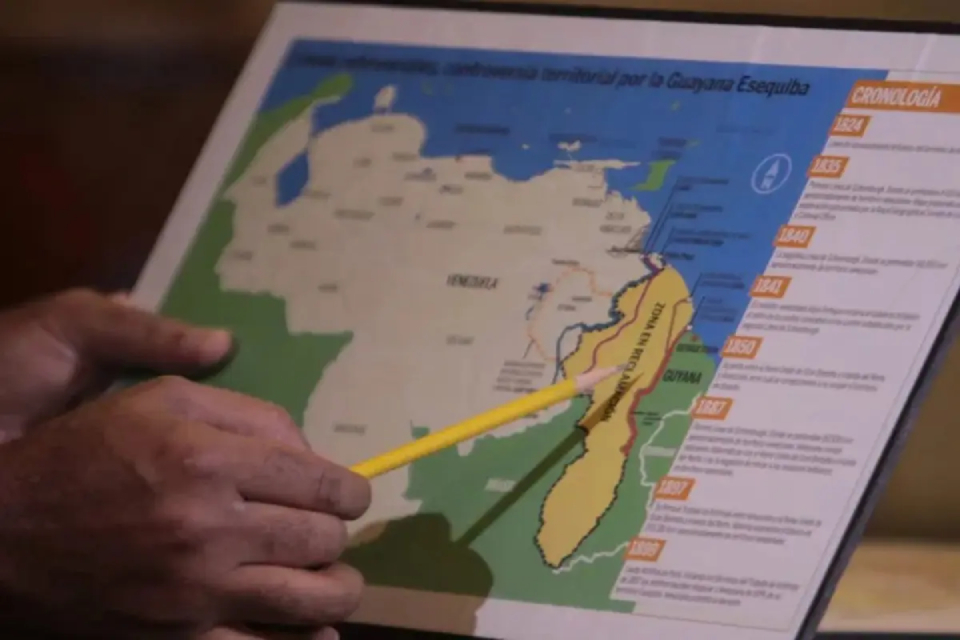
Guyana’s statement on the dispute over the Essequibo, a territory of about 160,000 kilometers administered by Georgetown and claimed by Caracas, comes on the occasion of the commemoration of the 60th anniversary of the signing of the 1966 Geneva Agreement.
For its part, Venezuela yesterday proposed to Guyana to “definitively engage in a negotiation in good faith” to resolve the controversy surrounding Essequibo.
*Read also: Nicolás Maduro and Cilia Flores received a consular visit last #30Jan
The differences over the border limits of Essequibo, rich in oil deposits and natural resources, began with the Paris Arbitration Award of 1899 that gave sovereignty of the territory to the then British Guyana.
After 60 years of recognizing the validity of the award, Venezuela changed its position and declared it null, signing with the United Kingdom the 1966 Geneva Agreement, which determined to create a commission to resolve the historic controversy, which did not materialize.
The Geneva Agreement is a binding international instrument deposited with the United Nations and based on the principles of the United Nations Charter and the rules of international law.
For this reason, the Guyanese Foreign Ministry rejected “official Venezuelan pronouncements that seek to distort the purpose and legal effect of the Geneva Agreement, deny the jurisdiction of the ICJ or formulate unfounded claims over the sovereign territory of Guyana.”
«The Geneva Agreement does not extinguish the 1899 Arbitration Award nor does it grant Venezuela the right to unilaterally determine the status of the Essequibo region of Guyana. Rather, it establishes a clear and legal path, before the ICJ, for the definitive resolution of the controversy,” Foreign Affairs insisted.
The dispute has worsened since Venezuela held a referendum in December 2023 to annex Essequibo and was exacerbated last year when Caracas elected a governor for the region in its regional elections.
With information from the EFE agency
*Journalism in Venezuela is carried out in a hostile environment for the press with dozens of legal instruments in place to punish the word, especially the laws “against hate”, “against fascism” and “against the blockade.” This content was written taking into consideration the threats and limits that, consequently, have been imposed on the dissemination of information from within the country.
Post Views: 140