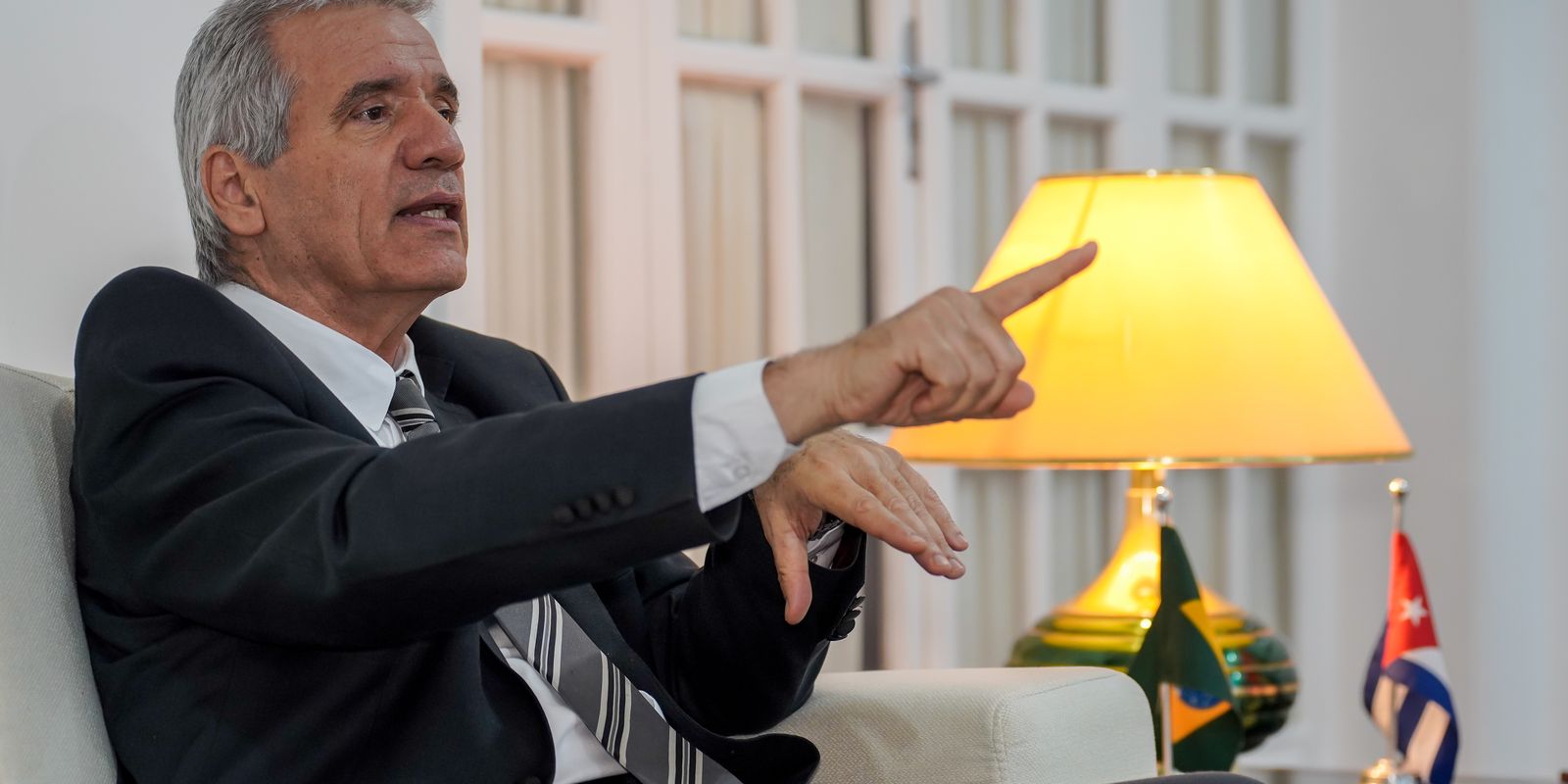
Cuba’s ambassador to Brazil, Adolfo Curbelo Castellanos, classifies the United States’ (US) economic and energy blockade against the Caribbean island as a “genocidal policy” that seeks to deprive the population of their means of subsistence. The representative of the Cuban government received the Brazil Agency at the country’s embassy, in Brasília, to talk about the tightening of the economic blockade on the island. The embargo has lasted 66 years, with the first measures adopted shortly after the Cuban Revolution of 1959. 
“Without energy, everything is compromised. What they did was condemn the Cuban people to extermination. A country like Cuba, which needs oil to generate electricity, simply cannot import it in the exercise of its sovereign right. The sovereignty of the rest of the world was also violated by the US, not just Cuba’s,” said Curbelo.
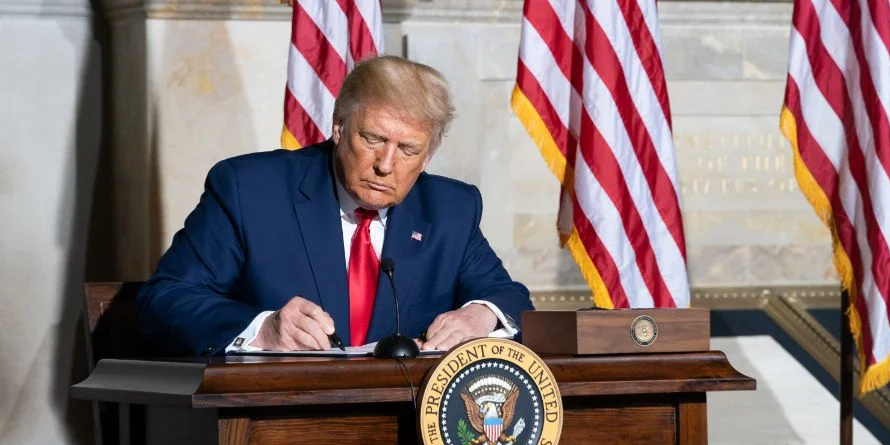
Last January 29, US President Donald Trump issued a new Executive Order classifying Cuba as an “unusual and extraordinary threat” to Washington’s security, citing, as justification, Havana’s alignment with Russia, China and Iran.
The decision provides for the imposition of commercial tariffs on products from any country that supplies or sells oil to Cuba. The threat has worsened the country’s energy crisis, which depended, until 2023, on petroleum derivatives for around 80% of the energy consumed, according to the International Energy Agency (IEA).
On February 5, Cuban President Miguel Díaz-Canel denounced Trump’s decision as yet another attempt to defeat the Cuban Revolution, which would install the first communist-inspired government in Latin America, challenging Washington’s policy towards the continent.
During the interview, Ambassador Adolfo Curbelo highlighted that Cuba is experiencing an unconventional war situation, which would explain the current difficulties faced by the population. For the diplomat, the new measure has “devastating” effects on the island, which has adopted extreme austerity measures and has invested in the expansion of solar energy and international solidarity.
Check out the exclusive interview below:
Exclusive interview with the Cuban Ambassador to Brazil, Adolfo Curbelo – Rafa Neddermeyer/Agência Brasil
Agência Brasil: How does the new US measure against oil trade harm the Cuban economy and society?
Adolfo Curbelo: There is an accumulation of factors. We come from a 67-year lockdown, reinforced during Trump’s first term, with 243 additional measures that remained in place throughout Biden’s presidency.
We live under a strict blockade that included, for many years, unconventional warfare measures to target, for example, ships transporting oil to Cuba, or shipping insurance companies. Many vessels were boarded to prevent oil from reaching Cuba.
On January 29, the US president issued a decree saying that any country that sold oil to Cuba would be subject to sanctions. They had already guaranteed that no oil from Venezuela would reach Cuba. This entire measure seeks, precisely, to subjugate Cuba. We say that it is a measure that constitutes declared genocide.
Agência Brasil: Why is it a genocide?
Adolfo Curbelo: Because it deprives the Cuban people of their means of subsistence. A country’s economy depends on energy. With energy, the country moves, cares for the sick in hospitals, produces food, moves and transports the population. Without energy, all of this is compromised. What they did was condemn the Cuban people to extermination. I think these things need to be called by name.
A country like Cuba, which needs oil to generate electricity, simply cannot import it in the exercise of its sovereign right. Now, the sovereignty of the rest of the world has also been violated by the US, not just Cuba. The effects of this on the economy and the country are devastating. Now, this doesn’t mean we are defenseless.
Agência Brasil: How does Cuba intend to face this moment?
Adolfo Curbelo: The situation is very tense. The country has had to take extreme austerity measures to prioritize protecting what is most needed. Firstly, the population. Although there are long blackouts across the country, work organization measures have been adopted so that people can work from home, prioritizing those who most need to go out to work.
Electrification work was carried out in areas that require special protection: hospitals, schools, and even homes with children who, due to their health conditions, need electricity. These houses are being prioritized.
We are working to increase oil extraction and refining in the country. We have been working to increase the installation of solar panels in the country to generate electricity from photovoltaics. Last year, we were able to install solar panels to generate 1,000 megawatts. This installation has allowed us to now have almost 40% of the country’s daytime electricity generation coming from solar panels.
This investment made it possible to increase the percentage of total national electricity generation, from photovoltaic solar energy, from 3% to 10%. The banking system, hospitals, schools and food production centers are being protected with solar panels.
This does not mean that we are doing well, as there is still a very acute deficit in electricity generation, which is linked to the lack of fuel. We do not yet have the storage capacity necessary to distribute this electricity. Most of the generation infrastructure installed in the country consists of thermoelectric plants and most of them have obsolete technology that we cannot modernize because it is very expensive.
Agência Brasil: Some aviation companies have suspended flights to Cuba due to lack of fuel to return, such as companies in Canada. What is the effect of this lockdown on tourism?
Adolfo Curbelo: Tourism is one of the country’s main activities for earning foreign exchange. With the foreign exchange obtained, oil is even imported. When there is no oil, there is no fuel to fuel the planes that transport tourists.
The US is also trying to stop the flow of tourists to our country and prevent the flow of money. That’s why I spoke of genocide, because the objective of this measure is precisely to deprive the Cuban people of their means of subsistence. The blockade is part of a policy of genocide.
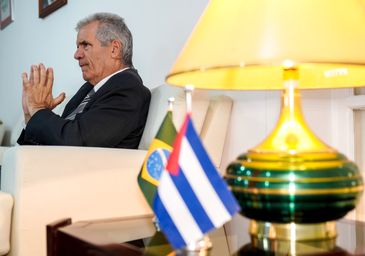
Exclusive interview with the Cuban Ambassador to Brazil, Adolfo Curbelo – Rafa Neddermeyer/Agência Brasil
Agência Brasil: How do you evaluate the international community’s response to this new measure by the Trump government?
Adolfo Curbelo: There is a widespread rejection of US policy in the world. Nobody accepts the tariffs, nobody accepts the aggression, nobody accepts any of this, the blackmail policy.
I also believe that solidarity will increase with the resistance of the Cuban people. There was significant international condemnation. The Non-Aligned Movement, which encompasses most countries in the world — the so-called Global South — issued a statement rejecting the order from the US president’s government. Important countries such as Russia and China, among others, issued strong statements of rejection and solidarity with Cuba, stating that they will provide assistance to the country. China donated 70 thousand tons of rice to Cuba.
Mexico has maintained a firm position, defending, let’s say, its right to help Cuba. Two days ago, several Mexican Navy ships sent more than 900 tons of humanitarian aid to Cuba. Special Cuban envoys visited China and Vietnam, and Cuba received important visits from Russia.
Agência Brasil: But wouldn’t practical measures for international aid still be timid?
Adolfo Curbelo: We believe that international mobilization is very important. Denouncement and political dialogue are very important, but we also believe that practical solidarity is important, the possibility of helping and supporting the Cuban people to resist.
José Martí, the apostle of Cuban independence, said that doing is the best way to talk. We can all play a role. We must not limit ourselves to telling a story, but we must act to change that story to defeat US policy.
This is not just about defending Cuba, but about defending Latin America, all of us. The attack against Cuba is not just against Cuba. The attack against Cuba and Venezuela is an attack against all of us. We declare Latin America a zone of peace. And they want to transform this into a space of war, of conflict, of the imposition of the law of the strongest. We will resist and we will win.
Agência Brasil: How far does the Cuban government believe the US blockade policy will go?
Adolfo Curbelo: Cuba’s decision to defend its sovereignty and independence, even with the use of weapons if necessary, is unshakable. We are a peaceful nation. We have always declared our willingness to maintain a respectful relationship with the USA, including with the current American government, and our willingness to dialogue on an equal footing.
However, no conditions can be imposed, there can be no interference in Cuba’s internal affairs, nor any attempt to subjugate or subordinate our country to U.S. interests. Cuba’s independence and sovereignty are non-negotiable.