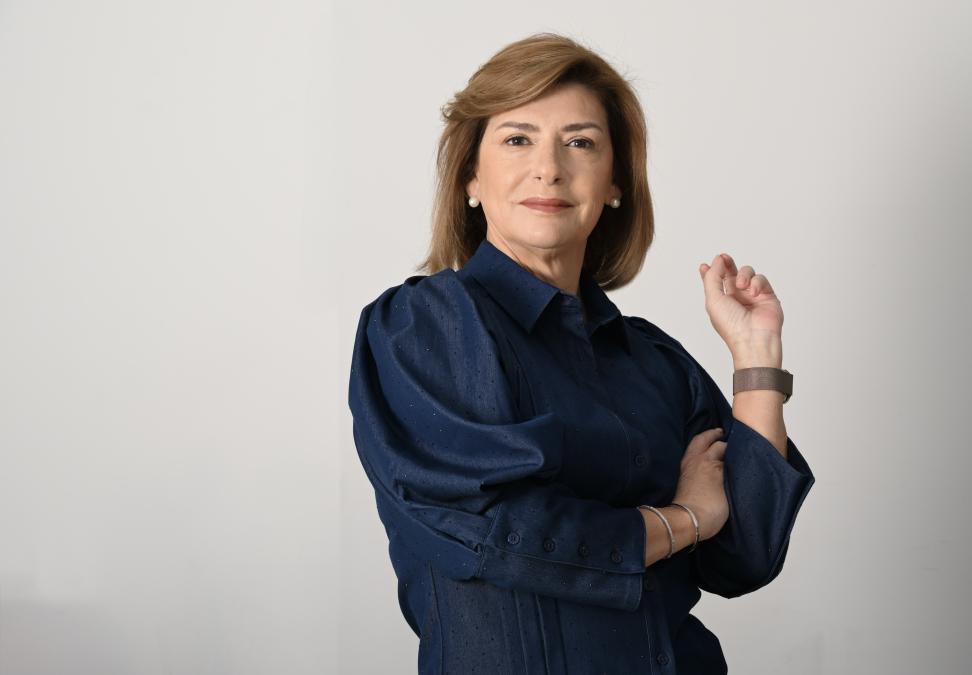
Flavia Maggi I wanted to be a journalist in 1984, when terrorism and the rampant economic crisis besieged Peru. “Look, why don’t you study advertising, which is more or less similar?” his father, then a pediatrician, proposed.
—And they have nothing similar, but I had to do it. In any case, I love to investigate, I love to get to the bottom of the truth, I love to know, I read a lot – describes herself as the youngest of eight siblings who, finally, became a communicator, researcher and, in the 90s, was one of the few female publicists.
Today she is executive director of the Effie Awards and last night she presented the book Ideas with their own light. Three decades rewarding effectivenessimpeccably edited.
—In addition to research, in some way I do journalism; and I love advertising. So, a time has come in my life where I can do everything I like,” he tells me. He also hosts and directs the Marcas & Mercados program, via Peru21.
How is the marketing and advertising industry in Peru?
With many new features, with a lot of movement. We see brands like Gloria that have launched more than 25 products last year. I see an Alicorp with brand repositioning, with different value propositions. I see La Tinka everywhere. Yape that is constantly evolving. Banks in general with super interesting value propositions. The other day I was doing a study cross-referencing information in Latin America and the truth is that we in banking are super advanced in the region, evidently taking Mexico and Brazil out of the equation. You see new brands coming out all the time, the consumer is very alert to what they want. Marketers have realized that the Peruvian is a ‘brand name’, we like to buy brands.
Are we a special case in the region in terms of entrepreneurship?
There is a lot of entrepreneurship and kids want to have their own businesses. I doubt that there are so many entrepreneurial kids in Chile, in Colombia, in Ecuador. I think they’re a little more conservative in that sense. Our big brands are Peruvian brands. I think the Peruvian has an enormous ability to develop products and create brands.
What is the purpose of the Effie Awards?
Highlight the marketing and communications work that companies do in Peru. And we also do it in more than 60 countries around the world. And what we measure is effectiveness: we applaud the teams that have participated in a project and that has been effective and successful for the company, for themselves, for the consumer and for the entire chain. And in marketing we talk about changing behaviors.
For some purpose beyond the sale itself?
Well, change behaviors so that people do more sports, so that people can eat healthier, so that people know that they have options to balance their food. There are a number of reasons why we have a responsibility to help change behaviors that are not okay.
Is this sense of change already installed in brands and in those who consume them?
Yes, there is a lot of responsibility on the part of the producer to offer products and services that people need, because generations are also changing. Before, they sent you a bag of chips and a package of cookies as a lunchbox to school; Now they send you an egg and a piece of avocado.
Book cover.
And do the Effie Awards also take those factors into account?
We have some categories of social good. But the Effie is an award for advertising effectiveness, for effectiveness of marketing communications. And we have more than 43 categories. Last year we had 420 cases, a historical record for us.
You also define yourself as a conservationist and humanist. Because?
Conservationist, because I believe in the sustainability of natural resources. I worked for four years at a foundation for nature conservation. And we are lucky to live in a country that has more than 12 different climates. We are an extremely rich country and I think we have the best pantry in the world. And the only way to be able to maintain our natural resources is to conserve them and help people who live in the most remote areas so that they can learn to take care of their natural resources and that businessmen are also aware that they cannot fish during closed seasons and that they have to help the communities so that they can develop their own products and so that the value chain continues.
And the humanistic?
I believe in human beings.
Do those values filter into your daily life?
Throughout. We are in a privileged place and from that place I think we have to try to give back to those people who are not as privileged as us through our work. The more we generate employment, the more people will have jobs and will escape poverty.
Do you also carry those principles to the family?
Yes, my two children have that sensitivity for nature and for human beings.
What is your purpose in life today?
When I wake up in the morning, I say “wow, what does my day propose today?” I love what I do.
Self-sign:
-“I am Flavia Giuliana Maggi Pacheco. I am 58 years old. I was born in Lima. I finished school and went to live in the United States for a year. I came back and studied Advertising at the IPP, I was the second class. And while I was working, I studied. I finished my degree and worked at Associated Publicists.”
-“I went to Toyota, then to 3M, McCann, Pro Naturaleza, Telefónica, Interandina and Apoyo. I remember the ‘Always Coca-Cola’ campaigns, in ’92, the year I also got married; in ’97, with Telefónica I did a campaign that I think is the most beautiful I have ever done.”
-“I am vice president of Ipsos. Opinion and market; I am CEO of the Valora Perú group and executive director of the Effie Awards. Now the call begins. You can submit cases until April 27. And we will award on June 2. You can register on the page www.effie-peru.com.”
Peru needs us informed to make decisions. Subscribe for free to the Perú21 newsletter: THE TOP 5 NEWS YOU SHOULD KNOW TODAY. Click on the following link.
RECOMMENDED VIDEO