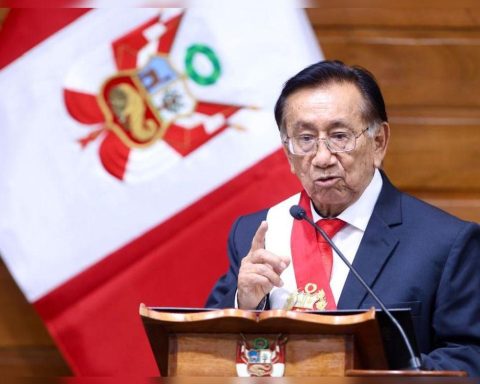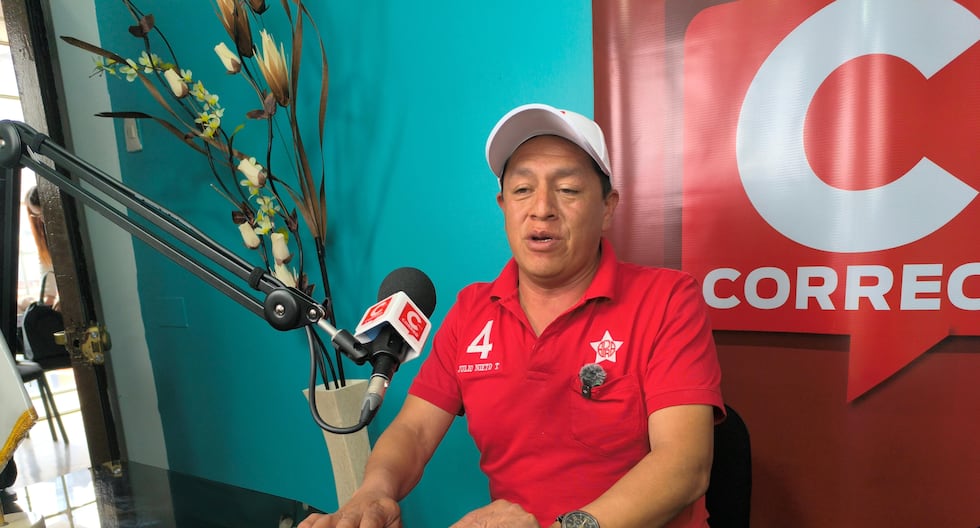
This week the Correo podcast “Meet your candidate”, begins with an interview with the candidate for the Chamber of Deputies for the Peruvian Aprista Party, Julio Nieto Tinoco, with number 4. Nieto assured that APRA has returned to the political arena with organization, experience and concrete proposals for the country.
The Peruvian Aprista Party has recovered its registration. Some point out that it could be a debut and farewell due to the electoral fence. What do you think?
It is true that we lost registration a few years ago due to a decision by the National Elections Jury, which even led to colleague Nidia Vilches renouncing her application. Today that stage is behind us. The party has regained its registration and is once again organized at the national level.
Polls still place them low. Are you worried?
Not necessarily, because most surveys are only carried out in Lima. At the national level we have almost 99% of candidates registered for both the Senate and the Chamber of Deputies. Historically, APRA has never had less than 5% and I am convinced that we are going to pass the electoral hurdle.
Do you think that without Alan García, the party lost its call?
Comrade García was a political figure who moved the national scene and cannot be compared with anyone. However, each militant has their own form of leadership. Carla García is running and making every effort to join, and I am convinced that she will reach the Senate along with other colleagues.
Is there a generational change taking place within the party?
Politics is not just a generational issue, it is also experience. The country needs people with knowledge of public management. APRA has experienced cadres, but also young people trained in Lima and in regions like Junín.
From your municipal experience, what would you propose in Congress?
Greater coordination between the Executive and Parliament. Many laws are issued without considering reality or coordinating with the Government, which makes them ineffective, especially in matters of citizen security, justice and governance.
Have you been critical of the State’s labor regimes?
Yes, there are currently too many labor regimes that generate inequality. My proposal is to unify them and deactivate SERVIR, which has become an unnecessary expense and has not met its initial objective of meritocracy.
Regarding the proposal to move the capital of Peru to the central region, what is your position?
Anything is possible, but you cannot fall into populism. It is not enough to say that Huancayo or Jauja are the capital of the country if basic conditions such as roads, international airport and infrastructure are not guaranteed. A law cannot be issued without first creating the real conditions for it to work.