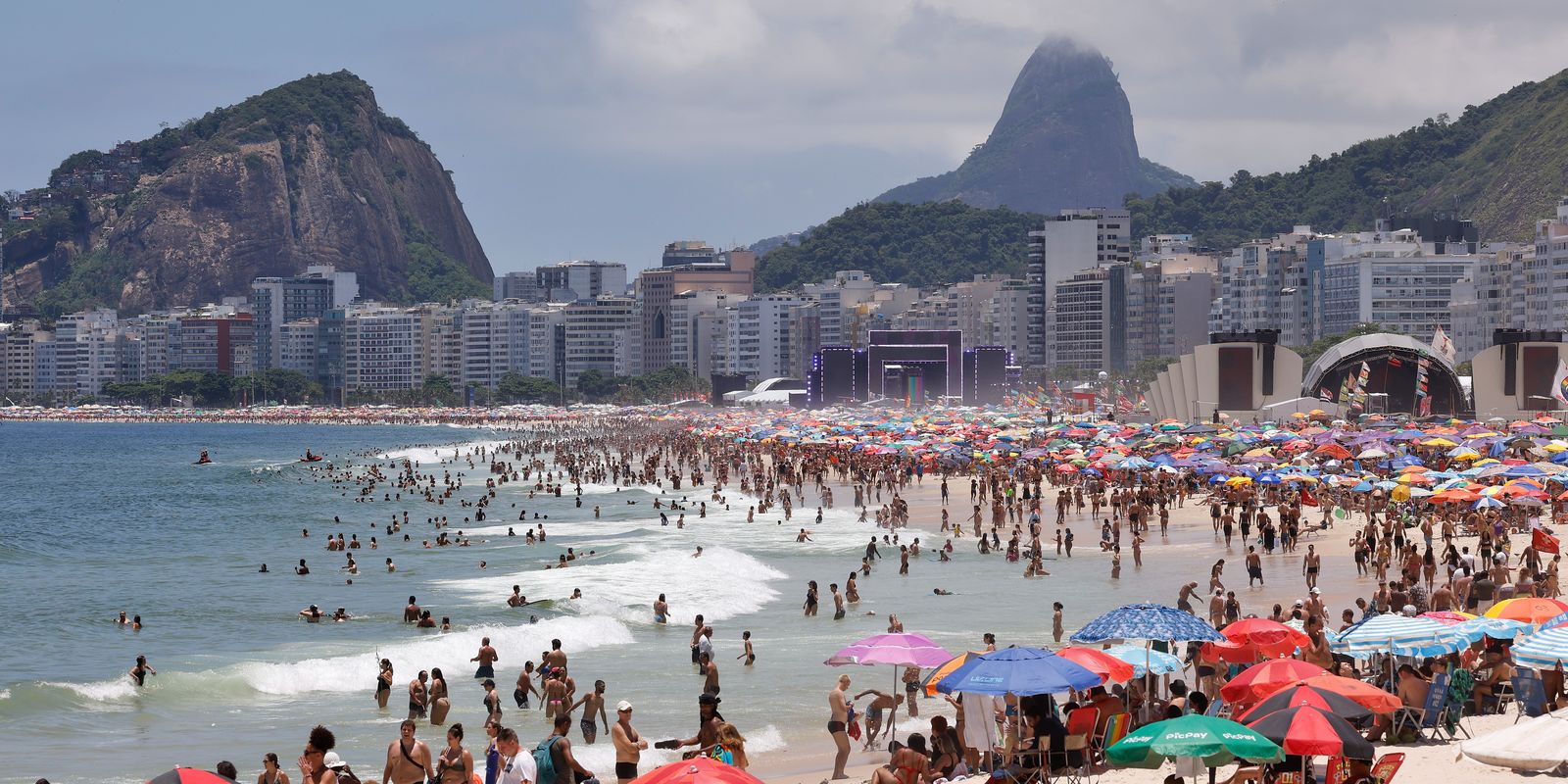
More than a thousand people have been rescued by lifeguards since Friday (13) on the beaches of the state of Rio de Janeiro. The Fire Department has reinforced the number of agents throughout the coast, as the number of bathers increases significantly during the carnival period.

Furthermore, since the beginning of summer, most lifeguards have been working at mobile posts, which can be repositioned at different points on the beaches, depending on the flow of swimmers and changes in sea conditions. Agents also have the help of high-resolution drones and thermal cameras, to make it easier to locate people in emergency situations.
Related news:
- Body of third victim of shipwreck on the Amazon River is buried.
- Accident between van and truck in Planaltina leaves five dead.
- See tips to protect your cell phone from virtual scams during Carnival.
According to the Fire Department spokesman, Major Fábio Contreiras, for safe sea bathing the population must observe the flags that indicate the level of danger in the area. The ideal is to only dive on green flag beaches and close to a lifeguard station.
“In general, the red flag is a place where we have a ditch, a rip current in front. Never dive in these places. If you are surprised by a rip current, the main recommendation is to try to swim to the sides, until you can return to the shallow part of the beach with the force of the waves. If you don’t know how to swim, the advice is to wave your arms, because our lifeguards are trained to identify this sign and help you as quickly as possible”
The major also recalled that the danger increases at night and with alcohol intake:
“Alcohol and diving do not mix. Our balance and reflexes are greatly impaired and the chance of drowning is very high. Nighttime swimming is not recommended anywhere in the world. Visibility is very reduced and the chances of drowning increase greatly.”
Contreiras also warned of the risks of areas with rocks and slopes. Diving from these locations can cause injuries and lead to drowning, but even people who are close to the edge for a short time, to take a photo, for example, can fall or be swept away by the waves.