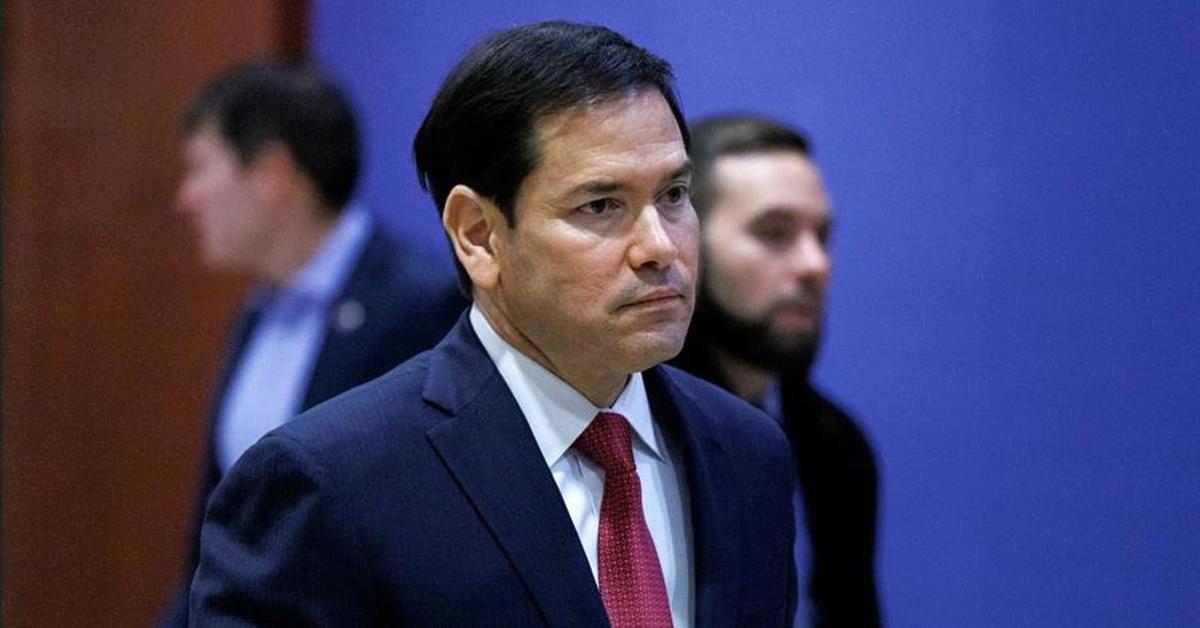
Madrid/US President Donald Trump said this Monday that his Secretary of State, Marco Rubio, is “talking to Cuba right now” about an “agreement”, but considered a military operation in the country similar to that in Venezuela “not necessary.”
“We’re talking to Cuba right now. Marco Rubio is talking to Cuba right now, and they should totally come to an agreement, because it’s really a humanitarian threat,” Trump told reporters aboard the presidential plane.
Asked if a military operation like the one that led to the capture of the deposed Venezuelan president, Nicolás Maduro, is being considered, Trump refused to answer, but said that “it would not be a very tough operation” and said “he does not believe that that is necessary.”
He anticipated that Cuban-Americans “will be happy when they can return” to the island and reunite with their families.
The president reiterated that Cuba is “a failed nation”, highlighted that “they do not have fuel for the planes to take off and they are accumulating on the runways”, and anticipated that Cuban-Americans “will be happy when they can return” to the Island and reunite with their families.
“I am very interested in the people who are here, who were treated very badly by (the Castro regime) and the Cuban authorities, they have been treated horribly. We will see how everything turns out, but we are talking to Cuba,” he declared.
Likewise, he defended that “there is no oil, there is no money, there is nothing” flowing to Cuba, in reference to US sanctions on countries that sell or provide oil to Havana.
Last week, The Economist published information according to which the United States would be considering sending diesel and liquefied gas to Cuba to slightly alleviate the situation.
Rubio spoke with Bloomberg in one interview on saturday in which he insisted that the solution for Cuba would be economic opening. “Now, forget, put aside for a moment the fact that there is no freedom of expression, no democracy, no respect for human rights. Cuba’s fundamental problem is that it has no economy, and the people who are in charge of that country, who control that country, do not know how to improve the daily life of their people without giving up power over the sectors they control. They want to control everything. They do not want the Cuban people to control anything,” he lamented.
“Now, forget, put aside for a moment the fact that there is no freedom of expression, no democracy, no respect for human rights. Cuba’s fundamental problem is that it has no economy.”
The Secretary of State stated that they have been offered opportunities to change things and “they do not seem to be able to understand or accept it in any way. They would rather be in charge of the country than allow it to prosper.”
Asked about the options that are on the negotiating table, Rubio said that he could not announce them in an interview, but that the important thing was “not only political freedom, but also economic freedom,” since the regime is used to living off aid from the Soviet Union first and Hugo Chávez’s Venezuela later.
“The Cuban regime does not have a basic knowledge of how business and industry work, and people are suffering as a consequence of this. So I believe that, without a doubt, its willingness to begin to open up in this sense is a possible way forward,” he said before claiming the humanitarian aid that the United States is sending to the island.