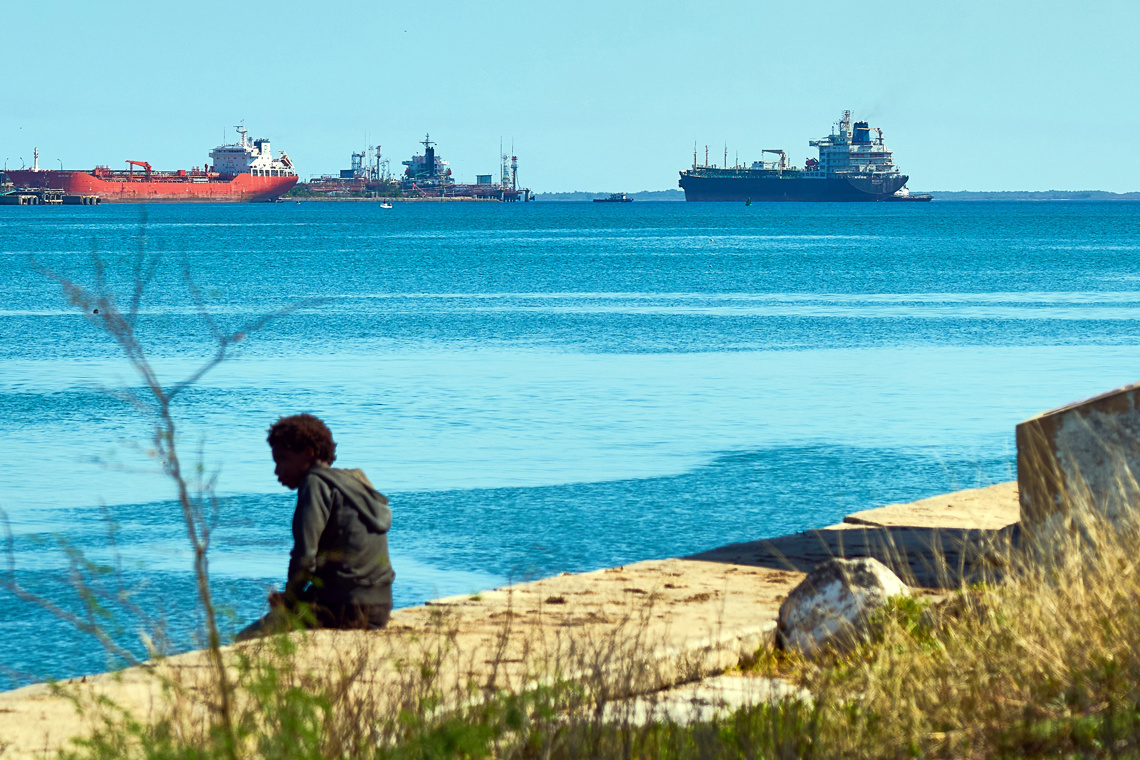
A oil tanker with cargo entered Matanzas Bay this Monday and docked near the city’s energy logistics port in the middle of US energy blockade of Cubaas confirmed EFE.
This is the Nicos IV ship, with IMO identification code 9103843, flag of Saint Vincent and the Grenadines and 183 meters in length.
Although it appears partially loaded (has capacity for more than 300 thousand barrels)the type and amount of fuel it carries is unknown.
If it came from a port outside of Cuba, it would be the first tanker to dock on the island since the Ocean Mariner on January 9, which entered from Mexico with about 85 thousand barrels.
Ship tracking platforms did not have the Nicos IV registered in a Cuban port in recent weeks, although It is possible that the ship was operating in the island’s waters without making its position known.
The ship
Nicos IV is not sanctioned by the United States, but it does have “active surveillance” status for a previous environmental crime and for having been linked in the past to the so-called “energy bridge” between Venezuela and Cuba.
According to recent US legal documents, this tanker belongs to the Greek shipping company Nicos IV Special Maritime Enterprises, a single-purpose company for the control of this ship, although its technical and commercial management is in charge of the Greek company Oceanic Shipmanagement Corp.
On the western shore of Matanzas Bay is one of Cuba’s strategic energy logistics complexes, with a large supertanker base—the largest capacity—and the Antonio Guiteras thermoelectric plant, one of the largest on the island.
That is the super tanker base which in August 2022 suffered a serious fire, the largest industrial disaster in the country’s recent history, which claimed the lives of 17 people and damaged four of its eight warehouses, each of 50 thousand cubic meters.
oil blockade
The United States has established a oil blockade on Cuba since January by closing the tap on Venezuelan oil and subsequently announcing by executive order tariffs for countries that supply crude oil to the island.
In the last days Mexico has sent humanitarian aid to the island and Russia has announced that it is studying sending oilalthough he preferred not to give details in order to preserve the operation.
Cuba barely produces a third of the nearly 110,000 barrels of oil it needs per day.
The consequence of the oil siege are greater blackouts, lack of fuel at gas stations and growing problems in multiple sectors due to the transversality of the energy factor.
The Cuban Government has implemented an emergency plan that has left health and transportation at minimum services, ended in-person classes at the university, established teleworking and restricted hours in state offices, and severely rationed fuel.