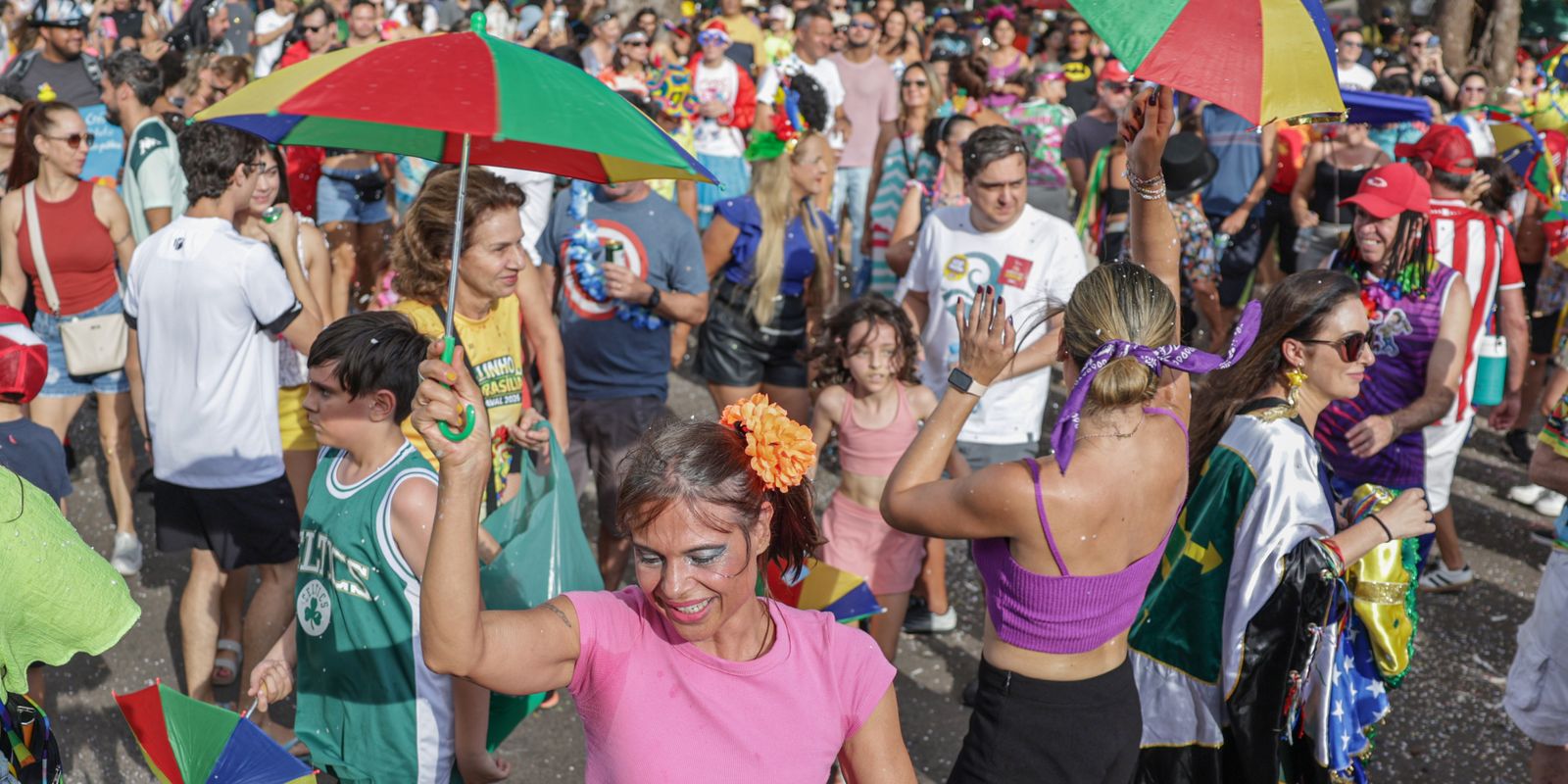
Galinho de Brasília, a traditional group that for 34 years has sought to keep the Pernambuco frevo tradition alive in the country’s capital carnival, has, in the 2026 edition, a new challenge: to revive Brazilians’ ancient passion for football.
With the theme “Galinho na Copa: Frevando towards Hexa”, the group, which in other carnivals attracted more than 100 thousand people, took to the streets of the federal capital this Monday (16) accompanied by the Marafreboi Orchestra, led by maestro Fabiano Medeiros; and by Orquestra do Galinho, led by maestro Ronald Albuquerque.
“There are many types of frevo invented in Pernambuco. It is a rhythm so rich that it cannot be played by just any band. There are many instruments and metal sections rich in backbeats. Only good musicians can play this rhythm that makes the people of Pernambuco so proud”, explains Pernambuco public servant Damísia Lima, 52 years old – of which 21 in Brasília.

Damisia Lima speaks to Agência Brasil during street carnival, Galinho block. Photo: Joédson Alves/Agência Brasil
Accent, refuge and tradition
Damísia is from Olinda, a city in Pernambuco with more carnival tradition. “We Pernambucans are very proud of our culture and our music. My biggest fear was losing my accent. Thank God I keep it to this day. I never miss Galinho de Brasília, because it is my refuge to endure spending the year away from Recife”, he added amid praise for the top quality frevos performed by the musicians from the Brasilia branch.
The block’s organizers are attentive to this tradition that so enchants old and new generations of Pernambuco residents. The block’s administrative director, Sérgio Brasiel, says that carnival currently has many aspects.
“Today we see several other musical styles influencing carnival. There is even rock. Our proposal here is to rescue the essence of Pernambuco’s carnival. And, as 2026 is the year of the World Cup, we take the opportunity to bring back the old passion that Brazilians have for football”, explained Brasiel, referring to the theme adopted for the current edition of Galinho de Brasília.
He cites the challenges of organizing the event, especially because of the bureaucracy imposed for popular festivals.
“The ideal would be to have three to four months to dedicate ourselves to the organization, but we ended up doing it in just 15 days due to this bureaucracy. But the good thing is that it worked and, after all this work, we were happy to see the joy of our revelers”, added the administrative director of Galinho de Brasília.
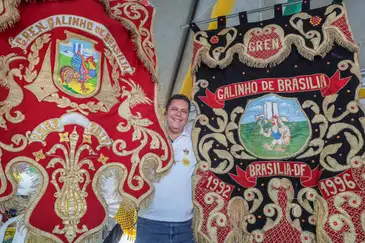
Block organizer, Sérgio Brasiel. Photo: Joédson Alves/Agência Brasil
Carnival experience
Someone who also experienced a lot of the Olinda carnival was teacher Célia Varejão. Wearing the t-shirt from the 1995 edition of Galinho de Brasília, she carried with her a flag from her homeland and made declarations of love for her favorite club, Flamengo.
“I love popular things, both in carnival and in football. They are two things that, if they stop being popular, lose their essence. That’s why I am outraged by the prices charged in stadiums, as they did here, in the Super Cup final”, she added, referring to the match played recently in Brasília, between Flamengo and Corinthians.
Quiet Carnival
The two people from Pernambuco praise the safety of the festivities in Brasília. Damísia, in fact, says she prefers the one in the federal capital, compared to the original Pernambuco block, Galo da Madrugada.
“In Pernambuco there are too many people. I think that, because there are fewer people, Galinho de Brasília allows me to enjoy the party more. I get less tired and, therefore, I can stay at the party longer. The truth is that my phase of big parties is over. I prefer parties like the one in Brasília. Especially because the frevo here is legitimate”, argued the reveler.
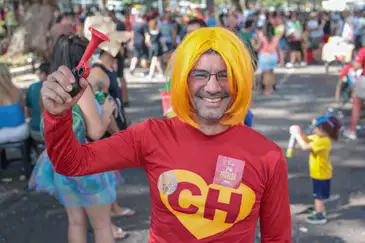
Benedito Cruz Gomes praises the tranquility of Brasília’s carnival. Photo: Joédson Alves/Agência Brasil
This tranquility of Brasília’s carnival also pleases public servant Benedito Cruz Gomes, 47. Accompanied by his wife and two daughters, he says that “carnival is a family thing; a free space for games”.
“I’ve been going to Galinho de Brasília for 30 years,” said the reveler who wore a costume that mixed the heroic characters Chapolin Colorado and He Man. “This block has always been present in my life because I live nearby. Now, it’s also present in my daughters’ lives”, he added.
Back to the game
Despite living in the city of Viçosa, in Minas Gerais, coffee producer Guilherme Fontes, 48, also got to know the first editions of the block. “I came to one of the first Galinho de Brasília, and I always want to go back, especially because I have friends here,” said the coffee grower.
He also praises the “calm and family atmosphere” of the Brasilia carnival. “For me, carnival is synonymous with fun,” he said amid endless foam spray fights with his wife and his friends’ children.
Another Pernambuco native who is a regular at Galinho de Brasília is engineer Alex França, 30. Born in Caruaru, which according to Pernambucans is the capital of the June festivals, he says he followed many of the stages the Brasília celebration went through.

Born in Caruaru, Alex França enjoys the Galinho group. Photo: Joédson Alves/Agência Brasil
“I remember that, a few years ago, the structure of Galinho de Brasília was more precarious and with less police. Today we have more security here, which motivates more and more people to frequent the block”, he said.
34 years of history
Founded in 1992 by a group of people from Pernambuco living in the Federal District, Galinho emerged as an affectionate alternative for those who were unable to travel to Recife to participate in the legendary Galo da Madrugada group.
The block’s organizers explain that the first parade took place “in an adverse economic context, marked by the confiscation of savings, which prevented many people from the Northeast from traveling to play Carnival in Pernambuco”.
According to them, the experience was so remarkable that, after Carnival, revelers founded the Grêmio Recreativo da Expressão Nordestina – GREN Galinho de Brasília, with the aim of preserving and spreading northeastern cultural traditions in the federal capital.
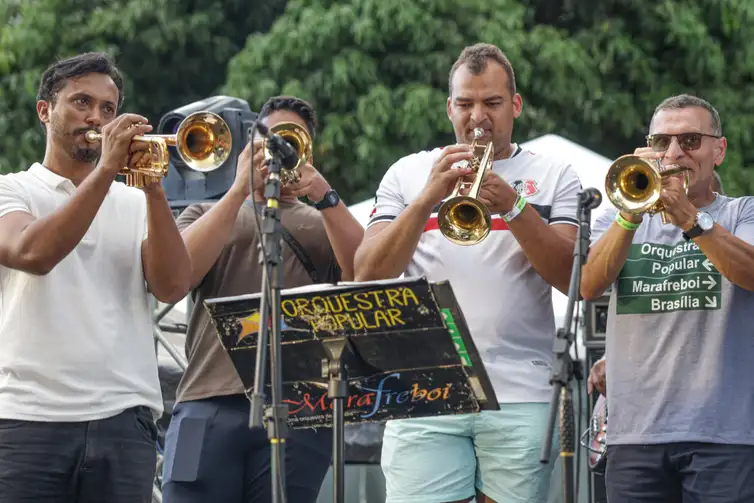
Brasília (DF), 02/15/2026 – Street carnival, Galinho block. Photo: Joédson Alves/Agência Brasil – Joédson Alves/Agência Brasil