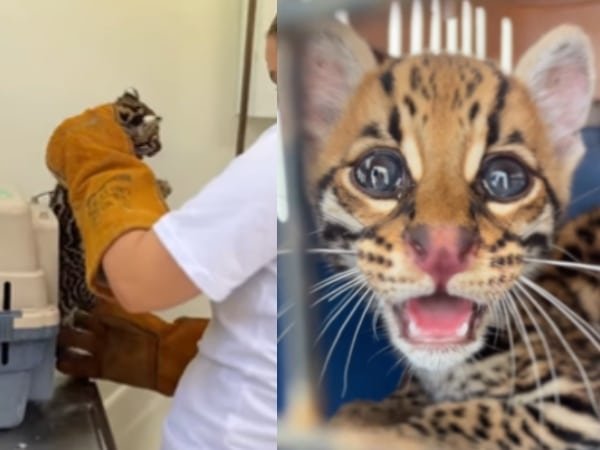
Rescued in Tierralta in the midst of heavy flooding, a juvenile margay (Leopardus pardalis) receives specialized care at the CVS Wildlife Care and Assessment Center, where doctors and biologists work to ensure its recovery and eventual return to its natural habitat.
Colombia News
The winter emergency in Córdoba not only affects human communities. Among the waters, a small wild feline was saved and today represents a story of hope and commitment to the protection of the department’s biodiversity.
Also read:
In the midst of the emergency caused by floods in the municipality of Tierralta, Córdoba, a story of hope makes a difference. A juvenile margay, scientifically known as Leopardus pardalis, was rescued alive and today is fighting to recover thanks to the timely intervention of the environmental authority.
The specimen was received at the Wildlife Care and Assessment Center of the Regional Autonomous Corporation of the Sinú and San Jorge Valleys (CVS), where they immediately activated the specialized medical care protocol.

A rescue in the midst of environmental tragedy
The heavy rains and the overflowing of water sources have left multiple effects in Tierralta. However, among the ravages, stories also emerge that reflect the commitment to protecting biodiversity.
The ocelot, a key species for the balance of ecosystems, entered the Center when it was just a juvenile, which increases its vulnerability to extreme events such as floods.
Since his arrival, the team of veterinarians and biologists carried out a complete clinical assessment to determine his health status and establish the appropriate treatment.
Medical exams and rehabilitation plan
As part of the process, the feline will undergo blood counts and stool tests. These exams will allow us to identify possible effects derived from the emergency, such as infections, dehydration or the presence of parasites.
With the diagnostic results, the specialists will define your rehabilitation process, always prioritizing your well-being and the possibility of you returning to your natural habitat.
Specialized management to guarantee their return to the wild
During its stay at the Care and Assessment Center, the ocelot will have:
- Feeding according to its species.
- Environmental enrichment.
- Minimal human interaction.
These measures seek to preserve its wild behavior and prevent it from losing essential skills to survive in the wild.