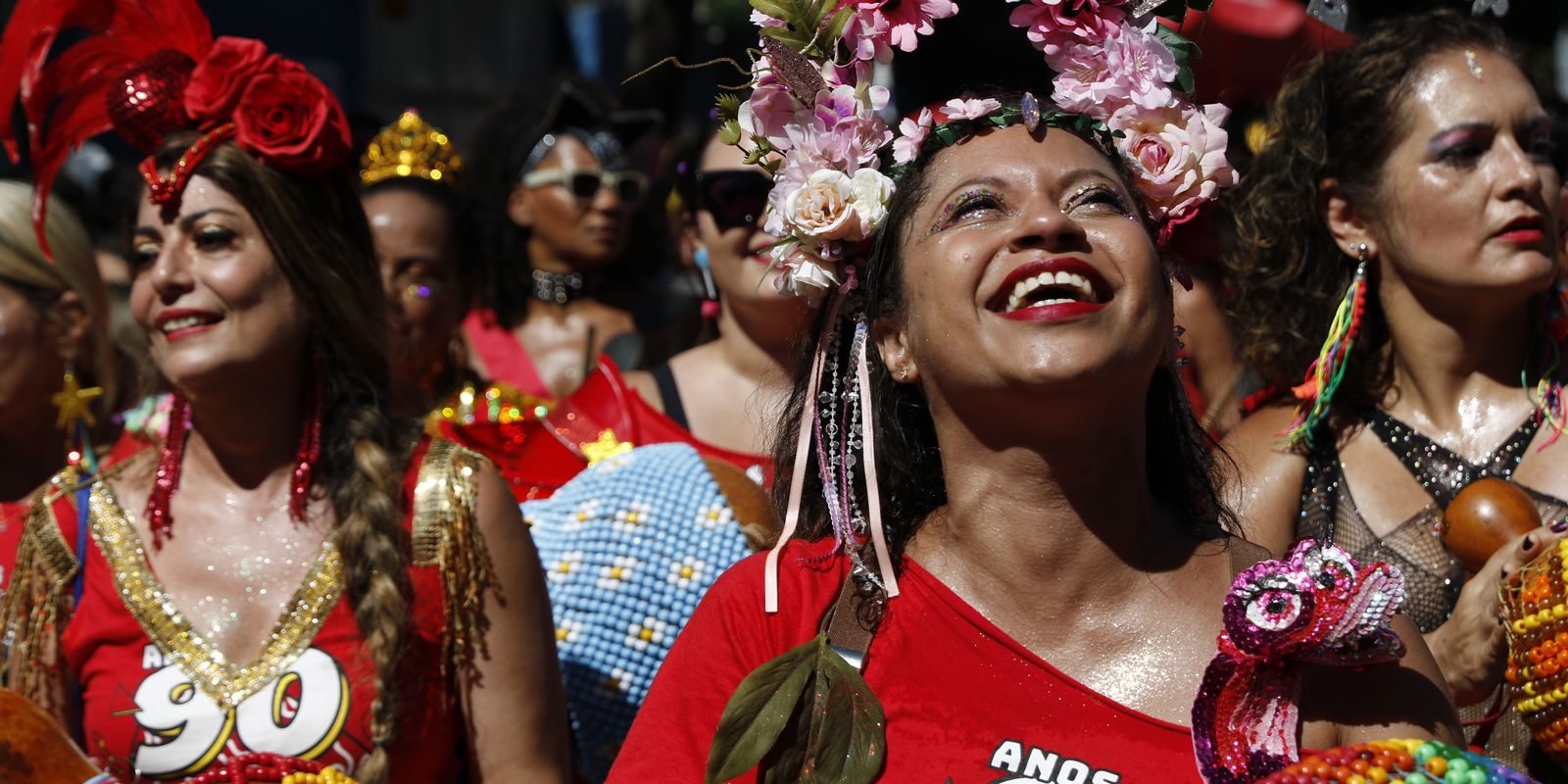
“There isn’t just one carnival. The name should be carnivals.” This is what Ana Beatriz Dias, a professor at the Polytechnic School of the Pontifical Catholic University of Paraná (PUC-PR) defines, is a specialist in human behavior.
In an interview with Brazil Agency To tell interesting facts about the long holiday, the psychologist and theologian argues that there are many ways to celebrate carnival and feel the meanings that the party can have.
“That’s the beauty of Brazilian culture. Being able to go to the Sambódromo, if you like, or to a rock show. In the Northeast, there are the Olinda puppets; in Pará, another type of carnival; in Rio Grande do Sul, there is the carreada, which is the final moment of fattening cattle to start the export period, before winter begins.”
What does parading mean?
Ana Beatriz reinforces that the rite of parading dates back to ancient times. The fact that a person paraded through the city with banners and banners always represented something victorious, a joy for the people, the death of an enemy, the conquest of a territory.
“When, especially in Catholicism, people go out for a procession, they generally carry images, crucifixes, candles. In many ancient cities, this tradition persists, including with music.”
The blocks, maracatus, cordões and various carnival groups built their choreographies, presentations and parade forms based on the model of processions, she says.
“It’s the same style: the instrumentalists, the people with the scaffolds or allegories and each group will defend the banner of the parish or the neighborhood, the team, the brotherhood, the saint”.
Gradually, a miscegenation occurs, in which the sacred and the religious emerge, and the dancing body begins to occupy this symbolic place, and gains this form of expression for freedom.
Carnival and spirituality
For each person, carnival can represent, today, a way of seeing the year that begins or of understanding their spirituality, comments Ana Beatriz. In addition to being a secular state, Brazil has people who belong to numerous religious denominations.
For young people, in particular, carnival represents being able to express themselves and enjoy sexual freedom, adds the researcher. For Catholics, the issue of spirituality stands out, because Carnival will be the moment when, for the last time, meat will be eaten.
“For these, it is a period of purification, of fasting, of doing good practices, of conversion, of looking at the reality of others. Carnival would be a period of overflowing and extrapolating everything, so that, the next day, the issue of experiencing Jesus’ suffering throughout his arrival at Calvary begins. This is the meaning of Lent.”
Celebration of life
Ana Beatriz highlights that carnival gains strength with the possibility of getting together as a group to follow a certain tradition or give up a certain thing, such as meat.
“This emotional intensification aims to strengthen the social bond, which can renew belonging to the group, to the neighborhood, and can reduce the feeling of isolation”, he pointed out.
The language of carnival and culture itself, she analyzed, is a way of demonstrating how a person relates to their own body, whether by avoiding rigid norms, or by avoiding excess and taking better care of themselves.
“It demonstrates how much society has these rituals of joy and symbolic reorganization in which, for a certain period of time, it can escape reality for a while to take on social issues, organize them, channel tensions and live their year.”
“It’s an identity game, a cultural expression. And culture will talk a lot about the health of this society, be it bodily health, mental health, everything that involves human desire, fantasies. Popular culture, whatever the celebration, will have many ways of reading”.