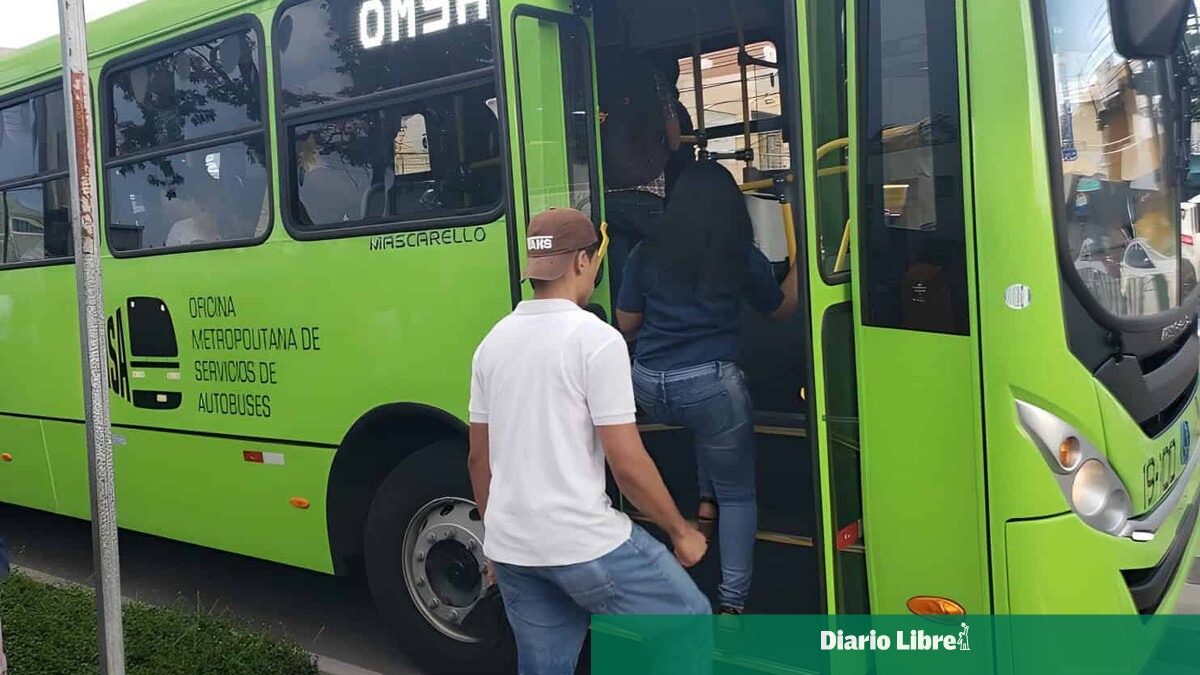
As next year marks three decades since its creation, what is now called Metropolitan Bus Services Operator (WHOSA) faces a notable decline in the mobilization of users with 16.1 million of passengers in 202539% below the 26.4 million projected for that period.
The figure, which in addition to being the lowest in the last decade—except pandemic 2020 when he just moved 11.8 million of people— represents 6.8 million less that the 22.9 million transferred in 2016.
However, if compared to a decade ago, at 2005when the WHOSA moved 50.5 million people, the drop rises to 68%, according to internal data from the institution and the National Statistics Office (ONE).
- Added to this decrease were the replacement of routes with private corridors, the deterioration of the units, judicial processes for administrative corruption and the long waits of users at stops, as incident factors in the reduction of passenger flow.
There was a time of glory
The WHOSA It was created in October 1997 by former president Leonel Fernández. At that time, every piece of news about the project would be viral today, given the need for a means of transportation for a time in which the Greater Santo Domingo accumulated 2.6 million of inhabitants.
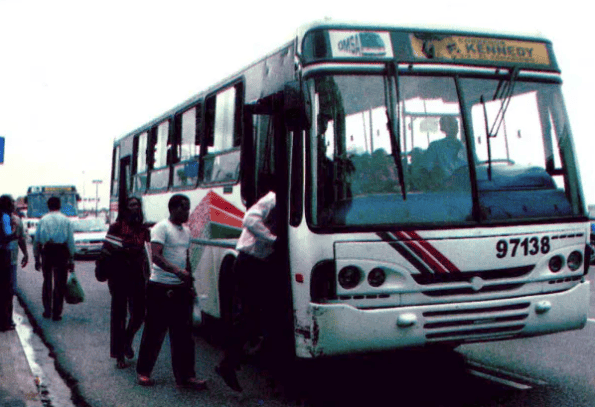
An example of this was that in the first five months of 1998 The Kennedy corridors were already operating, February 27 and Los Alcarrizos with 247 buses, transporting 9.2 million of passengers.
Data from the time, 90% of people preferred to use this means of transportation than the “flying babies“. With the price of three pesos, the proceeds were used to pay the loan to the Finamex bank in Brazil.
Ten years later, however, the picture began to change. Many place the beginning of the slope with the inauguration in 2009 of the Santo Domingo Metroalthough the data reflect that the decline began in 2008when the WHOSA mobilized alone 28.9 million of users.
Two years earlier, in 2007 and 2006they moved 43.6 and 52.8 millionrespectively, figures that reflect that it was a means of transportation as needed as the Metro is today, which exceeds the 100 million of passengers per year.
High budget vs. the low collection
In 2023, the president Luis Abinader converted to WHOSAthrough the Decree 167-23in a public company attached to the Ministry of the Presidency. Currently, it operates with 12 runners and 32 routes in the capital, Santiago and Barahona.

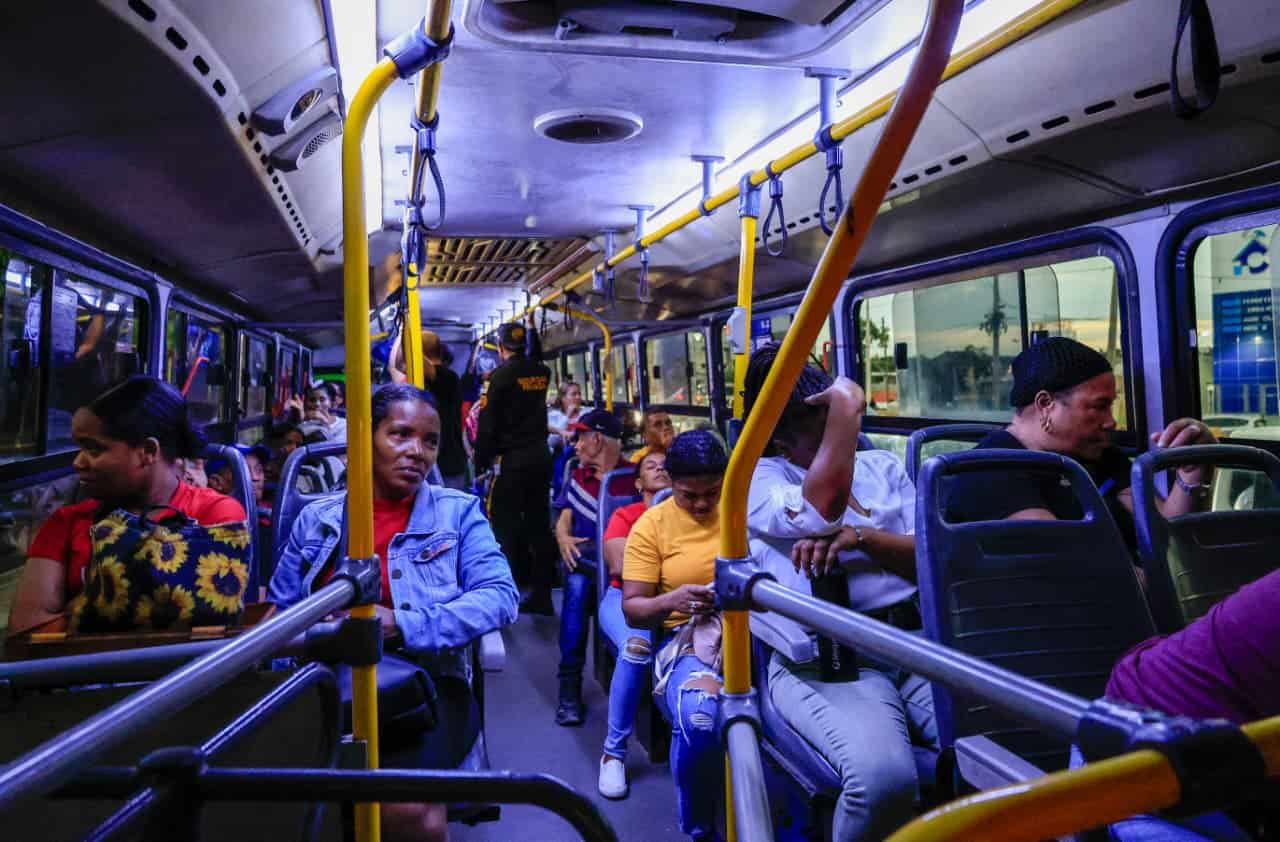
By 2026, the WHOSA has a budget allocated more than 2,222 million pesos, although it only collected RD$265.9 million. The previous year, when it transported 16.3 million passengers, it had 2,652 million pesos allocated and barely collected 306 million, including income from advertising on buses and special contributions.
In 2024the corridor with the greatest flow was February 27–Hippodrome, with 999,658 passengerswhich generated income of 8.9 million pesos. The Las Caobas corridor followed, with 519,269 passengers and revenues of 7.7 million pesos.
In contrast, the runner María Montés, in Barahonawas the one with the least activity, with 5,484 users transported and a collection of only 82,260 pesos, according to internal data from the WHOSA.
Despite the population’s progressive loss of interest in using the OMSA and the government’s push for alternative models of mass transportation, the entity, managed by Onísimo González, plans to transport some 54.7 million passengers and collect 1,915 million pesos.