Accepting differences is something revolutionary. As it is a space where differences can coexist, carnival carries with it this revolutionary potential that, in an ant’s pace or at the speed of light, can bring the peace that everyone deserves. It is with this thought that, over its 11 years of history, Bloco do Amor has been gaining more and more space in the country’s capital.
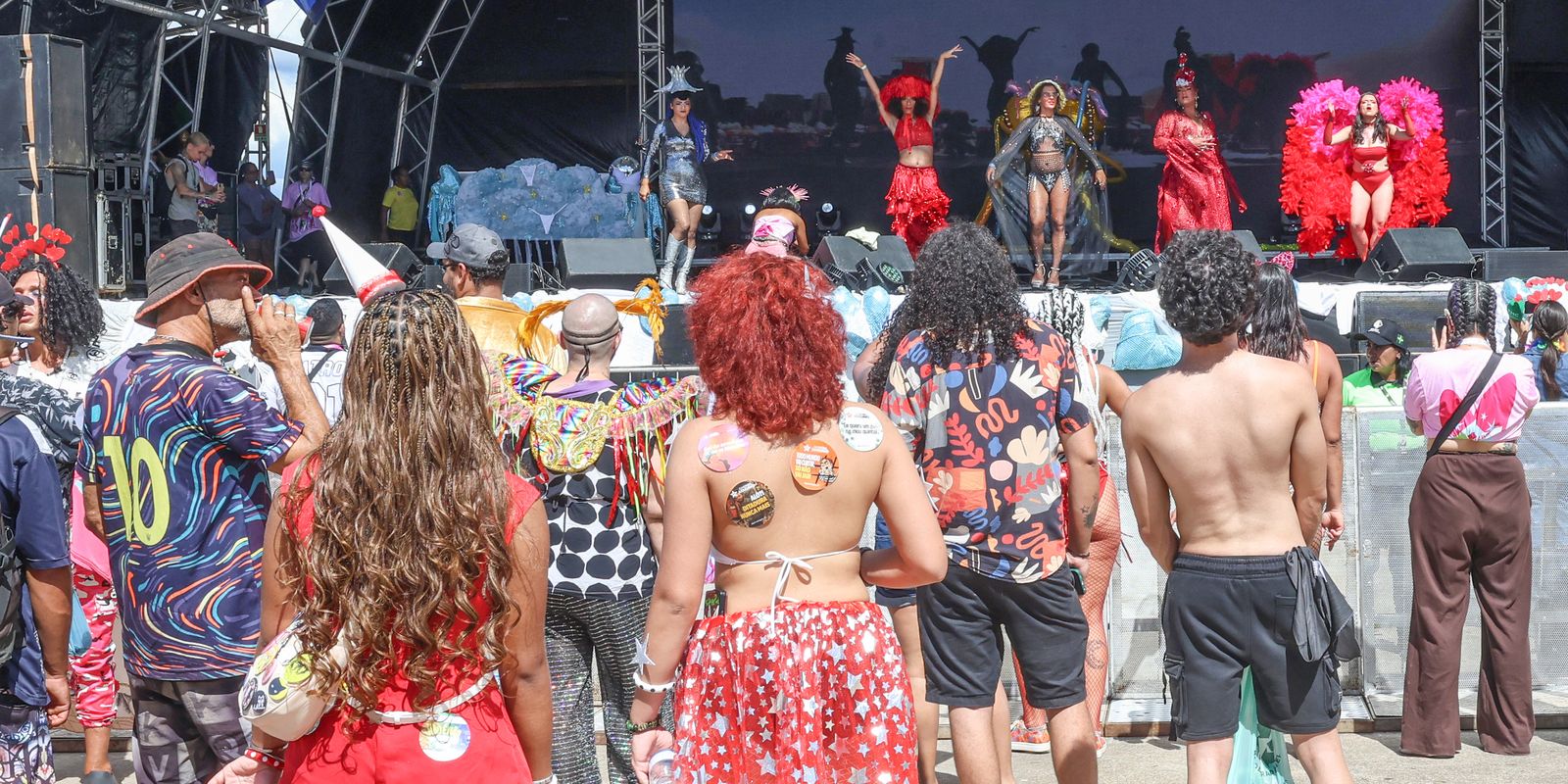
The group, which last year had an audience of almost 70 thousand people according to the organizers, brought the public together again this Carnival Saturday around the Library and the National Museum.
Founded in 2015, Bloco do Amor was born with the purpose of occupying the center of Brasília with political-poetic manifestos of respect, diversity and collective affection. Everything with lots of color and glitter.
According to the organizers, it is one of the most emblematic and affectionate celebrations of Brasília’s carnival, a mix of nostalgia and celebration that spread a sea of brilliance in the center of Brasília.
Dreaming as an act of existence
In the 2026 edition, the block came with the motto Dreaming as an Act of Existencea proposal that sees dreams and joy as tools of resistance and social transformation.
With the extremely plural audience of the LGBTQIAPN+ community, the block presents itself as a territory free of prejudice, where revelry is present in a respectful way.
“Diversity is present, including in the variety of rhythms that encourage revelers, ranging from retro axé to electronic, including pop music, MPB and forró”, he explained to Brazil Agency the general coordinator of Bloco do Amor, Letícia Helena.
Letícia Helena says that diversity is present even in the variety of rhythms of the block- Valter Campanato/Agência Brasil
The 2026 edition is part of the Monumental Platform, a structure set up to accommodate various events over four days.
Love in the city
Cultural producer, singer, costume designer and graduate in Performing Arts from the University of Brasília (UnB), Letícia Helena explains that Bloco do Amor emerged from the “need to discuss love in this city; what we want and what we are, in order to bring more representation to the spaces”.
“We were born from voluntary work on Via S2 in Plano Piloto, where there were many professionals who sold love. It was the first edition of the block there. As it grew a lot, the space could no longer accommodate the public, moving to the outside area of the National Museum of Brasília”, he added.
According to her, it has been 11 years of festivities enjoyed with respect, using communication to convey messages about acceptance and good coexistence in diversity to the public.
“We noticed, over the years, many things improving. This is in the statistics. To give you an idea, the number of harassment cases were very high in the beginning. But in 2024 we managed to hold a party that, according to the Public Security Secretariat, zeroed the number of records of violence and harassment against women”, celebrates the block’s coordinator
According to her, much of this is due to the preparation work that is done with the production team. “We even have protocols indicating how to act in the most diverse situations.”
heart block
A few meters from the stage, where several dancers expressed, in their movements, all the sensations caused by an electronic rhythm very different from those traditional carnival songs, Fernando Franq, 34, and Ana Flávia Garcia, 53, said that Bloco do Amor was the block of the couple’s hearts.
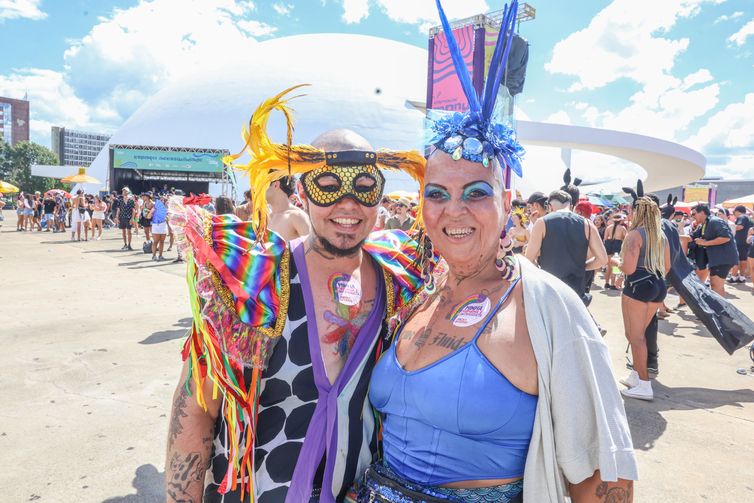
Fernando Franq and Ana Flávia Garcia say that Bloco do Amor is the block of their hearts – Valter Campanato/Agência Brasil
“It’s an environment we identify with, full of art and with many artists. A safe place for the LGBT community, organized by friends who are also in our hearts”, said Fernando.
Ana Flávia adds that, in addition to being very musical, Bloco do Amor is safe and without prejudice. “It’s an environment reverberated by people of their own accord. Here, everyone is accepted.”
For this reason, she reiterates that, in essence, carnival is revolutionary, when it adds respect and acceptance to collective thought.
“Note that we have young people who already realize the importance of a peaceful and respectful environment, where nudity can and should be respected, free from harassment and prejudice”, he argued.
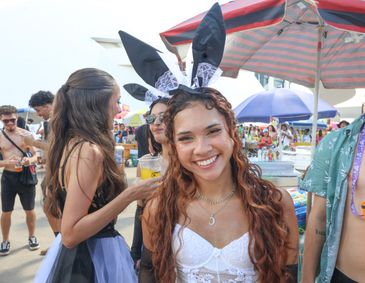
Clarice just wants love and fun at the first carnival she enjoys in Brasília – Valter Campanato/Agência Brasil
First carnival
One of these young women mentioned by revelers is Clarisse Pontes, 22, recently graduated in Biology. “It’s the first time I’ve been to a carnival group”, confesses the biologist who also works as a nanny.
She says that she has always heard many stories relating Carnival to drinks and dancing, but that what she hopes to have is “a lot of peace and enjoyment”, in this block so associated with acceptance and respect for diversity.
“I think that, as they said here, the spaces in Brasília belong to everyone, with everyone, for everyone. May we have a carnival of great diversity and respect.
With a CV of four editions of Bloco do Amor, student Alaska Ricarte, 23, explains that his fantasy mixes the Greek myth of Dionisus with the flag of bisexuality.
For Alaska, Carnival is an opportunity for people to show themselves in a truer way. “What pleases me most here is this: being free as I want, being accepted and accepting everyone as they are”, he said.
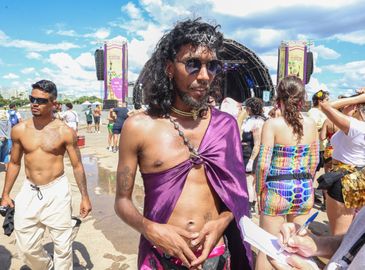
Alaska sees Carnival as a time of freedom and acceptance- Valter Campanato/Agência Brasil
In the assessment of the UnB design student, the world has managed to move towards accepting differences, “even though there are forces always acting in the opposite direction”.
The student regrets that Brasília is still a place where conservative and prejudiced people try to dismantle Carnival and the freedom it represents.
“The city is a true stage for disputes over space, between inhabitants with different ideals about the use of space. I realize that the more tense the clash, the more difficult the debate about acceptance is. What guarantees progress is exactly our resistance. People have to understand that, even though it is a small square, Brasília is for everyone”, he argued.
Respect for freedom
It was also in search of a carnival where men and women respect each other that student Ana Luíza, 25, chose to party at Bloco do Amor. “I saw a lot, in other blocks, of women being disrespected by men. In my opinion, carnival, to be good, has to be enjoyed with respect for freedom”, he said
“I came here because I like this environment of acceptance, and acceptance also means safety. This is a calmer block, whose motto is love and coexistence between people who seek the joy of carnival”, he told Brazil Agency the student.
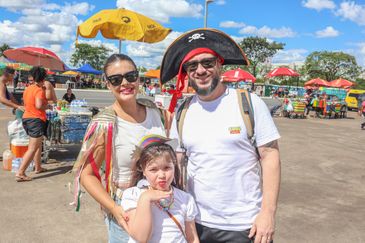
Ricardo Maurício wants his daughter to understand the richness of differences- Valter Campanato/Agência Brasil
Accompanied by his wife and 7-year-old daughter, Ricardo Maurício, 41, says he talks a lot with his daughter about the issue of diversity. “I have always worked on this topic of diversity with my family, especially because we have a diverse family,” he said.
“We respect differences and live in the diversity of a world that is big and diverse. I want my daughter to know this, and to understand the richness of differences. She is used to it, especially because she lives with gay and trans couples. For her, diversity is already something trivial”, he added.