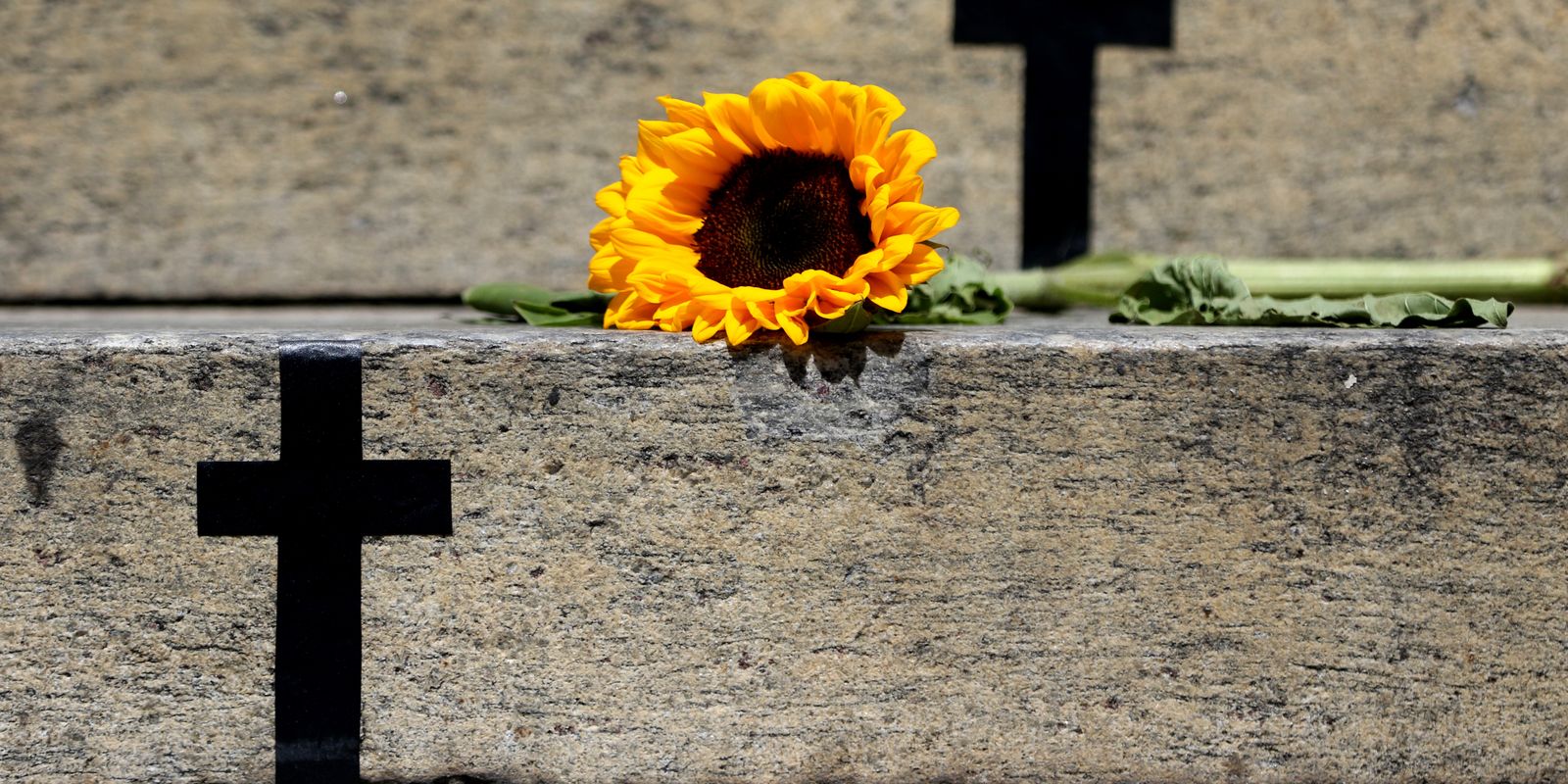
Amid the most diverse types of violence against women recorded every day in Brazil, a case in the interior of Goiás brought to light a little-known or, at least, little talked about type of violence: the so-called vicarious violence, which occurs when a man hurts or kills a woman’s intimates with the aim of punishing her or harming her psychologically.
Last Wednesday (11), the Government Secretary of the city of Itumbiara (GO), Thales Machado, shot his two children in the residence where he lived and then took his own life. One of the boys, aged 12, died before he could be rescued. The younger brother, aged 8, was taken to hospital in a very serious condition, but died hours later.
In an interview with Brazil Agencythe national secretary for Combating Violence against Women, Estela Bezerra, described the concept of vicarious violence as a situation in which the aggressor offends and creates situations of pain and even death to affect people who have a loving relationship with the victim, mainly children, but also mothers and even pets.
“Most of the time, children and teenagers are used, children of that mother, because they are the greatest emotional bond she has. To be able to penalize the mother – which was exactly the case in Itumbiara, where the father killed the two children to harm the mother. It’s as if she received the biggest penalty a person can receive, which is having a child executed”, he explained.
Estela recalled that, in the case of Itumbiara and in the vast majority of other cases, the aggressor also constructs a narrative in which he positions himself as a victim and holds his partner responsible for what happened.. Before shooting himself, Thales Machado posted a letter on social media in which he cited alleged betrayal by his wife and a marital crisis.
“He executes his children and constructs, before he dies, through narratives, the responsibility of his wife. And he also puts the responsibility for the death, for the execution he committed, on her, because he was being rejected and the romantic relationship no longer corresponded to what she wanted for her life”, detailed the secretary.
“The most serious thing about this situation is that there is manipulation. The murderer and also suicide constructed a narrative to blame the victim who, in this case, is the woman. She had her children murdered, her image and her story were exposed and the responsibility, in the tragedy, for the social narrative and machismo, falls on her”, he said. “This type of violence tries to penalize the woman and hold her responsible for the crime committed. And the crime committed is the choice of whoever kills. Whoever kills chose to kill. It’s not the woman’s responsibility,” he added.
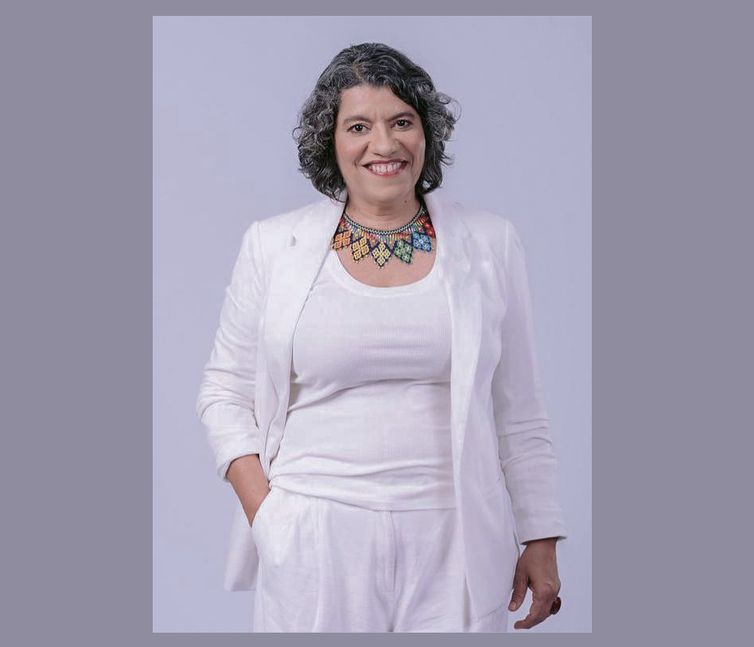
National Secretary for Combating Violence against Women, Estela Bezerra, says that in vicarious violence, the aggressor also constructs a narrative in which he positions himself as a victim – Photo Ministry of Women
According to Estela, cases of vicarious violence are very common in Brazil, but little talked about.
“This type of violence is systematic, it happens on a daily basis. It ranges from subtle situations to more explicit situations, like this one in which men execute their own children.”
She cited another recent case of vicarious violence registered in the country, in which a civil servant from the Comptroller General of the Union (CGU) attacked his son and his ex-partner.
“In the scene where we see a CGU employee attack a child and the woman, he attacks the child first. The woman tries to protect the child and he also attacks the woman. He hits the child and the woman. When the woman frees herself, he attacks the child again. So, attacking the child, the mother and even domestic animals or mistreating them is an everyday thing that happens in situations of domestic violence.”
“There is a very sexist culture present in Brazil and in the world. There is a very strong gender asymmetry, heightened in several areas, in political representation, in the economy, where women receive less than men, even though they are more qualified. And the greatest expression of this asymmetry occurs in the instrument of violence, an instrument for keeping women in a place of subalternity, of fear, which does not allow for freedom”, he added.
Civil society
When commenting on the case in Itumbiara, the Maria da Penha Institute, a non-governmental organization (NGO) that works to combat domestic and family violence against women, confirmed that cases of vicarious violence are no exception. “It is a form of gender violence that affects women through children and adolescents. When sons and daughters are used as instruments of control, punishment or blackmail.”
“We are not talking about family conflict. We are talking about violence. And serious violation of human rights. For a long time, this practice was naturalized, made invisible or treated as a private dispute. The result is the silent suffering of women and the profound impact on the emotional development of children and adolescents.”
For the NGO, advancing the debate is essential. “Brazil officially recognized [por meio de resolução conjunta do Conselho Nacional dos Direitos da Criança e do Adolescente e do Conselho Nacional dos Direitos da Mulher] vicarious violence as gender-based violence and established guidelines for the performance of the Child and Adolescent Rights Guarantee System, reinforcing the need for prevention, protection and inter-institutional response”.
“Naming violence is the first step to confronting it. Quality information is also a form of protection. The Maria da Penha Institute works to strengthen public policies, qualify the debate and contribute to ensuring that no form of violence is treated as invisible. Information needs to circulate to protect relationships, childhoods and rights.”
The entity warns of the following ways in which vicarious violence can manifest itself:
– threats involving children;
– forced removal from coexistence;
– emotional manipulation;
– false accusations;
– kidnapping or illegal retention of children.
Public defender
When taking a stance on the case in Itumbiara, the State Public Defender’s Office of Goiás (DPE-GO) published a note reinforcing that acts of abuse, violence and feminicide are crimes and that the practice of hurting children to harm the mother has a name: vicarious violence. “She’s not to blame. Period.”
“In November 2024, DPE-GO promoted the campaign She Has No Fault – 21 Days of Activism to End Violence against Women, in which it sought to reflect on the constant blaming and judgment of women, even when they are victims”, highlighted the organization.
“The DPE-GO reinforces that the responsibility always lies with whoever commits the violence. Regardless of the behavior, clothing or voice of whoever is on the other side. And exposing a woman who is a victim of violence can constitute a crime. Reflecting on blaming women is the first step to breaking gender inequalities that perpetuate cycles of violence.”