In a social context marked by the celebration of the Day of Love and Friendship and by the massive circulation of narratives associated with romantic love, the Ministry of Women presented the national campaign “Let’s love each other without pressure”, an initiative that seeks to directly challenge one of the most normalized practices of sexist culture: the so-called “love test”.
The campaign includes the dissemination of visual materials and content on institutional social networks and the Center for the Promotion of Comprehensive Adolescent Health (CentroPSIA), in correspondence with one of the central axes of the campaign focused on the youth population in which the pressure associated with the so-called “proof of love” usually manifests itself with greater intensity.
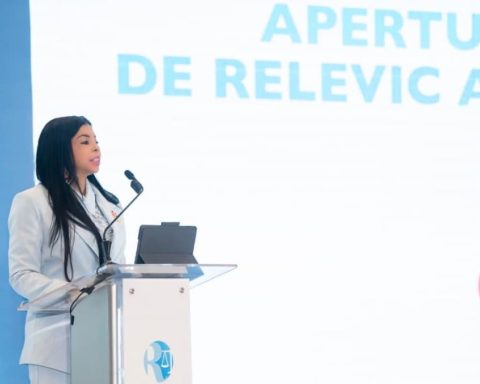
The Minister of Women, Gloria Reyes, explained that the initiative is based on a clear reading of the cultural moment. “February 14 is a date that mobilizes emotions and bonds, but it is also an opportunity to reflect on the messages we reproduce. Not every demonstration of affection is healthy, and not every demand can be justified in the name of love,” he said.
The campaign is part of a multisector strategy for the prevention of gender-based violence, which seeks to articulate actions with the educational system, media, digital platforms, community radio stations, public institutions and training spaces such as the School of Equality, with the purpose of impacting different populations and sectors of the country.
The Ministry warns that the notion of “proof of love” has historically operated as a mechanism of emotional and sexual pressure, especially towards girls, adolescents and young women, while, in parallel, it reinforces cultural mandates that push men to demonstrate their masculinity through control, insistence or forced conquest.

“When we talk about loving each other without pressure, we are talking about consent, autonomy and respect. We are talking about relationships where no one has to give in for fear of losing the other or for fear of social accusation,” the official added.
Adolescence and youth: dismantling the “love test”
Through a youth adaptation titled “Let’s love each other without force”, the Ministry seeks to connect with the new generations from a familiar, culturally situated language, but with a clear message: if there is pressure, it is not love.
The content aimed at adolescents and young women emphasizes that their body is not a currency or a condition to sustain a relationship. The campaign reinforces the idea that no one who really wants can demand proof, rush decisions or condition affection on sexual availability.
Bell
In parallel, messages aimed at adolescents and young men question the mandate to demonstrate masculinity through insistence, control or pressure. The campaign promotes positive masculinities, emphasizing that respect is also bravery and that accepting “no” is part of a healthy relationship.
“Love cannot be an excuse to violate rights or to reproduce inequalities. Emotional or sexual pressure is also violence, although it is often disguised as romanticism,” said the minister.
The strategy includes specific pieces for platforms such as TikTok, aimed at generating identification and reflection in young audiences, as well as pedagogical messages that can be shared in educational centers and community spaces, in coordination with allied entities.
The Ministry of Women reiterated that the prevention of violence begins with the transformation of cultural imaginaries that legitimize harmful practices. In that sense, “Let’s love each other without pressure” is not limited to a temporary campaign for February 14, but is part of a sustained policy of education, awareness and promotion of relationships free of violence.
“Loving each other well is a collective decision. It involves reviewing what we have learned about love and assuming the responsibility of building fairer, more conscious and more respectful bonds,” concluded the minister.
With this initiative, the Ministry calls on families, educators, the media, public and private institutions, as well as adolescents and young people throughout the country, to join a necessary conversation: transform the culture of pressure into a culture of respect.