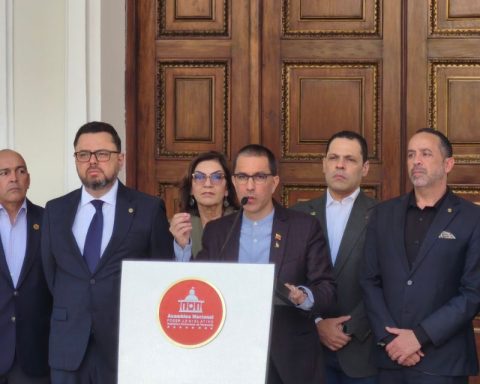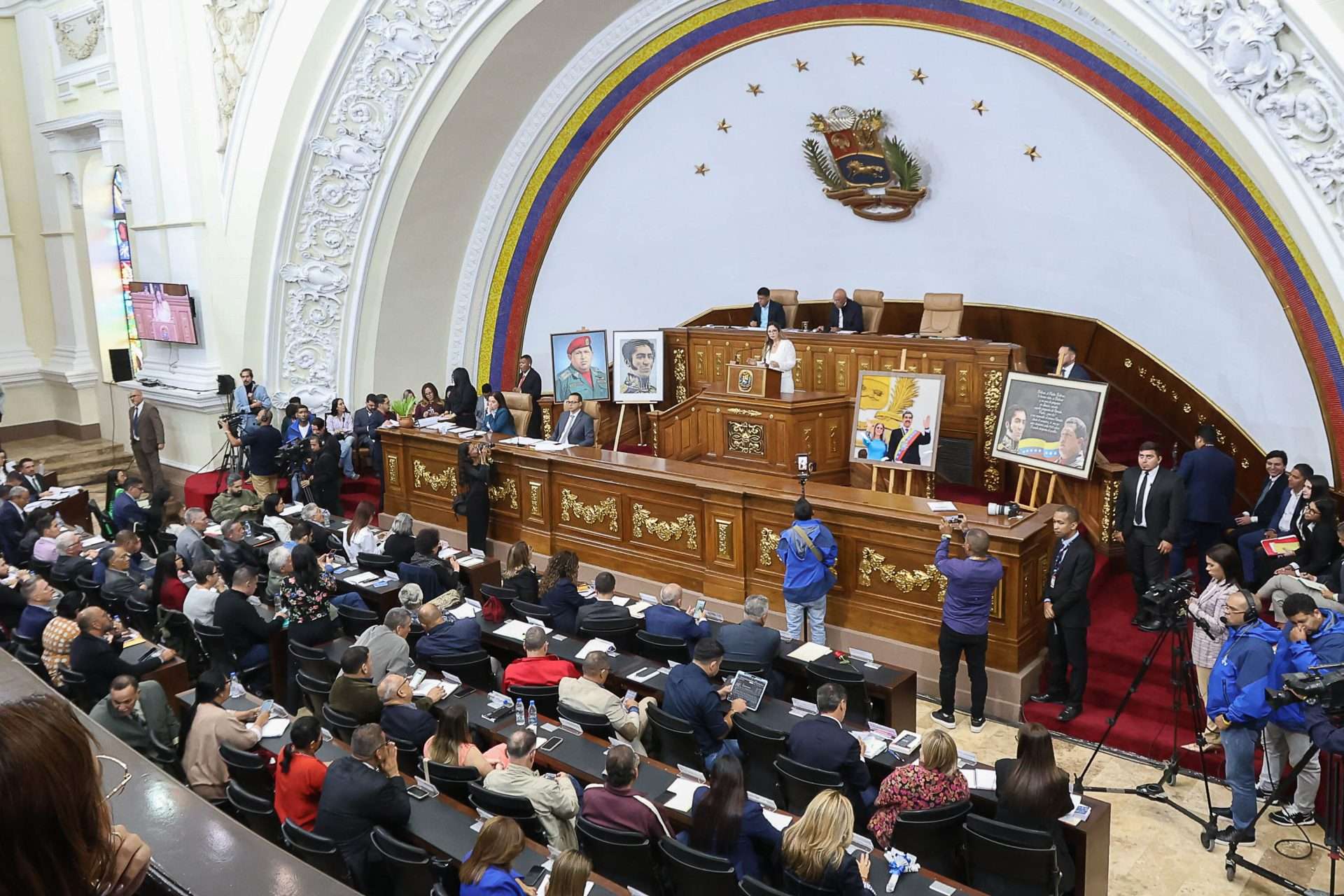
The National Assembly approved this Thursday, unanimously, the first 6 articles of the Amnesty Law for Democratic Coexistence. The president of Parliament, Jorge Rodríguez announced the postponement of the discussion.
The debate on the second discussion of the norm will continue next week within parliament, since there was no consensus on the wording of article 7 relating to the requirement of the accused and convicted to appear before justice.
“The amnesty, the object of this law, covers any person who is or may be prosecuted or convicted for their alleged or proven participation in crimes or misdemeanors committed, within the framework of the facts subject to amnesty, provided that it is lawful or becomes lawful with the entry into force of this law.”reads the text under discussion.
The opposition deputy, Luis Florido, was the first to object to the wording of the article, because he considered that the person subject to the law is presumed guilty, pointing out that he must be brought to justice and highlighted the spirit of article 2 of the Magna Carta, which establishes that the country is a democratic and social State of Law and Justice.
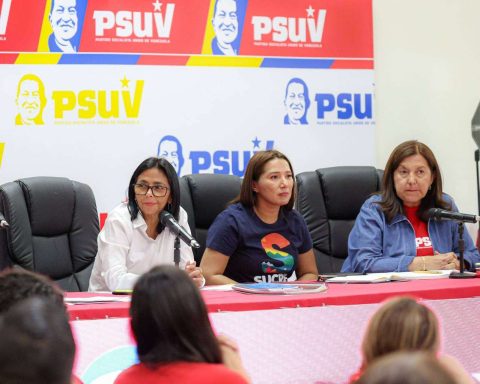
For her part, the Psuvista deputy, Iris Varela, highlighted “the magnanimity” of the acting president Delcy Rodríguez, who proposes, after a month of bombing of the Republic, an Amnesty Law. “Many seem to be unaware that there have been repeated attacks against the Venezuelan State here,” he said.
He recalled that in 2017, for the sake of peace, President Nicolás Maduro convened a National Constituent Assembly “and that is why there is peace in the country, which has always wanted to be violated,” he said and cited some of the events that have affected the stability of the country, such as the oil strike, the attack against President Maduro, the guarimbas, among others.
“It seems that someone wants to protect these people so that they do not even recognize the crimes they have committed, the US dropped the bombs, but who is responsible for that, those who requested the attacks and the blockade,” he expressed.
He recalled the hiring of mercenaries and snipers “who killed and injured many Venezuelans in 2002 during the coup d’état.”
He clarified that the victims of the 2017 guarimbas, such as Gisela Rubilar and Orlando Figuera, were victims of violence and called it such a “grotesque manipulation” that they try to place them as victims of the Venezuelan State, “they are victims of violence that today seeks an amnesty and that does not have the humility to recognize that the State, for the sake of peace, is giving them forgiveness for the crimes they committed,” he clarified.
«You cannot amnesty someone who has not committed any crime. “Whoever wants to be amnestied must act legally and that is the core of this law, which is why I propose maintaining Article 7, as presented in the project,” stated Deputy Varela.
Stalin González proposed adding reference to the agreement with articles 21 and 49 of the Magna Carta. For her part, Congresswoman Carolina García recalled that no Venezuelan can be prosecuted in absentia, since upon their return, they should submit to the rule of law before the courts.
The scope of the amnesty
The president of the parliament, Jorge Rodríguez, used to exemplify the scope of the regulations, the situation of at least 100,000 Venezuelans abroad, specifically in the United States, who, advised by “unscrupulous law firms,” have declared themselves politically persecuted to obtain immigration benefits such as TPS.
“There are pre-established formats, there are forms that had the option to declare themselves politically persecuted and therefore, they could be subject to this amnesty law, for declaring themselves politically persecuted, so things must necessarily be made clear, because those 100,000 people should be clear that they will have to submit to the Amnesty law,” he warned.
The parliamentarian questioned the validity of these massive declarations, and assured that in many cases they respond to economic or personal reasons. “You cannot expect people who lied in an immigration format for money or convenience to join an amnesty process that has a higher goal: the peace of the Republic,” he stated.
Rodríguez recalled that, under the Constitution of the Bolivarian Republic of Venezuela and the jurisprudence of the Criminal Cassation Chamber (Sentence 547), there is no trial in absentia. Therefore, anyone who wishes to qualify for the benefits of this law must submit to the rule of law and be brought before the courts.
Likewise, he issued a warning about the sectors that he described as “extremists”, who, in his opinion, do not want true democratic coexistence.
«Be careful with opening a wedge to extremism that does not want this law, that does not want to lower the discourse. We have seen cases of those who receive a freedom benefit and the first thing they publish is ‘I’m coming for you’. That does not contribute to the climate of peace. We cannot contaminate something so important with cases that do not correspond to the political reality of the country,” he warned.
Finally, the president of the Venezuelan parliament, deputy Jorge Rodríguez, called the deputies who made their observations on the matter to the stage and announced the postponement of the discussion of the project for the next session.