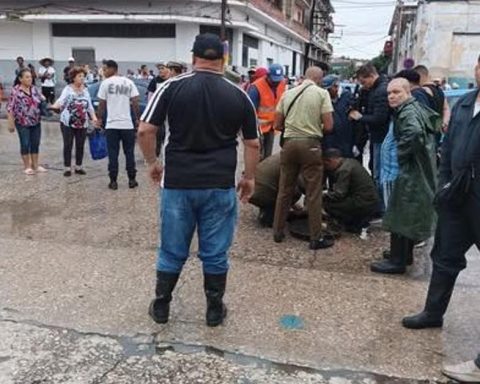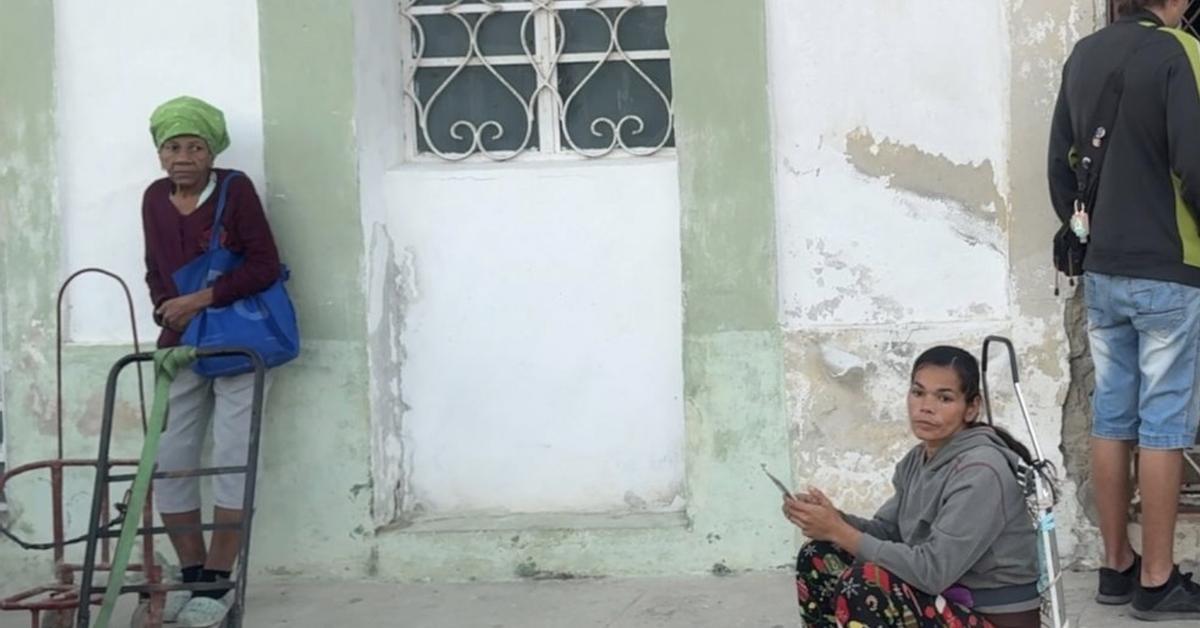
Havana/The sun begins to set in Regla and, under a reddish sky, people continue crowded in a line that began to form long before three in the afternoon. The majority of those waiting to buy a gas cylinder in Cupet stores are older people; Many use the empty tank, or the cart they use to transport it, as a seat to relieve fatigue.
At six in the afternoon the truck loaded with gas arrives; and finally, two hours later, the crowd advances slowly, amid arguments and commotion.
Not all queues in the capital are the same: some are better organized than others. A girl who, while waiting, checks Facebook on her cell phone, loudly tells that “her mother in the Cerro took the balita since one in the afternoon, imagine,” without taking her eyes off the phone.
The protocol – published in a Telegram group – indicates that the queue must prioritize the group of people who have not replenished the balita for the longest time; in this case, those of August. But the reality is that the organization depends on the criteria of the workers at each point of sale. For example, on Obispo Street in Guanabacoa there was a “tremendous commotion,” according to neighbors. 14ymediobecause it was decided to send only 150 gas bales to the first to arrive. “Many of them are people who have been marking for days or are messengers, so those from August ran out of bullets again.”
/ 14ymedio
This Tuesday the Liquefied Gas Company (LPG) announced the distribution of cylinders for the population of the provinces of Havana, Artemisa and Mayabeque, with a forecast of 15,000 units per day, distributed in an “equitable” manner, supposedly prioritizing, by geographic location, the areas with the highest customer density. The document contemplated marketing of a single cylinder per contract, the organization of the points of sale based on the customer structure, as well as the date of the last acquisition. In the case of registered couriers, they would only be authorized to purchase one cylinder per customer per day. However, the reality observed on the streets is far from established and reveals chaos far removed from protocol.
Yamila, a resident of Nuevo Vedado who spoke with 14ymediofeels very lucky for not having to participate in that “ordeal”: “Luckily, the street gas is working well, I don’t know if it’s because it’s national. It doesn’t cover the entire city or anything like it, but for those of us who have it, it’s a blessing to have that service.”
The growing demand for gas bales – which in the informal market can already reach prices of up to 30,000 pesos – has skyrocketed in the last month as a result of the worsening of the energy crisis. Before the gas and electricity shortagemany people have begun to resort to charcoal and firewood for cooking, a practice that has been widespread for years in the east of the country, but which today is becoming increasingly common in some neighborhoods of Havana.
Jamaica has been the traditional supplier of liquefied gas to Cuba, but, after the sanction imposed by the Government of Donald Trump as of January 30 on any country that supplies fuel to the Island, shipments were interrupted. On February 1, the Cuban tanker Emily returned empty to the port of Cienfuegos after a frustrated attempt to purchase LPG in Kingston.