
Almost half (47%) of Brazilian women have suffered some form of sexual harassment during Carnival and 80% of them are afraid of going through some similar experience.. This is what a survey carried out by the Locomotiva Institute and released this Wednesday (11) shows. Furthermore, 86% of those interviewed agree that harassment still exists at Carnival.
According to the institute’s research director, Maíra Saruê, the results demonstrate a problem that goes beyond the festivities.
“We are talking about the right to come and go, but also the right to leisure, and access to the city, the possibility of living in the city and occupying public spaces. These are super important issues. Whether or not to participate in Carnival is an individual decision for each person, but being able to have access to it is a very important right”
Harassment also unfairly interferes with the way women enjoy the party, according to Maíra. “To protect themselves, they need to adopt individual strategies at this time that should be fun, such as only walking in groups, planning safer routes and avoiding certain times.”
>> Follow the channel Brazil Agency on WhatsApp
Men x Women
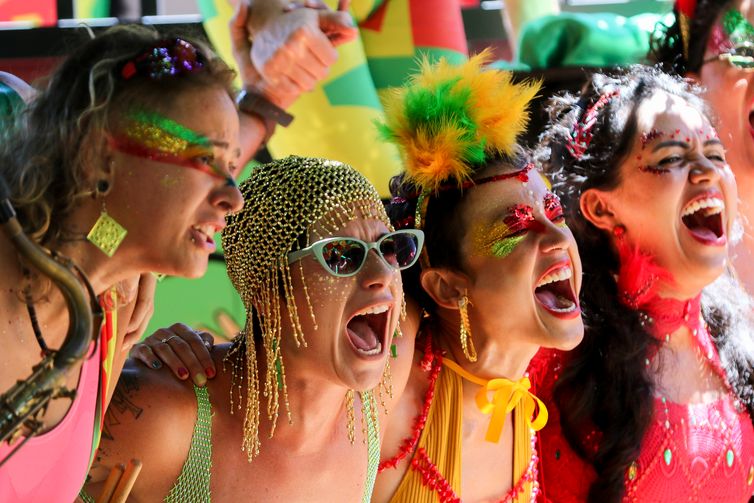
The Calango Careta block excited revelers in Brasília – Fabio Rodrigues-Pozzebom/ Agência Brasil
The research was carried out across the country, with 1503 people over 18 years of age who make up a representative sample of the Brazilian population. The survey also measured agreement with some statements related to sexual violence. In all cases, the degree of agreement was greater among men.
The study identified that 22% of Brazilians agree that those who are skipping Carnival alone “want to be with someone” (28% among men and 16% among women); 18% believe that the clothes worn by a woman can indicate an intention to kiss (23% among men and 13% among women); and 17% consider that, at Carnival, “nobody belongs to anyone” (20% among men and 14% among women).
The survey also asked about a practice that constitutes sexual violence: for 10% of all respondents and 12% of men, it is acceptable for a man to “steal” a kiss from an intoxicated woman during a party.
For Maíra, in addition to being used to justify violence, these thoughts can even keep women away from the party “Harassment is such a concrete experience, whether from the woman herself or from other women she knows, that many even think that Carnival cannot be for everyone. They are afraid of going and being harassed because they think that others will have that thought.”
On the positive side, the vast majority of respondents, 86%, argue that combating this violence is everyone’s responsibility, but again, there is a difference in the responses of men and women, 89% versus 82%. Furthermore, 96% recognize the importance of campaigns to combat harassment during the carnival period.
“This has to be a collective responsibility, because it’s not a problem for women, it’s a problem for society as a whole. We need to change everyone’s behavior so that women are seen differently and men change their attitude”, concludes the director of Instituto Locomotiva, responsible for the research.