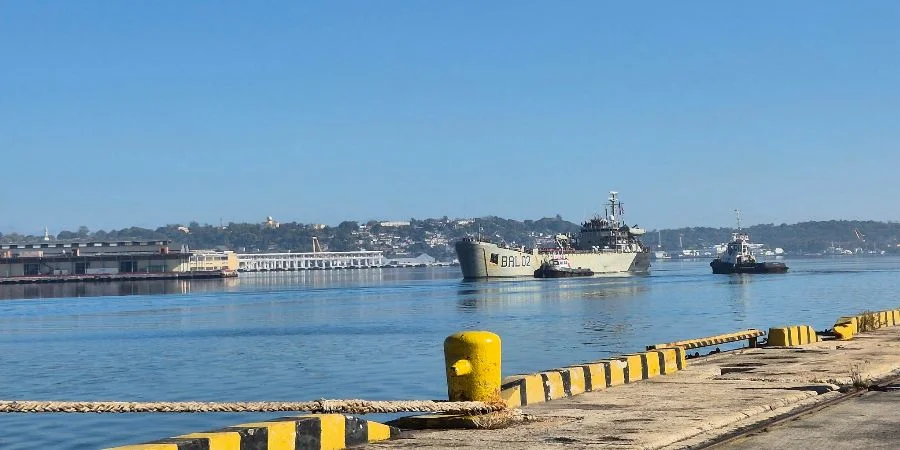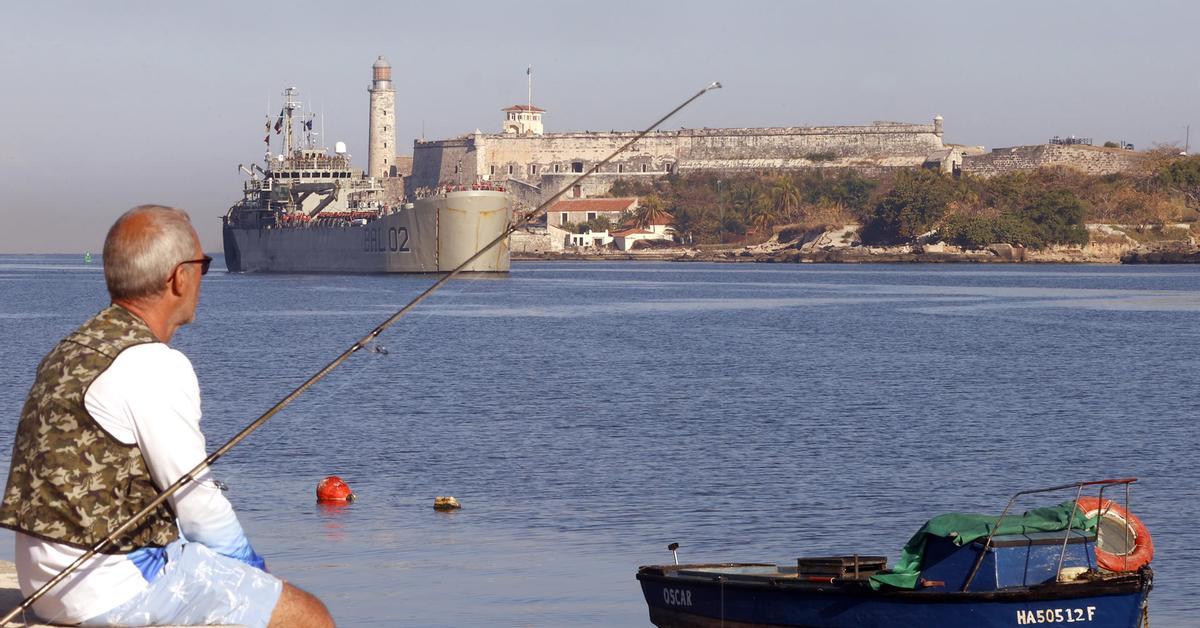
Havana/The two Mexican ships with humanitarian aid for Cuba that left last Sunday from Veracruz, the Papaloapan and the Holbox Island, They arrived this Thursday morning at the port of Havana. They load 814 tons of food and other products in the middle of the United States oil blockade that has led to shortages at critical levels.
The first of the Mexican Navy’s logistical support ships slowly entered the narrow mouth of Havana Bay around 8:30, while the second entered minutes later.
Mexico announced this shipment as a symbol of “solidarity and humanitarian aid” in the midst of its efforts to support Cuba once stopped its crude oil shipments to Havana after US President Donald Trump’s executive order that threatened tariffs on countries that supplied oil to the island.
He Papaloapan It carries around 536 tons of basic food items, such as liquid milk, meat products, biscuits, beans, rice, tuna, sardines and vegetable oil, as well as personal hygiene items. He Holbox Islandfor its part, carries more than 277 tons of powdered milk.
He clarified that they had a reserve of more than 1,500 tons of powdered milk and beans “pending to be sent” to Cuba
The Mexican president, Claudia Sheinbaum, explained this Wednesday that her country remains committed to Cuba and that a second shipment of humanitarian aid to the Island is planned after the return of these military ships to her country. He previously clarified that they had a reserve of more than 1,500 tons of powdered milk and beans “pending to be sent” to Cuba.
Mexico has maintained cooperation programs with the Island in recent years, amid the economic difficulties faced by the Caribbean country and the new shipment is part of that assistance policy.
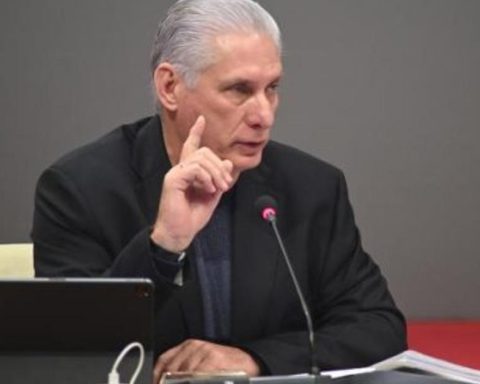
The Cuban Government, for its part, has thanked Mexico for its support in these circumstances. “Thank you Mexico. For the solidarity, the affection, the always warm embrace of Cuba,” President Miguel Díaz-Canel wrote on social networks this week.
Also this Thursday, the Government of Chile reported that it will send humanitarian aid to the Island. “We are determined to provide humanitarian aid for the people of Cuba. We want to do it in the way in which the Foreign Ministry has always worked: through a special fund,” the Foreign Minister, Alberto van Klaveren, said at a press conference.
The minister, who described the situation in Cuba as a “humanitarian drama,” indicated that in the next few hours the final amount of aid will be detailed, which will come from the Chile Fund against Hunger and Poverty and will be channeled through multilateral organizations and different United Nations programmes.
The minister, who described the situation in Cuba as a “humanitarian drama,” indicated that in the next few hours the final amount of aid will be detailed.
This special fund, Van Klaveren added, “has also made it possible to make humanitarian contributions in other very serious situations such as those that Ukraine has experienced throughout a conflict that has now lasted four years, the situation in Gaza and also the consequences of the passage of hurricanes through the Caribbean.”
“Cuba already received a small amount of humanitarian aid after the last hurricane hit last year,” said the chancellor.
The increase in pressure from Washington, with the oil blockade after the intervention in Venezuela and the presidential order of January 29 to impose tariffs on those who supply fuel to Cuba, has aggravated the deep energy crisis that the Island has suffered since mid-2024, to the point that frequent blackouts have reached record numbers.
The lack of fuel has caused airlines to Canada and Russiathe two main sources of tourists to Cuba, temporarily suspend flights to Havana after evacuating their stranded nationals.
In addition to increasing pressure on Havana, Washington has assured that Cuba’s “days are numbered” due to the lack of fuel and has shown that it hopes the crisis will lead to “a regime change.”
Despite defending Castroism during his time as a university leader and deputy, Boric has changed his position since he is in power
In anticipation of an “acute fuel shortage,” the Cuban Government launched an emergency plan inspired by the so-called “zero option”, a survival strategy conceived in the event of a total absence of fuel during the so-called Special Period of the 90s, and which in practice means the paralysis of the country.
Chile’s decision comes hours after different leaders of the Chilean Communist Party (PC) – a political group that makes up the coalition with which President Gabriel Boric governs – urged to send aid to Cuba. Since Boric became President in March 2022 with a broad coalition that includes his party (the Broad Front), the communists and the traditional center-left, Cuba has been a thorny issue for the Government.
Despite defending Castroism in his time as a university leader and deputy, Boric has changed his position since he is in power, denouncing both the economic blockade of the United States and the “dictatorship” that Cuba suffers, a position that makes the PC uncomfortable. “Beyond the political characteristics that your regime may have, what interests us is to address the needs of the Cuban people as much as possible. And we are not alone in that, Mexico is also chartering aid and so is Brazil,” said the chancellor.