In 2024, 27.8% of Arizona’s exports were destined for Mexico, compared to 8.6% for Canada, according to official US trade data. In absolute terms, the state exported $32.4 billion in goods and services, with a growth of 7.5% compared to 2019, the last full year under NAFTA.
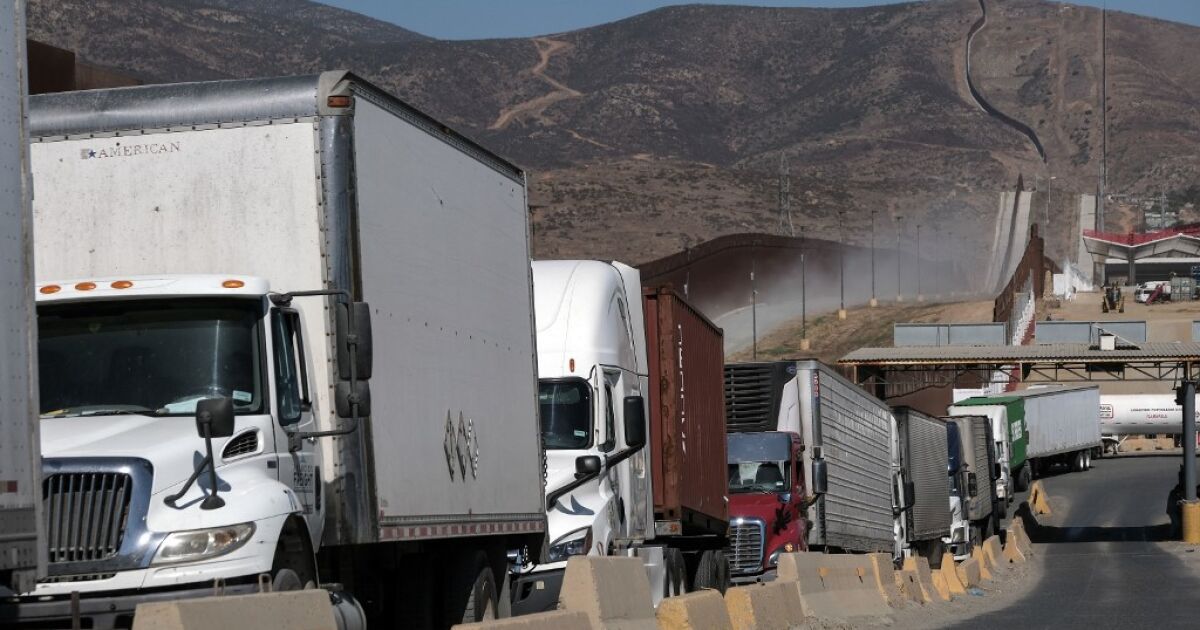
The study warns that a break in the trilateral scheme would have immediate effects on the Arizona-Sonora relationship. Companies foresee border delays, higher prices for inputs, less logistical fluidity and loss of competitiveness, precisely in sectors that depend on integrated production processes.
The concern is not limited to trade. It includes the risk that distribution centers will disappear, activity at ports of entry will slow down, and Arizona’s role as a logistics node in the American Southwest will be weakened.
In this context of uncertainty, Bloomberg recently reported on Donald Trump’s alleged intention to withdraw the United States from the USMCA, which once again shook the markets and productive actors in the region. From Mexico, President Claudia Sheinbaum responded that there is no formal notification and stressed that the treaty is still in force, “we do not believe it and it has never been expressed in the call because the trade agreement is very important for them and for us,” she assured.
For Arizona, the sectors most exposed to a disruption scenario would be advanced manufacturing, the aerospace industry, the automotive industry, agriculture and logistics. In particular, the aerospace sector depends on highly specialized components that cross the border with Mexico and Canada as part of a single integrated production system.