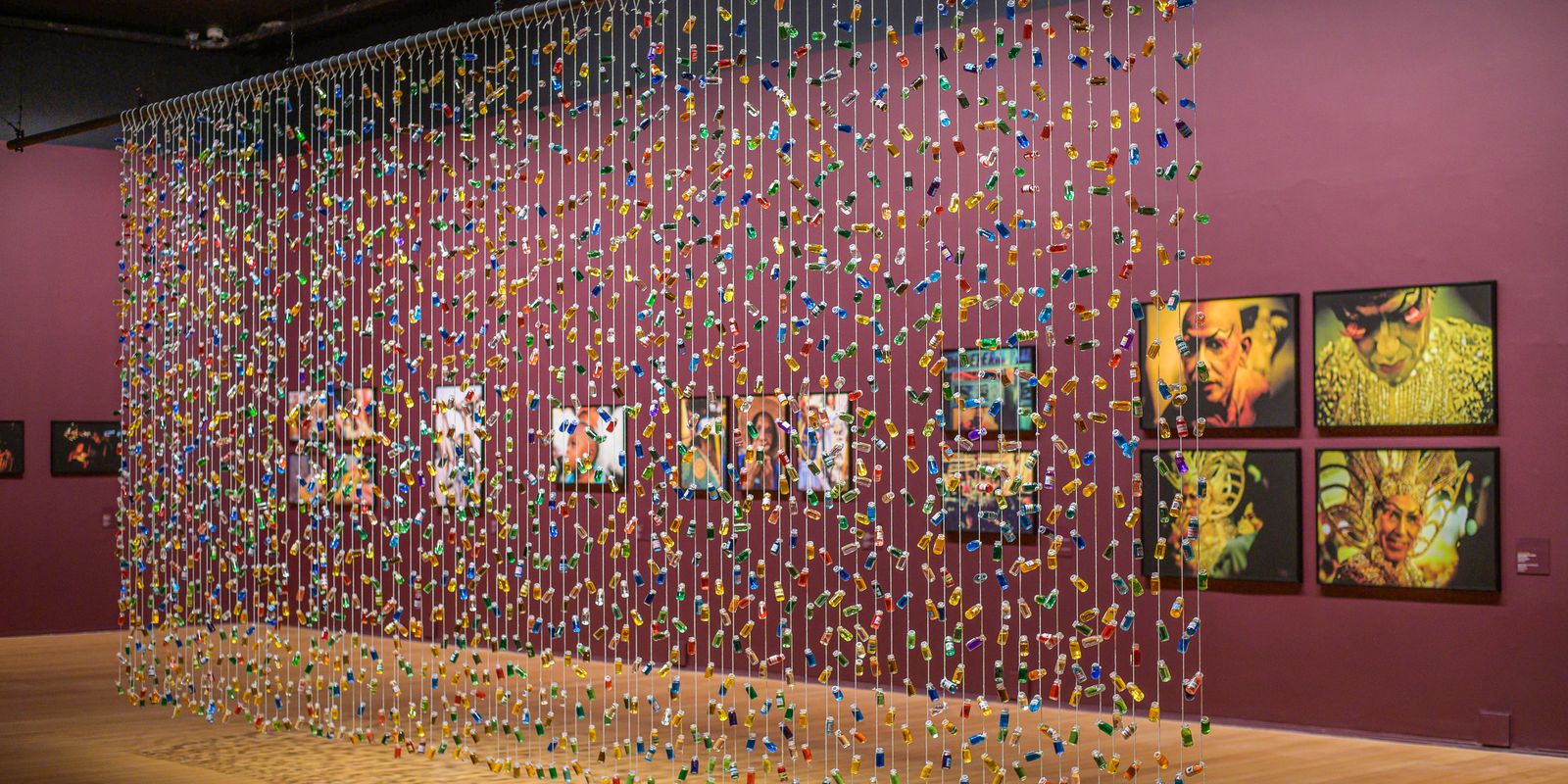
Starting this Wednesday (11), the Banco do Brasil Cultural Center in Rio de Janeiro (CCBB) will host the exhibition Vectors-Aspects: Photographers from Parácreated by the Women’s Museum.
The exhibition brings together 170 works by 11 photographers from Pará ─ from three generations ─ and proposes an experience that incorporates sensory and technological resources.
The selection includes pioneering names such as Leila Jinkings, Cláudia Leão, Bárbara Freire, Paula Sampaio and Walda Marques, including artists such as Evna Moura, Renata Aguiar, Nay Jinkings and Nailana Thiely, until reaching younger artists, such as Deia Lima and Jacy Santos.
The public has the opportunity to explore some of the photographs in augmented reality. At the Icamiabas Installation, it is possible to have access to aromatic compositions inspired by indigenous Amazonian warriors.
Already in the virtual reality film Mukathu-hary (“Healer”, in Tupi), the viewer is transported to an indigenous village with an ancient landscape. The exhibition rooms feature visual narratives that address identity, territory, memory, ancestry and resistance.
Expanded identity and photography
For photographer Evna Moura from Pará, participating in the exhibition represents a reunion with her own trajectory. Artist Evna’s production highlights Amazonian islands and communities, such as Combu and Marajó, and the exhibition brings different phases from her perspective.
Among the works on display, there are black and white and color photographs and so-called expanded photos, which bring art and technical experimentation together. An example are the works made from prints on sheets, using the phototype method with natural pigments.
The artist also highlights the intergenerational nature of the exhibition and how her work as an artist and educator has impacted new generations.
“Cláudia Leão was my professor at university and is an inspiration. Leila Jinkings is also a fundamental reference. Being here with these women is very meaningful”, says Evna.
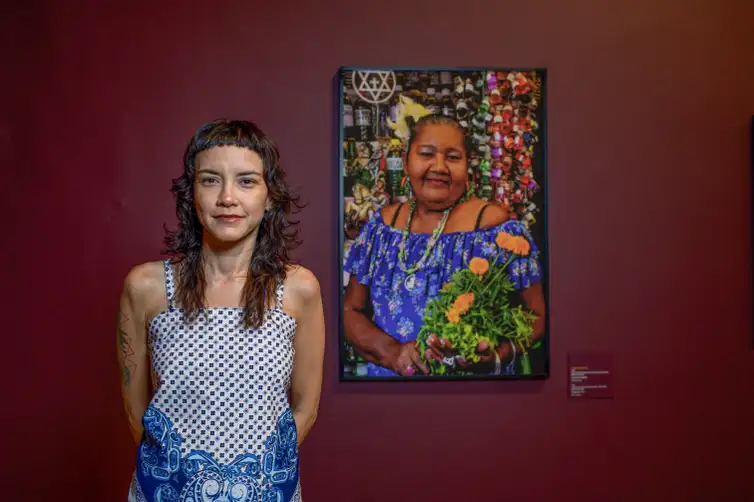
Photographer Evna Moura participates in the Exhibition at CCBB Rio Photo: Ana Paula Amorim/Disclosure
“I’ve already met former students who now have degrees in visual arts and say they chose this path because of the workshops I taught. It’s really beautiful to see these encounters.”
The presence of the Amazon as a central axis of its production also appears as a political and symbolic element that helps to break stereotypical views.
“For a long time, our identity was injured. Our traits and our culture were not valued. Bringing these elements to the Southeast is also affirming other narratives about us. Showing an Amazon that is not only one of poverty, but also of cultural, aesthetic and human wealth”, says Evna.
Pioneering and visual memory
A fundamental name in photography from Pará, Leila Jinkings revisits, in the exhibition, images produced since the late 1970s. Among the selected works, she highlights images of indigenous people, transvestites and records of political demonstrations.
“I really like the photographs of the Kayapó people. They are images that raise reflections on cultural clash with non-indigenous people”, says Leila.
The photographer also recalls the historical context of part of her production.
“I photographed repressions during the dictatorship. It was a difficult period, but fundamental to understanding the role of images in bringing light to those very difficult events”, says Leila.
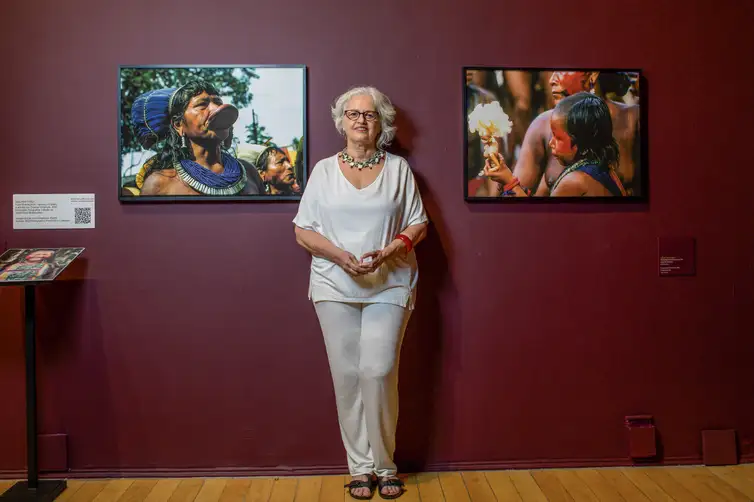
Fundamental name in photography from Pará, Leila Jinkings has work on display at CCBB Rio. Photo: Ana Paula Amorim/Disclosure
Female narrative
Curator Sissa Aneleh explains that the organization of the exhibition reflects a historical and conceptual reading of photography from Pará. The proposal speaks directly to his academic research of more than 15 years.
According to Sissa, the exhibition does not intend to exhaust Amazonian production, but to highlight its power.
“One exhibition will never be enough to showcase all of Pará’s artistic production, but we can reveal its conceptual, aesthetic and narrative strength,” says Sissa.
The notion of “Amazonian visuality” emerges as the structuring axis of the exhibition.
“It’s a concept that began to gain strength in the 70s and 80s, when artists began to reflect on what would be immediately identifiable with the Amazon. Recurrent elements, such as water, territory and female presence permeate different works”, concludes the curator.
Service
Vectors-Aspects: Photographers from Pará
Location: CCBB Rio de Janeiro
Season: February 11th to March 30th
Visitation: Wednesday to Monday, from 9am to 8pm
Tickets: CCBB website and bio link of the Women’s Museum
Entrance: free
Free classification