Santo Domingo.– The American continent did not show progress in the fight against corruption in 2025, with Venezuela and Nicaragua again among the most corrupt countries and the United States in a worrying worsening, according to the Transparency International Corruption Perceptions (CPI) published this Tuesday.
The countries of the region receive in theCPI 2025, in which the NGO classifies 182 countries and territories, an average score of42 out of 100, zero being the worst (a lot of corruption) and one hundred the best (very low corruption).
According to Transparency International, 12 of the 33 American countries have worsened considerably since 2012, the year in which the study methodology was updated.
Just Dominican Republic (with 37 points) and Guyana (40) have registered improvements, with an advance of one point each.
“Years of government inaction have eroded democracy and allowed the growth of transnational organized crime, directly harming people by undermining human rights, public services and security,” the NGO said.
In countries such as Mexico (27), Brazil (35) and Colombia (37), corruption has allowed transnational organized crime to infiltrate politics for years, the report highlights.
Currently, Costa Rica (56) and Uruguay (73), “the strongest democracies in Latin America” and with better results in the CPI, they also suffer from violence fueled by corruption and organized crime, adds Transparency International.Uruguay among the best, Venezuela among the worst
The countries with the highest scores areCanada (75), Uruguay and Barbados (68).
“These are among the most solid democracies in the region, but their limited growth (in the score) and their setbacks are worrying,” says the NGO.
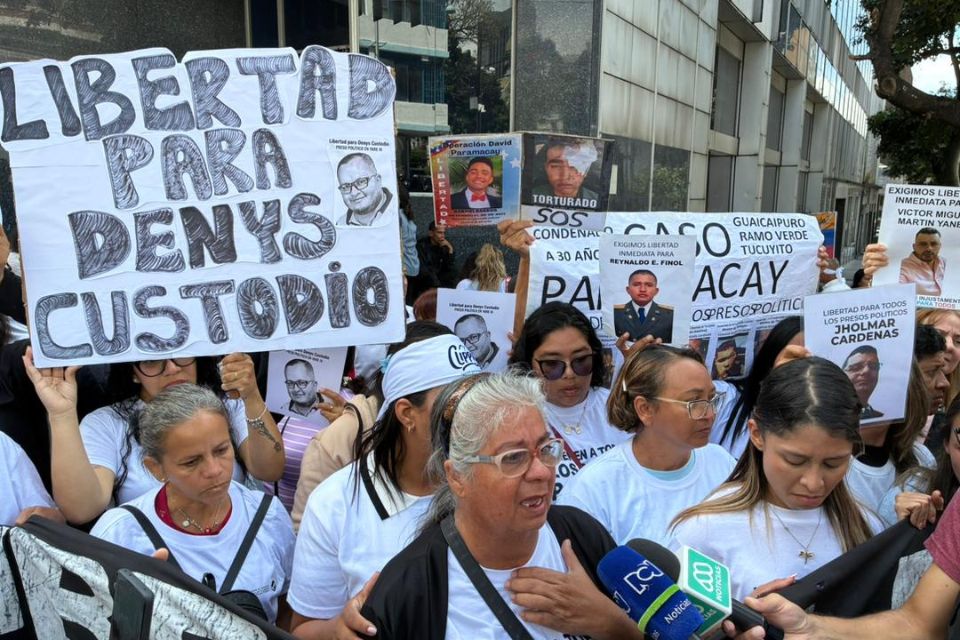
On the opposite side are Venezuela (10), Nicaragua (14) and Haiti (16), characterized by high levels of repression, failed or co-opted institutions and structural corruption.
In the case of Venezuela, although it maintains the same score than the previous year, the poor result reflects “years of widespread corruption and illicit activities, which triggered poverty and malnutrition”according to the report.
Outside of America, below Venezuela there is onlyn Somalia and South Sudan, with nine points each. For its part,Nicaragua and Haiti They continue to be mired in corruption, especially in public services and deep-rooted criminal networks, with serious consequences on daily life.
The United States deepens the worsening
The United States, with 64 points (one point less than the previous year), reached the lowest score on record, thus deepening its downward trend, according to the report.
The NGO explains that, although the impact of the events of 2025 has not yet been reflected, recent measures such as “attack independent voices and undermine judicial independence” raise great concern.
In addition, the temporary freeze and weakening of the application of the US Foreign Corrupt Practices Act (FCPA) “are a sign of tolerance towards corrupt business practices,” he maintains.
On the other hand, cuts to US aid to civil society abroad have also weakened global anti-corruption efforts.
Since 2015, the North American country has fallen twelve points, since then it had a score of 76.
Impact on public services
The report highlights that throughout the region, corruption in public services has serious consequences on daily life.
The NGO cites Peru as an example (30)where the prosecutor’s office is investigating alleged bribery in the school feeding program to evade health controls, since Argentina (36), where they are investigating alleged corruption in the management of funds for medicines for people with disabilities.
At the same time, in several countries, the reduction of civic space weakens supervision and accountability, such as in El Salvador (32) and Ecuador (33), he highlights.
“Laws that limit NGOs’ access to funds and obstruct their operations, along with intimidation and hostility towards independent media,” are other aspects that the NGO denounces.
Civic space
—1— Surrender
In several countries, the reduction of civic space weakens supervision and accountability, such as in El Salvador (32) and Ecuador (33), he highlights.
—2— Obstruction
Laws that limit NGOs’ access to funds and obstruct their operations, along with intimidation of the media, are other aspects reported.