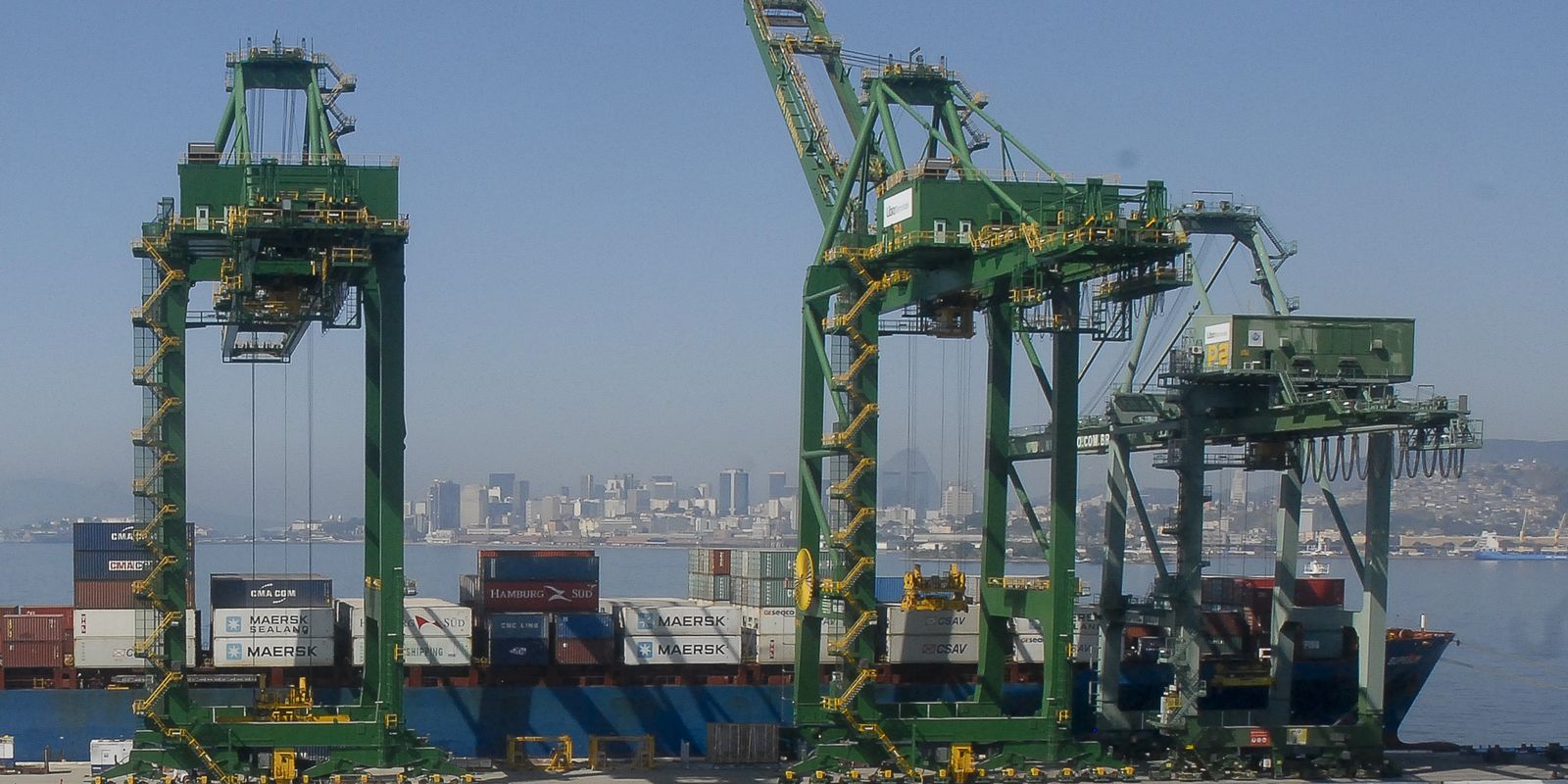
Cargo movement in Brazilian port terminals reached 1.40 billion tons (bi/t) in 2025. The result represents an increase of 6.1% compared to the 1.32 bi/t recorded in 2024.
The result, a new movement record, was released by the National Waterway Transport Agency (Antaq) this Tuesday (10), in Brasília.
In the same period, cargo movement in containers increased by 7.2%, reaching 164.6 million tons. Loose general cargo, in 2025, totaled 65.8 million/t, which represented an increase of 0.8% compared to 2024.
Solid bulk movements varied 6.3%, reaching 839.7 million/t in cargo, while liquid bulk reached 333 million tons (6.1%).
>> Follow the channel Brazil Agency on WhatsApp
Overall, iron ore (30%), crude oil (16%) and containers (12%) represent more than 50% of all cargo moved. China remained the main destination for iron ore extracted in Brazilian territory, consuming 72% of all exported product.
For the general director of Antaq, Frederico Dias, “it is the day to celebrate another record for movement in the waterway sector”.
“This is not a good moment, but rather a growth trajectory for the sector, which reflects the institutional maturity of the country and Antaq’s operations”, said Dias, highlighting the “substantial increase in private investments” in the sector in recent years.
In 2020, the private sector invested around R$129.3 billion in port infrastructure. Last year, this value reached R$234.9 billion. In the public sector, in comparison, total investments increased much less, going from R$36.4 billion to R$45.1 billion, almost half of the R$88.7 billion in 2010. Between the two sectors, investment jumped from R$165.7 billion to R$280 billion, in just five years.
“Today, the country invests more in infrastructure than in its entire history. And the fact that the private sector has [quase] double the amount invested, it shows how mature the Public Power is to form partnerships with the private sector”, said Dias.
“Increasing productivity and efficiency has limits. [Por isso] It is necessary to increase and strengthen the capacity and availability of Brazilian infrastructure”, defended the general director of Antaq, revealing that the authority projects a considerable increase in demand for containerized cargo over the next four years.
Studies by the authority indicate that port movement will reach 1.44 bi/t this year, an increase of 2.7% compared to 2025; and 1.59 bi/t in 2030.
“It is essential that the State creates the conditions and can respond to this great challenge. Ports cannot be the bottleneck for the country’s growth. It is not enough to focus from the gate inwards. We need to improve access and we are already evaluating what needs to be done”, emphasized Dias.