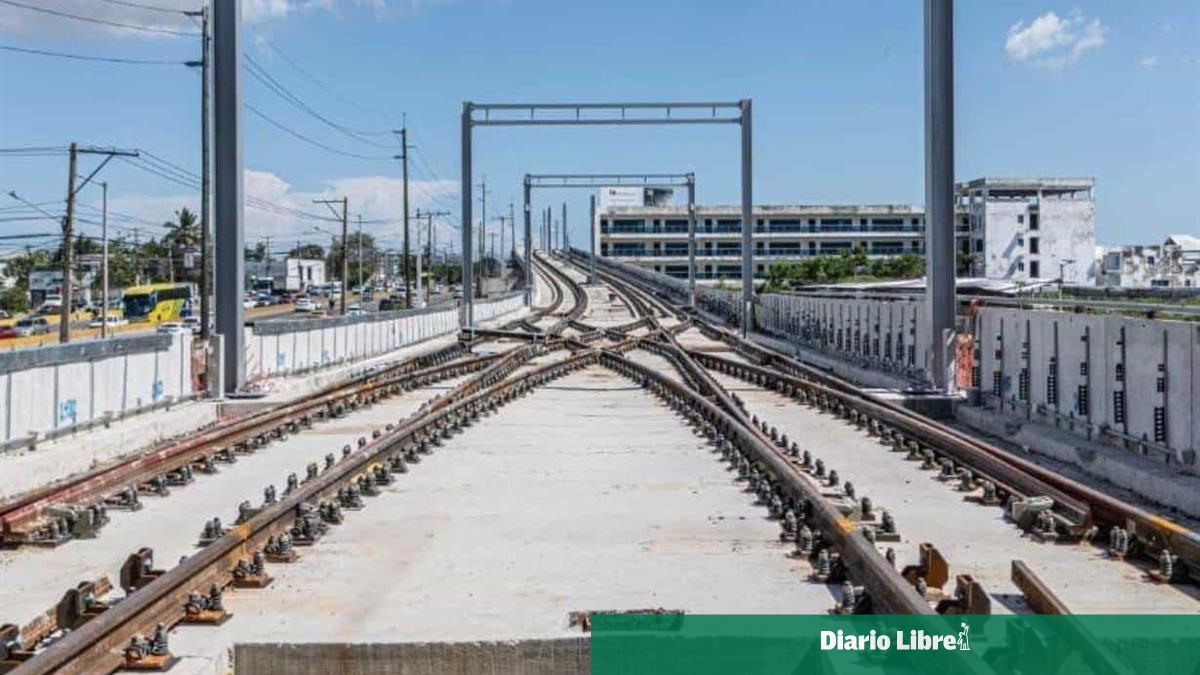
After a string of dates announced and not fulfilled in recent years, the extension 2C of the Santo Domingo Metro will start operating from on the 24th of this monthas reported by the president Luis Abinader.
The president indicated that from that date and until the Easter week The service will be free on the new section, as part of an initial operating period. The measure seeks to put the system into operation and facilitate the adaptation of users, mainly in Santo Domingo West.
Timeline of delays in the 2C extension
He first sting of the work occurred on February 8, 2022 with the expectation of a relatively quick execution.
At different times, the authorities offered projections of delivery which were later adjusted. In October 2023, the Office for Reorganization of Transportation indicated that the line would be ready early 2024.
Subsequently, it was reported delivery for the second quarter of 2024, first postposition. The one that at the end of the year was undated of delivery.
Already last year, in February 2025 It was announced that the extension would be ready for end of last year.
But months later, after a tour by the Minister of the Presidency, José Ignacio Paliza, it was announced that the work was going to be for end of 2025. With the deadline about to expire, it was planned for a delivery end in February 2026.
Technical and operational details of the new line
By pointing out the president, who will be the February 24the current announcement sets for the first time a specific date of start of operations amidst that history of postponements.
The line 2C has an extension of 7.3 kilometerswith a 840 meter tunnel and the rest of the elevated route. The estimated initial cost was 700 million dollars and its area of influence exceeds one million inhabitants, according to official data.
The new section includes stations in the Duarte highwayat the entrance to the Manoguayabo highway, at the intersection with Monumental Avenue, in the extension of 27 de Febrero Avenue (Colombia Avenue), at kilometer 13 of the Duarte Highway and at the entrance to Los Alcarrizos, where the connection with the cable car to integrate different systems mass transportation.
Prior to the start of the tests, the responsible companies of the civil works delivered to the Opret the structural components. The firms in charge of the technological systems were ordered to conclude their work to enable the dynamic tests trains, electrical systems, signaling and control.