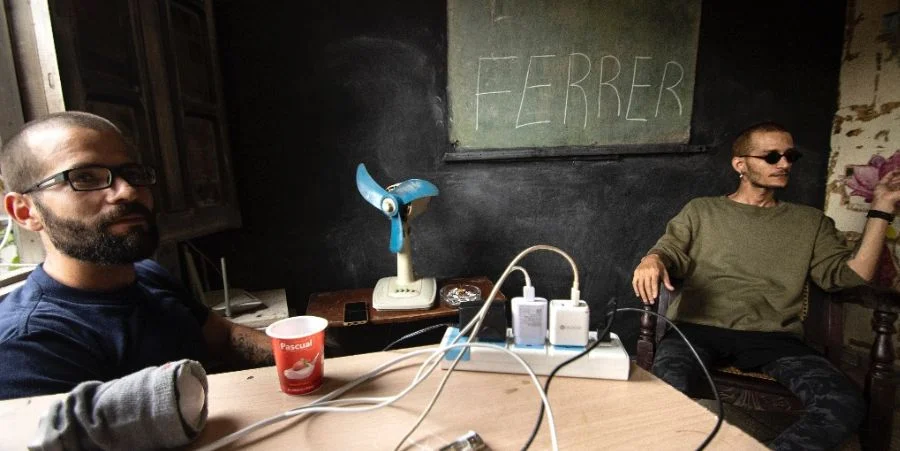
HAVANA, Cuba. – Ernesto Ricardo Medina and Kamil Zayas Pérez, young members of the independent audiovisual project El4tico, were accused by the regime of committing the crimes of “propaganda against the constitutional order” and “instigation to commit a crime,” as reported to CubaNet a family source who requested anonymity.
The young people were detained in the province of Holguín last Friday, February 6, and transferred to the province’s Criminal Investigation headquarters, known as “Everyone sings.” According to the NGO Ciudadanía y Libertad, which describes it as “the Villa Marista of Holguín”, it is “a center known for torture, violent interrogations, degrading treatment and repeated complaints of abuses against detainees.”
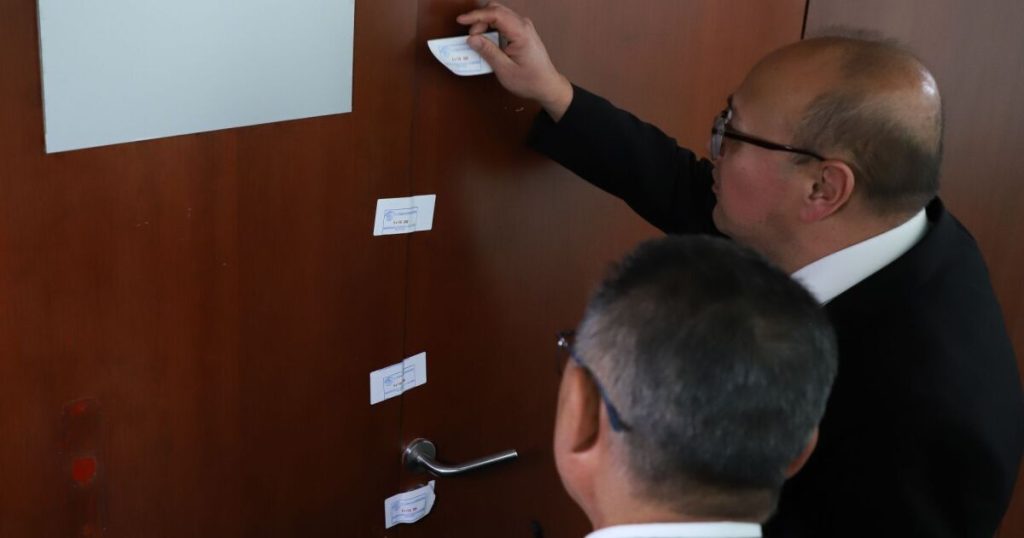
During the operation, the authorities searched Medina’s home, where his wife and young daughter were. In the operation, according to Ciudadanía y Libertad, computers, phones, cameras and other work equipment used by the young people for their recordings were confiscated.
El4tico defines itself as “a dissident space within Cuba.” Thanks to its content on social networks, the project has in a short time reached more than 50,000 followers on Instagram alone and more than 89,000 on Facebook. According to the NGO Justicia 11J, from a room in the province of Holguín, the members of the project carry out critical social and political analyzes aimed directly at the power on the Island.
This weekend, the first secretary of the Communist Party of Cuba (PCC) in the province of Holguín, Joel Queipo Ruiz, pointed out in a publication on his Facebook profile that Medina and Zayas had “the soul of invading traitors.” According to the official, the audiovisual project “responds to imperial interests,” a narrative that the Cuban dictatorship frequently uses to justify its repressive acts against freedom of expression and the press.
Alain Espinosa, lawyer at the Cubalex Legal Information Center, said to Martí News that, with the process against the members of El4tico, the Cuban authorities violate both international law and domestic law. “They are in such a repressive spiral that they are no longer even capable of respecting their own internal regulations, even though during these six decades they have not paid much attention to respecting their own legislation,” he said.
The arrest of the young people has generated a broad wave of solidarity on social networks. The United States Embassy in Cuba spoke out in favor of his release.
According to articles 124 and 268 of the Penal Code Cuban, which establish the crimes of “propaganda against the constitutional order” and “instigation to commit a crime”, respectively, young people could receive sentences of up to eight years of deprivation of liberty only for the first alleged infraction, and one more year for the second.
At the time of writing, the young people were being held incommunicado, without the right to telephone calls, not even to their families.