camel nostalgia
Faustino is nostalgic. He looks from the door of his house topped with a 1924 light at the empty San Lázaro and Águila stop and it seems like a lie to him. “In the Special Period, the camels. Now not even goats” (bicycles), he says, exaggerating the note of zoological inspiration. “Look páesto. I never thought we would be like this… Nothing at all,” he says, very irritated, alluding to the collapse this week of public transportation in Havana, while making the palms of his hands resonate against each other.
Faustino will try to go to work tonight, “taking whatever it takes,” but it may be the last night to close the week. He is a custodian at a private fast food business that opens at ten o’clock and is located shortly after the bridge over the Almendares River. About seven or eight kilometers away, which his health and age could not cover on foot.
An ex-smoker, one of the hard ones, “one of the box and a half and up to two a day”, he suffers from peripheral arterial disease. It’s not like you can “burn” about 400 pesos from your budget on a round trip ticket three or four times a week in one of the regular cars that ply the city. “The bill doesn’t add up,” he complains.
“I’ll lose my job. What’s going to be done,” he laments. “I’ll look for another one nearby,” he reacts with forced optimism while his wife, Mirta, “a seamstress and bisnera college student,” she stares at him blankly and exhales a soft puff of smoke.
“Even she will have to give up the habit,” he foresees, at a time when he already has a pack of the worst black cigarette. —Creoles— It reaches 250 pesos. “Believe that. It’s the only pleasure I give myself. I’m sorry,” she responds furiously in defense of her smoking tyranny and rocks harder in her aluminum and rubber strip chair. The atmosphere heats up and a thick silence settles in as a truce.
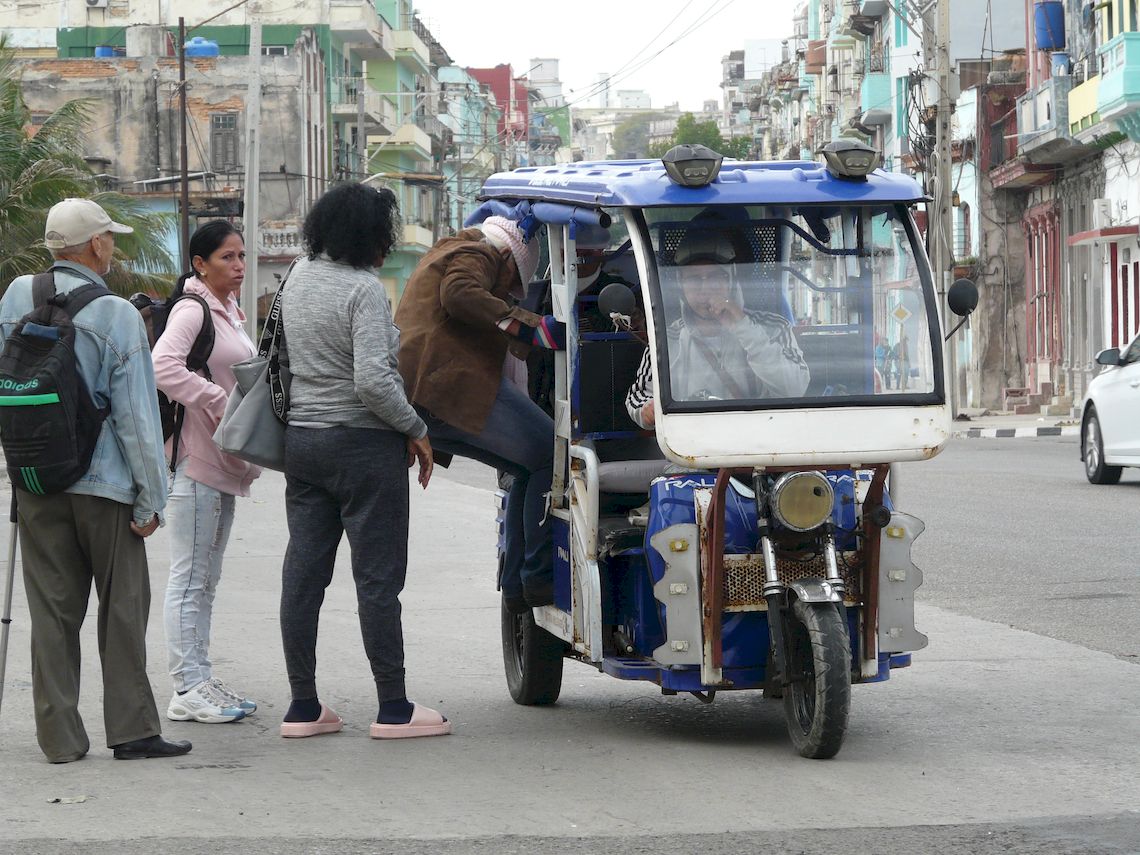
It’s barely 9 in the morning and on the avenue itself, in front of the brutalist mass of the Ameijeiras hospital, groups of anxious people gather, waiting to grab the first thing that comes along in order to escape the immobility and cold wind that keeps a choppy sea and their hands in their pockets.
“There are no buses, only tricycles (private and state), but almost all of them are already full from Havana. They are very small,” says a lady with sunglasses, a hat and a transparent bag from Corte Inglés full of red tomatoes. He lives “in La Palma”, in the southwest of the city, and works in Vedado as an assistant in a dentistry clinic.
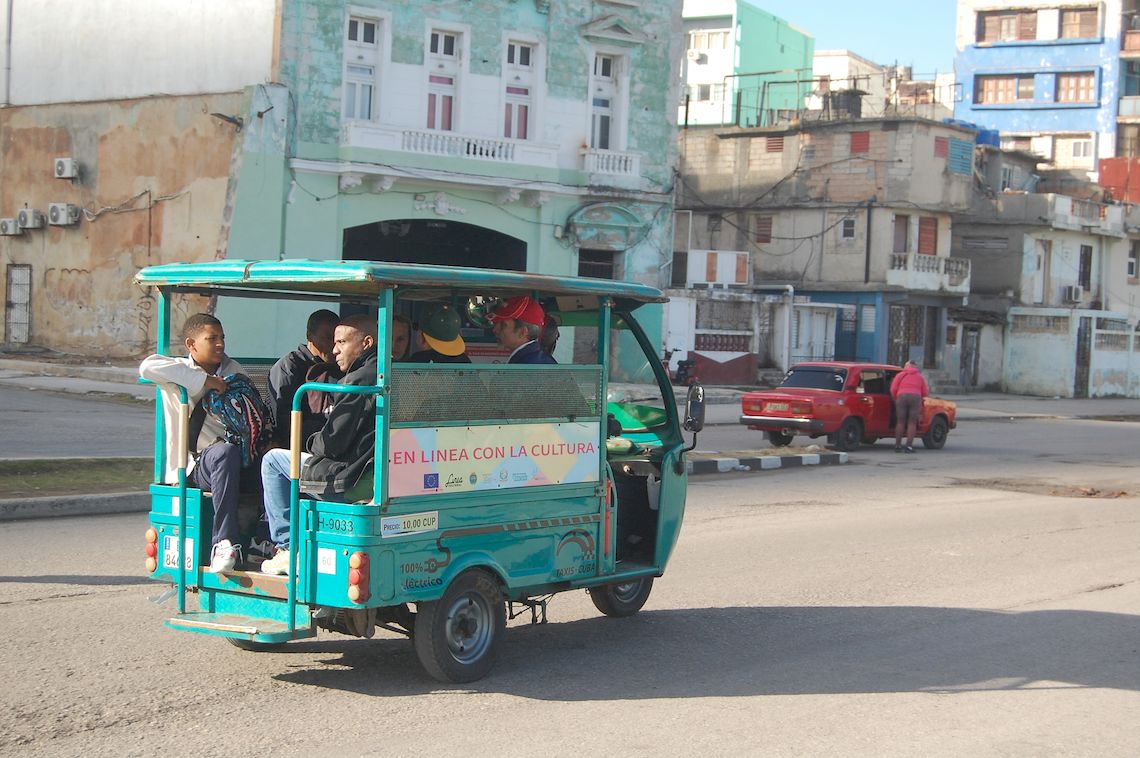
He says that trips from his house to La Rampa have already jumped from 250 pesos to 300 pesos and that today he wants to see his sick uncle, whom he loves like a father, who lives by the Obelisco, in Marianao. The monument was inaugurated in 1944 by then-president Batista in honor of his first coup d’état, on September 4, 1933, when he was a lepero stenographer sergeant from Banes.
Same blades, different landscapes
“In Canada my son has to shovel the snow to get the car out of the garage. I have to shovel too, but shit.” The phrase came out of the mouth and the resigned disgust of Augusto, a 70-year-old intensive care doctor with health missions in half the world who faces the displacement of the garbage dump from his street to the access to his carporsh, a kind of palisade that the owner himself calls a “chicken coop made with machetes” through recycling and opportunities.
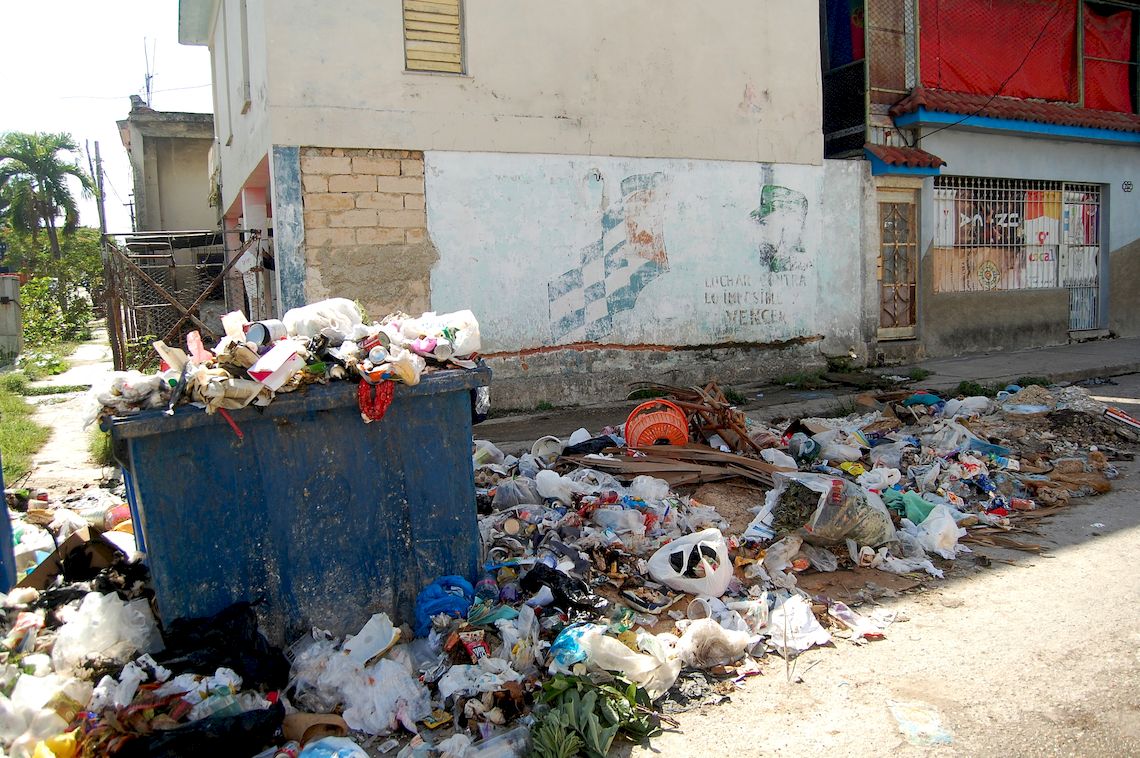
The doctor’s house is a few steps from the corner. Suchel’s corner either the palace of fliesas some enlightened neighbors usually call it. Others are less cynical and more passionate in their descriptions. You know. Unrepeatable.
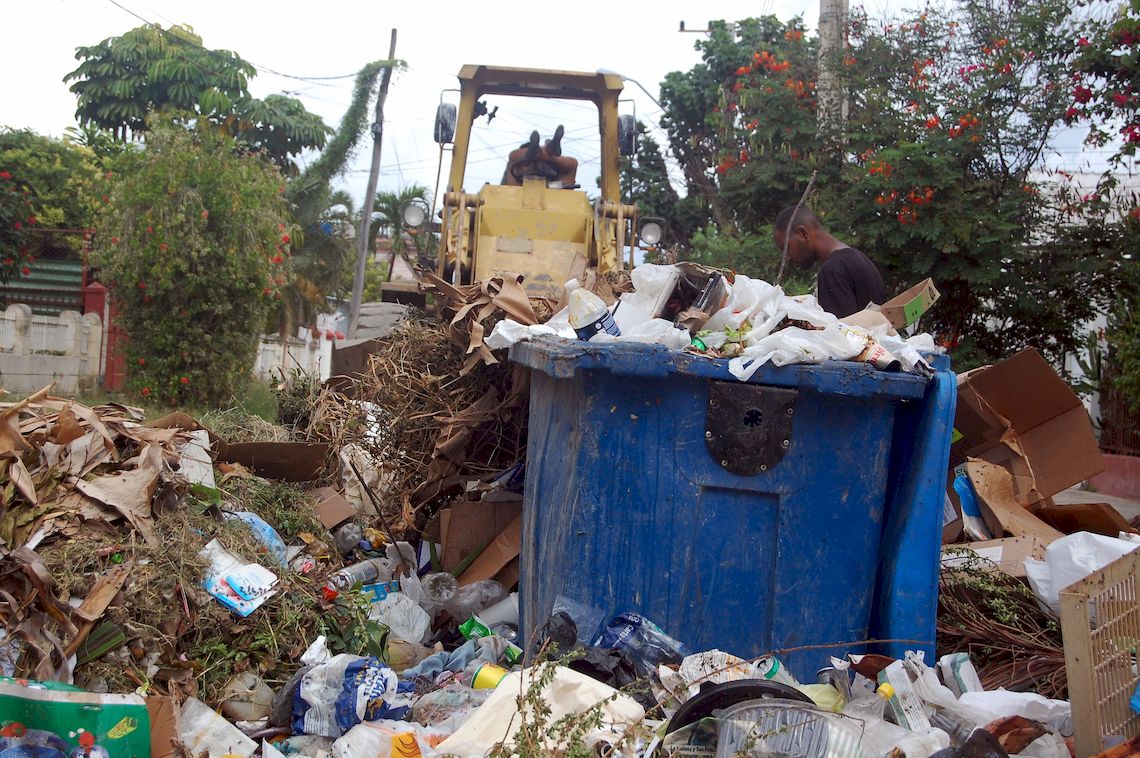
For years, several plastic tanks, which of them have not been dismembered due to predatory tradition, overflow in a couple of days or at most three, and then the waste occupies the flower bed and advances unstoppably towards the street, almost becoming natural barricades. It was almost enough for the road to be strangled by the waste, which ended up being evacuated by the blades of the bulldozer, that iron horse of Attila that erodes the sidewalk, removes the thin grass from the flower beds and breaks with its jaws the occasional segment of containment that gets in the way.
What results from such an attack is something like a landscape after the battle, to steal the title from Wajda’s 1970 film —a post-war existential drama in which it seems that there is no way out for the Poles when they go from the Nazi occupation to the Stalinist regime—.
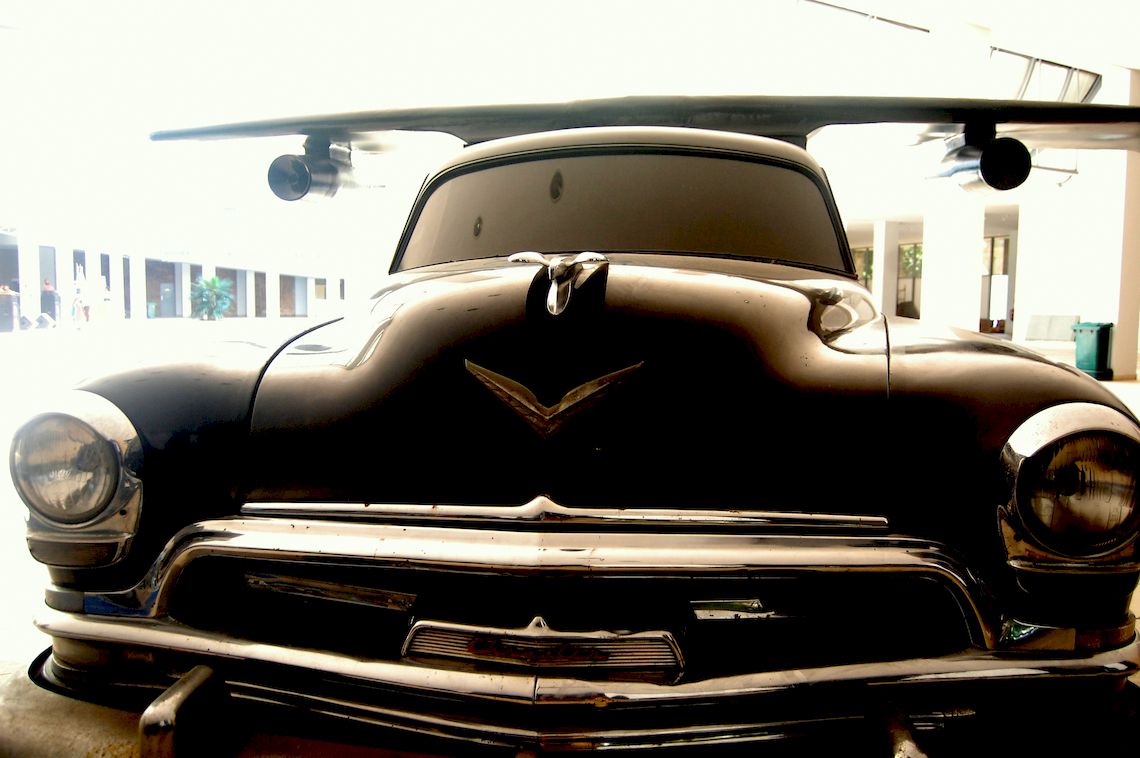
“Very soon I will have to put wings on the car to fly out of here,” he says, while he warms up the engine briefly and the cream of flies is excited by the noise of combustion.
To those knowledgeable about art in Cuba, Dr. Augusto’s fantasy refers them to “Hybrid of a Chrysler”, a sculptural piece created in 2003 by Cuban artist Esterio Segura.
But when magic comes to Augusto’s life, with the shovel he did what he had to do: move the border of the garbage dump, which these days has re-emerged with fungal force in almost all of Havana, multiplying the signs of oil shortage and its rebound in necrosis of public services.
The doctor has about ten liters of gasoline left in the tank of his pampered “Tico”, a Daewoo Tico from the 90s, which the doctor takes care of like “the apple of his eye”, because it is a “wonder”: around 20 km per liter of gasoline.
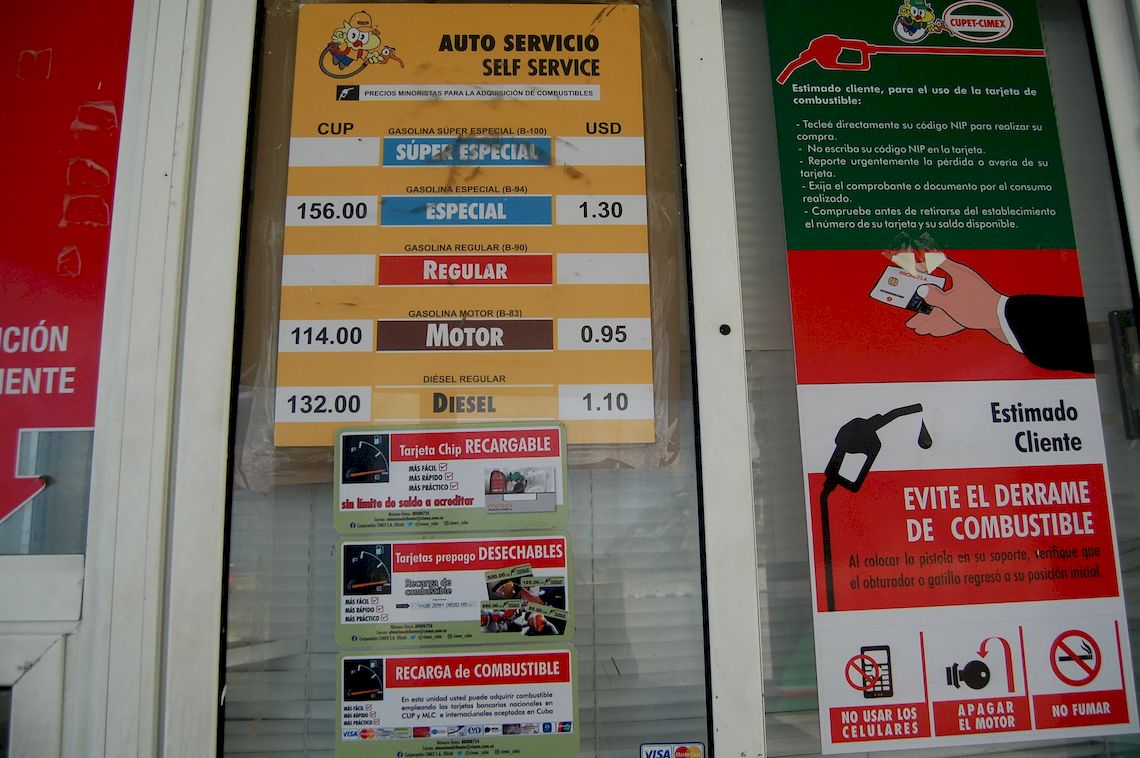
And it certainly is, at a time when the government has just decreed zero fuel for the peso market (Augusto was left stranded in the virtual queue with a ticket which puts it at an intergalactic distance from the assortment) and rationed the supply in dollars, allowing only 20 liters per vehicle at gas stations designated for this purpose, where the lines of cars extend for blocks and blocks and patience is forced to be longer than the wait.
Celeste, Turkish passion and reality
Celeste doesn’t give a damn about politics. What about her, a former bank teller for almost half a century and a manicure and pedicure at the service of any neighbor, is if the gallant of the novel The Turkish (2025), a soldier of the Ottoman Empire wounded in 17th century Italy, will finally be happy with what seems to be an impossible romance with a young Austrian village girl.
But politics or reality, which at times are almost the same, is more powerful than any soap opera and it has already knocked on the door. The bag of bread that I bought “early, before clarifying” has already increased by just over 23% in price. Eight well-baked units, weighing about 80 grams, are now priced at 370 pesos. A few days ago it was 300 pesos. “Imagine, aunt, the owner has to set up the plant to make bread when there is no electricity and that is oil that he has to buy at a very high price,” Celeste summarizes the explanation that the sad delivery man gave her.
In an apartment nestled at the end of a hallway, where the smell of coal permeates the clothes, the former cashier lives with her sister, a few years older than her, both natives of Baracoa, “but Havana residents by right of seniority,” and she is the one in charge of the kitchen. “She makes some delicious stews,” he says, putting his fingers in his mouth, and it is as if the adjective came out of its lexical hiding place, since it is very rare to hear this colloquialism in the common speech of contemporary Cubans.
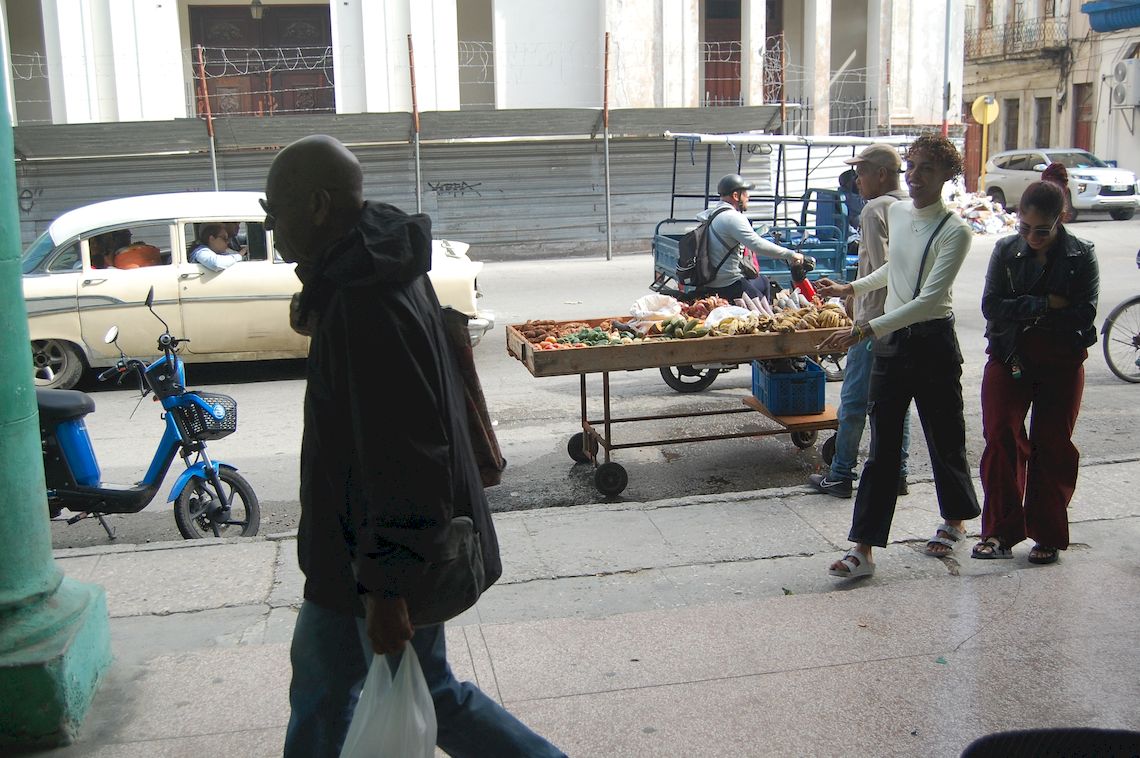
Each ear for the stew cost 80 pesos and, according to Celeste’s sister, the stallholder told her that perhaps they would be the last to sell in the neighborhood’s well-resourced agricultural sector. In fact, the supply chain is the first to react to the energy blockade.
“To come here from Matanzas, the truck driver had to buy 70 liters of oil at a thousand pesos each and then the products he transported to Havana totaled about 100 thousand. That is why the stallholder has to raise a little on almost all the food and fruits to compensate and that none be seen. Otherwise, he announced, he would have to close.”
And a revealing fact: “Oh, and he told him that at the checkpoints to enter Havana they are asking the truckers for 50 thousand pesos… Trun He doesn’t love us, but we are worse between us,” says Celeste, with an air of annoyance.