
With emotional eyes and, at the same time, a smile on her face, Rio de Janeiro teacher Carmen Araújo, 59 years old, let samba take over her feet this Sunday (8), in a pre-carnival celebration in Brasília. 
She, who has been caring for her father with Alzheimer’s disease for 15 years, knows that it is always time to take care of herself.
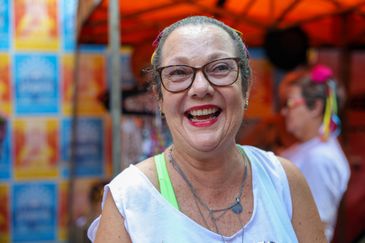
Brasília, DF 02/08/2026 Carmem Araújo takes care of her father with Alzheimer’s. Photo: Fabio Rodrigues-Pozzebom/Agência Brasil
Carmen is one of the members of the collective Mother’s Daughterswhich was founded in 2019 and aims to support people who are caregivers (mostly women) of family members with dementia.
During the time of revelry, the collective dresses up as a carnival group.
“If we don’t take care of ourselves, we get sick too,” he explains.
The love for carnival was inherited from his father, who is now 89 years old.
“He always liked it a lot. Until recently he still participated. Today it is no longer possible.”
She gets emotional remembering her father, always so excited and organized. Carmen understands that participating in the collective allowed her to collaborate with other families and similar stories.
Support network
One of the founders and directors of Mother’s Daughterspsychoanalyst Cosette Castro explains that the idea for the collective arose from the pain and solutions involved in caring for her mother, who passed away five years ago.
“I’m an only child and I took care of my mother, who had Alzheimer’s, for 10 years. People talk a lot about medicine, about how to take care. But no one looks at us who were caring and overloaded”, she considers.

Brasília, DF 02/08/2026 Cosette Castro is one of the founders of the group Filhas da Mãe. Photo: Fabio Rodrigues-Pozzebom/Agência Brasil
Cosette states that it is necessary to recover the child that exists within each person.
“Sometimes, we imagine that we no longer have the right to laugh and we feel guilty for feeling happy because the days are full of responsibility for 24 hours a day.”
The psychoanalyst explains that the collective serves at least 550 people on a daily basis in projects that function as a support network, with services, including virtual services on a voluntary basis. The idea is to work hard with health promotion and ensure visibility of the need for early diagnosis of dementia diseases, such as Alzheimer’s, and also the burden on caregivers.
She mentions that problems such as spinal injuries, fibromyalgia, hypertension, heart problems and mental disorders are common among this audience. “These are people who don’t sleep, have insomnia and a very high level of anxiety.”
Therefore, the collective uses events, such as walks and exhibitions, to provide information to the public. Even at carnival.
In fact, she testifies that sounds have therapeutic value. In the case of her mother and other caregivers, song lyrics were one of the last memories lost.
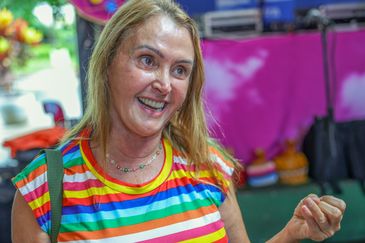
Brasília, DF 02/08/2026 – Márcia Uchôa, one of the founders of the Filhas da Mãe group. Photo: Fabio Rodrigues-Pozzebom/Agência Brasil
At the home of Márcia Uchôa, aged 69, her mother, Maria, aged 96, who is also diagnosed with Alzheimer’s, loves music and crochet.
He just didn’t show up for the festivities for fear of the flu. It was raining in Brasília this Sunday.
“We need to take care of ourselves and Carnival is within us”, he says.
Against prejudices
Next to the party Daughters of the Mother, another local collective, Call me by nameparaded joy in the name of the anti-ableism cause with a marching band made up of people with disabilities.
According to public servant Aline Zeymer, one of the group’s coordinators, this will be the group’s second carnival with the aim of combating prejudice, in addition to promoting resistance and care along the path of art.